Guided by a respect for the tangible and intangible values that accumulate within a space over time — from layered histories to collective memory — Joh Sung-yong has cultivated a distinctive voice in contemporary Korean architecture. Born in 1944, he has long been interested in multi-family housing and public architecture, designing residential complexes, museums, memorial halls, and parks of varying scales.
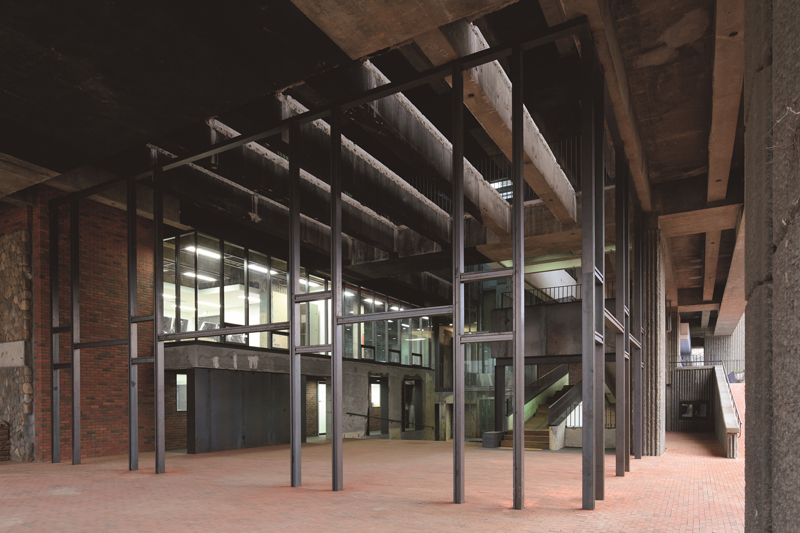
Located within Seoul Children’s Grand Park, Kkummaru originally served as a golf course clubhouse. Although the aging structure was slated for demolition, architect Joh Sung-yong opted for a partial renovation to preserve its historical significance and architectural value. Today, the transformed building offers visitors a refreshingly unconventional spatial experience.
ⓒ Kim Jae-kyeong
“Regenerating old places and buildings is just as important as constructing new ones or adding extensions.”
This remark succinctly captures Joh Sung-yong’s philosophy. For Joh, the ultimate goal of architecture is not the completion of a building itself. Instead, he focuses his attention on the gradual accumulation of meaning — how time leaves traces on spaces and surfaces. Rather than signs of decay, they are vital resources that shape the life of a building, embody collective memory, and anchor a place’s identity. Joh’s architecture continually questions how these traces can be cared for and sustained.
A representative example is the Sorokdo National Hospital Centennial Memorial, created on Sorok Island at the southern tip of the Korean peninsula. Joh was initially commissioned to design a monument to mark the hospital’s 100th anniversary in 2016, but instead he proposed creating an information center that would present the history of the village itself. After careful reflection on how best to preserve the memory of the island — long a residential community for patients with Hansen’s disease — he chose to renovate an aging house built in the 1970s. The transformed structure now records the stories of the island’s current and former residents. For Joh, this was what architecture ought to do for Sorok Island.
In Joh’s work, architecture is inextricably linked with one’s attitude toward life, and the veteran architect’s perspective has served as both a model and inspiration for many of his younger colleagues. He has encouraged them to read more sensitively the narratives generated where the city, people, and time intersect. For this reason, Joh’s legacy lies not merely in his completed buildings but in the discourse generated by the questions he poses throughout the design process. His emphasis on the public context is evident across projects of varying scales — from design competitions to educational, residential, and cultural facilities.
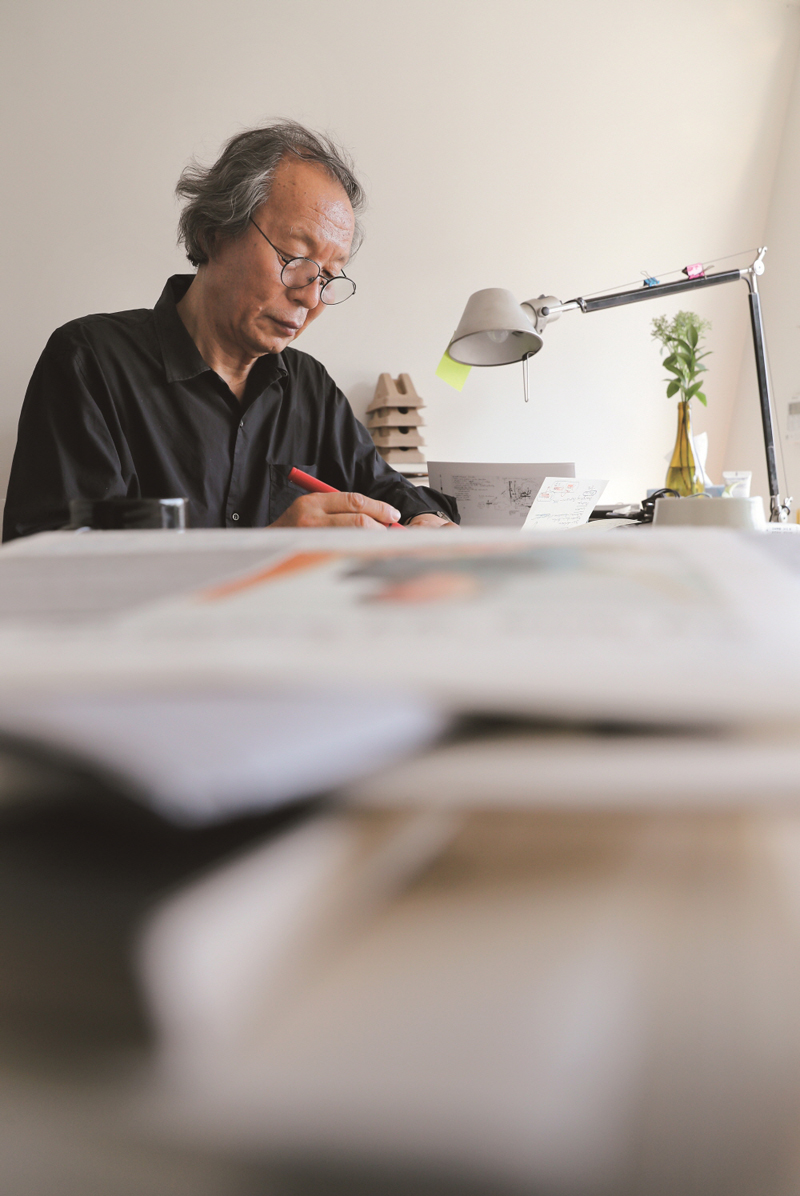
Joh has consistently explored the social role and public value of architecture. Prioritizing human experience and habitation over striking exterior forms, he is particularly noted for reviving a site’s embedded historical traces through a restrained architectural language.
ⓒ Hankyoreh
QUESTIONS FROM THE OUTSET
Architectural design competitions are inherently demanding. Strict regulations and tight timelines require architects to read and interpret a site’s context with precision and economy. Joh approached these constraints as a framework for exploring the historical depth of a site with a sharp intensity. The early sketches, diagrams, and comparative schemes he developed during this process remained theoretical and practical assets, later serving to test and recalibrate form and function as his respective projects took shape.
Joh came to prominence in 1983 when he won first prize in an international design competition for the 1986 Seoul Asian Games Athletes’ Village and Memorial Park, later realized as the Asian Athletes’ Village Apartments and Asia Park in Jamsil, a neighborhood in southeastern Seoul. Grappling with the intersection of monumentality and everyday life, as well as the organization of public memory, Joh demonstrated through this project that architectural facilities could operate as mediating devices linking the urban landscape with citizens’ lived experiences. Maintaining that the order of an apartment complex should derive from the structure of the street, he left the ground level of each residential block open, utilizing a piloti structure to enable free pedestrian movement, and placed generous courtyards between the parking areas and housing blocks.
This early experience sparked Joh’s enduring inquiry into how the design of public facilities might harmonize commemorative intent with ordinary use, informing his judgments regarding sense of place and public character in subsequent projects. The competition stage was never simply a path toward a single completed building; it was a laboratory, a space for articulating questions and testing answers. That constant inquiry carried forward into his later public projects, large and small alike.
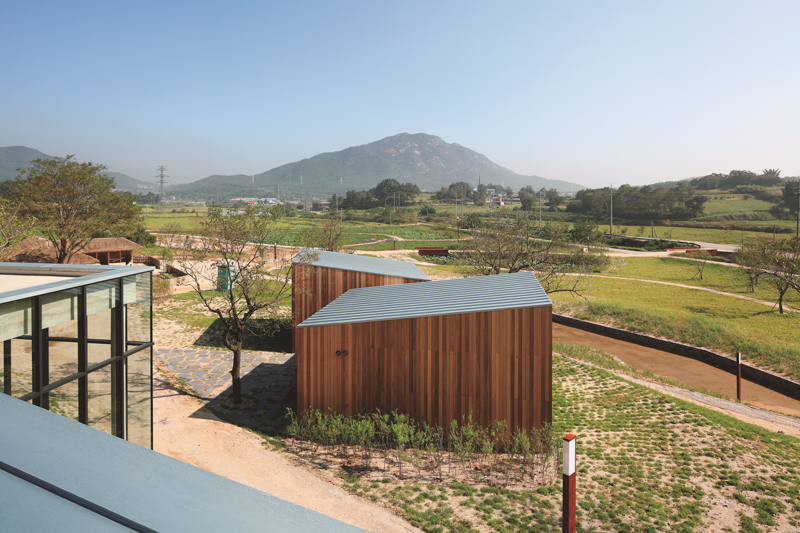
The House of Lee Ungno is a memorial museum in Hongseong, the hometown of the pioneering Korean modern artist. Conceived as an architectural reflection of Lee’s eventful life, Joh recovered the site’s original topography using historical documents. The ocher-colored buildings blend into the landscape, while the interior spaces are imbued with a contrasting sense of tension.
ⓒ Kim Jae-kyeong
NATURAL WEATHERING
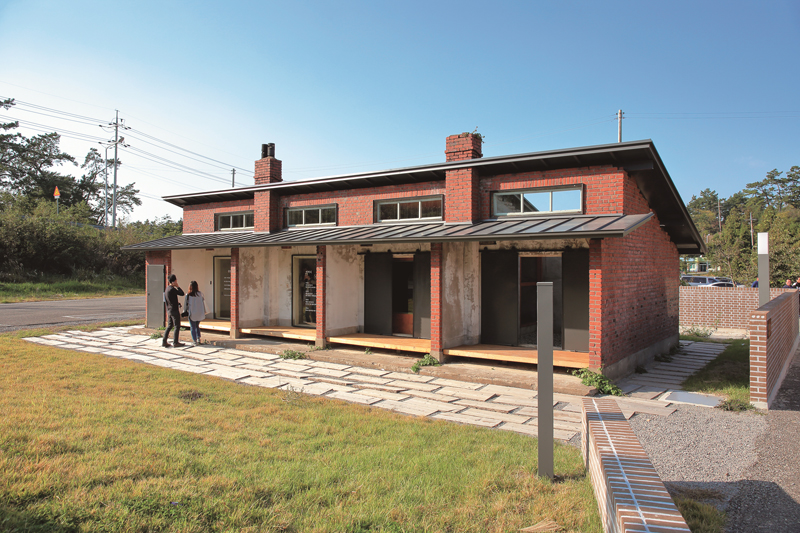
The Sorokdo National Hospital Centennial Memorial was created by renovating a former ward used by patients with Hansen’s disease. Rather than demolishing the long-neglected structure, the project transformed it into a welcoming space that greets visitors arriving at the island.
ⓒ Kim Jae-kyeong
Educational facilities are among the projects that most directly reveal the social role of architecture. Such spaces are not merely containers of functions; they serve as both the backdrop and catalyst for everyday encounters and public activity. In designing the Students’ Hall at Inha University, Joh was less concerned with simply accommodating the building’s designated uses and spaces than with shaping an interior environment that would encourage interaction and shared patterns of behavior. Through flexible, transitional spaces like staircases and lounges, he opened possibilities for chance encounters, dialog, and voluntary collective activity.
Joh also devotes particular attention to ensuring that architectural materials can gracefully accommodate the passage of time. Walls and floors, handrails and stair treads inevitably discolor and wear smooth through years of use. He describes this process as the “weathering” of architecture: an aging that unfolds alongside the everyday lives of its users. The patina left by countless touches and the traces of life gradually become the narrative of a community.
In numerous interviews, Joh has spoken of architecture that “ages with dignity.” From the moment of completion, every building begins to grow old; deterioration is inevitable. Yet, indiscriminately demolishing structures simply because they have aged does little to resolve deeper urban challenges. Allowing buildings to weather naturally — and gracefully — is, for Joh, both an alternative approach to urban regeneration and an essential aspect of architects’ social responsibility. This explains his meticulous attention to material and detail. The quiet elegance his buildings acquire over time is not accidental but carefully anticipated.
The same principle applies to his residential work, where seemingly minor decisions profoundly shape the landscape of daily life. The placement of windows, the size of a courtyard, the tactile quality of finishes — such details accumulate to form a dwelling that, over time, retains the memories and traces of its inhabitants’ lives. These decisions are not driven by short-term convenience but represent architectural promises made with a long-term commitment to quality of life.
ONGOING INQUIRY INTO PLACE
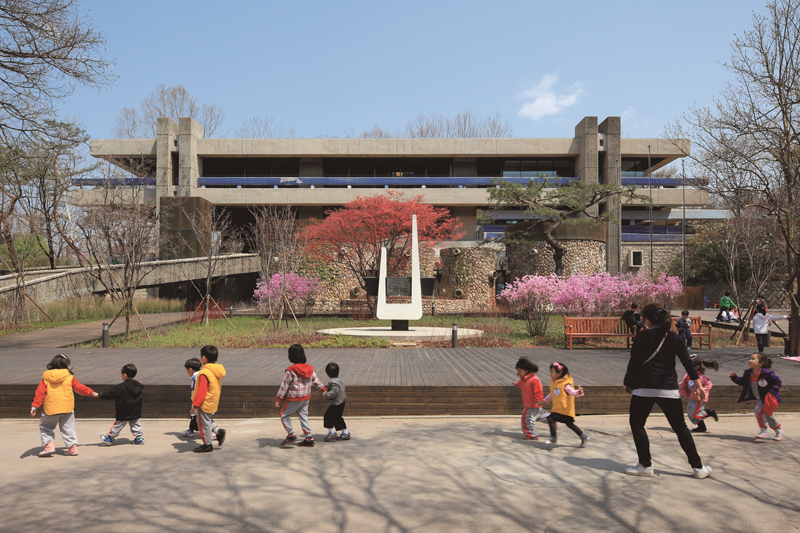
The core structure of Kkummaru was originally the Seoul Country Club House, designed in 1968 by Na Sang-jin, a pioneering figure in modern Korean architecture. When the project shifted from demolition to adaptive reuse, Na’s work was rediscovered by the media and the public, garnering renewed acclaim.
ⓒ Kim Jae-kyeong
For Joh, exhibitions and cultural facilities are public arenas where his architectural thinking can be tested openly. The 1989 exhibition Kim Ki Seok, Joh Sung Yong, Kim In Cheurl: Notion of Madang, held at TOTO GALLERY∙MA in Tokyo, served to introduce contemporary Korean architecture, which had gained international attention following the 1988 Seoul Summer Olympics. At two symposia held in conjunction with the exhibition, Joh engaged with members of the audience and gained insights into how his reflections on the sense of place were socially received. His sustained interest in the sense of place subsequently informed projects such as a proposed museum of modern art in Yongin, Gyeonggi Province, and the Haeundae Village project in Busan (1994) — works that translated climatic and scenic conditions into operative design elements.
This inquiry into place continues in his more recent works. Kkummaru (Dream Park, 2011), the annex building at Seoul Children’s Grand Park, functions as a mediating space that connects the park’s patterns of use and the functions and activities it accommodates while fostering shared experience across generations. Meanwhile, Seonyudo Park (2002) reflects Joh’s efforts to reinterpret and restore the preexisting ecological and cultural context of a site that once housed a water treatment plant. Particularly in locations such as Haeundae Village and Seonyudo Park — where architecture stands in direct dialog with nature — physical conditions like salinity, humidity, wind, and ecological change become crucial design considerations. They are embedded into the surface and form of the architecture, designed to gradually reveal themselves over time. Cultural facilities such as art museums, on the other hand, are more than mere containers for exhibitions; they mediate visitors’ experiences and contribute to the production of urban memory.
In Joh’s practice, conceptual sketches and built architecture remain inextricably linked. His drawings and models stimulate the imagination beyond practical constraints, while his competition-winning proposals and realized buildings validate and redefine those very imaginings. His award-winning high-rise proposals for the Korea Housing Corporation prompted a reconsideration of density, verticality, and communal life. The design approach, sometimes described as “Baroque,” employed rhythmic surfaces and formal experimentation to explore the layering of time and human experience. Joh’s conceptual investigations are continually translated into practical strategies, just as the physical and regulatory realities encountered on site serve to further refine and mature his ideas. This cycle has enriched Joh’s design language, enabling him to establish a sustainable approach that moves beyond any singular style or surface-level aesthetics.
 한국국제교류재단