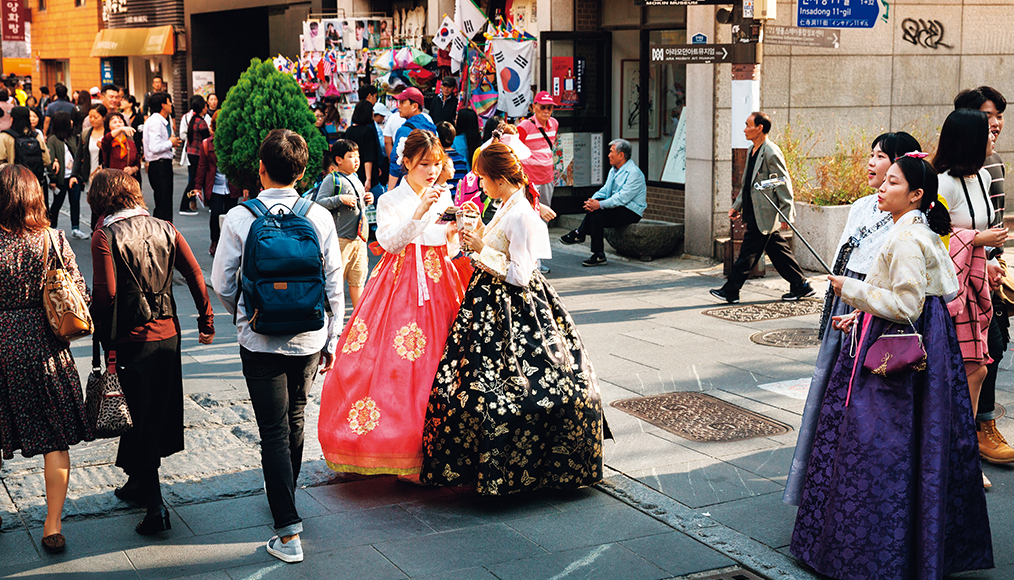
On the crowded streets around the historic city center of Seoul, especially the quaintneighborhood of traditional homes in Bukchon and the majestic Gyeongbok Palacecomplex, on any given day, a lot of young women can be seen wandering around,resplendent in hanbok. It makes one wonder if there’s a festival happening nearby. Or arethey guests leaving a wedding reception? Is the hanbok, the Korean national dress, back asany day wear? With the opening of the nation’s ports in the late 19th century, the taste fortraditional wear began to recede amid an influx of foreign goods and influences. But, untilthe 1960s, people dressed in hanbok were still a common sight on the streets of Seoul.Western-style suits and street wear became the norm when the fashion industry began toflourish thanks to mass production of textiles. Hanbok was mothballed, to be brought outonly for national holidays, such as New Year’s Day and Chuseok (Harvest Moon Festival),and on special occasions like weddings.
Though long out of sight, the hanbok has indeed come back into fashion in recent years.How did this happen? The annual Hanbok Day events, organized in 1996 by the Ministry ofCulture, Sports and Tourism, signaled the start. And the popularity of hanbok has been furtherboosted by the policy of free admission to the historic palaces of Seoul for anyone whocomes dressed in traditional attire. Implemented by the Cultural Heritage Administrationsince October 2013, the free admission applies not only to the four palaces and the royalshrine Jongmyo in Seoul but also the royal graveyards of the Joseon Dynasty in its vicinity.The hanbok trend really took off when Gyeongbok Palace and Changgyeong Palace wereopened to the public for night tours several times a year. To control the number of visitors,only those who have booked in advance are allowed to enter. Competition is fierce, but thosewearing a hanbok can enjoy touring the palaces at night, for free, without going through thehassle of booking in advance. You just walk up to the entrance, in camera-ready style. Aspopular as they are among locals, the program has caught on with tourists as well, drawnby the romance of visiting the palaces at night, promenading around the royal gardens inmoonlight and taking part in folk games, dressed in hanbok.
In response to this trend, hanbok rental shops have sprouted near the palaces, enjoying aroaring business. Traditional hanbok is difficult to make and therefore expensive, especiallyfor young people. But now they can rent one for little expense and roam around in traditionaldress for a few hours or the whole day. Social media is swamped with photos of couples orfriends in hanbok reveling in the experience of gliding gracefully like period film charactersaround the royal palaces or traditional villages. For a while they are actors and actresses ingorgeous costumes, recording themselves playing out roles to be viewed and shared lateronline. In those moments, they are on stage and the hanbok a charming prop for acting outa lovely fantasy.
Are these young people aware that, meanwhile, the traditional hanbok industry is collapsingand the crudely made, imported hanbok filling the rental shops are transformingthe original beauty of hanbok into colorful kitsch?
 한국국제교류재단