Spring greens (bom namul) are aromatic delicacies that capture the season’s quintessential flavors. A bowl of soup exuding the fragrant scent of mugwort, a spoonful of rice topped with soy sauce and Korean wild chive, and soybean paste stew with finely chopped shepherd’s purse — all of these signal the arrival of spring. However, savoring spring greens as a seasonal delight is a relatively recent luxury. In the past, people in Korea had to endure springs as harsh as the winters that preceded them, so these greens were not a delicacy but vital for survival.
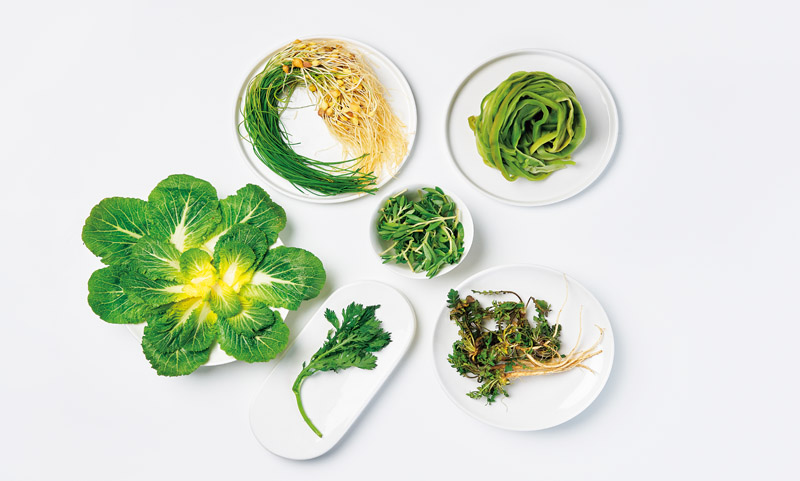
With the arrival of spring, seasonal wild greens naturally make their way onto Korean dining tables. Rich in vitamins and minerals, these plants help restore vitality after the long winter months, and their pleasantly bitter taste and fresh aroma awaken the palate.
ⓒ Getty Images Korea
In earlier times, grain stocks set aside to endure the winter months were typically depleted when spring arrived. Barley sown in the autumn could not be harvested until late spring or early summer, resulting in a prolonged period of scarcity. During this long wait for the barley to ripen, many hovered at the crossroads of life and death. This period of spring famine was known as borit gogae (literally “barley hump”), a term that signifies not just a particular season but the ultimate test of survival.
The greens that freshly sprouted in spring provided the means to weather this time of severe food shortage. From today’s perspective, this may seem surprising. The common perception is that famine foods should be high in starch — like potatoes, sweet potatoes, corn, and buckwheat — to quickly provide satiety and energy, while light and fragrant spring greens are considered mere appetite stimulants. Yet, it was a completely different story in the past: When people first began foraging for wild greens, these plants supplied essential nourishment that effectively filled their famished stomachs.
How could low-starch vegetables satiate such profound hunger? The answer lay in both quantity and combination. Every edible plant growing in the mountains and fields was utilized as food. Mugwort, shepherd’s purse, Korean wild chive, toothed ixeridium, angelica-tree shoots, butterbur, Fischer’s ragwort, and aster became ingredients for everything from rice and soup to side dishes, porridge, jeon (savory pan-fried fritters), and rice cakes. Various methods were also developed to boost caloric intake. One notable example is galbun, an arrowroot starch made by grinding the plant’s rhizomes, dissolving them in water, and collecting the settled sediment. Additionally, the inner bark of mountain pines — the part richest in starch — was stripped, dried, and ground into a powder. These starchy ingredients were then mixed with vegetables to make porridge or rice cakes. Though no substitute for staple crops, greens prepared in that way helped to alleviate hunger and nourish the body.
Spring greens had another kind of value. There was a practice known as namul seori. After harvesting large quantities of spring greens from the mountains and fields, impoverished women would proceed directly to the homes of affluent families, set down their baskets, and sit there, refusing to leave. The wealthy families, left with no other choice, would accept the greens and offer grains in return. Thus, spring greens were not only daily sustenance but also a means of bartering for grain from the rich.
In those days, pleasing the palate was not the primary purpose of food. The criteria for what constituted food were simple: Is it edible, and can it sustain you? Accordingly, dishes made with spring greens were modest and uncomplicated, utilizing minimal cooking methods — blanching, seasoning, boiling, and pan-frying.
IN RICE AND SOUP
As spring wore on and grains became scarcer, greens were cooked with rice. While rice made with mugwort, shepherd’s purse, or angelica-tree shoots is considered a seasonal delicacy today, adding greens was originally a practical way of increasing the overall amount of food. By adding finely chopped greens, a full pot of rice could be prepared using only a small amount of grain. The same principle applied to soup. In spring, soups made with greens like shepherd’s purse, mugwort, and Korean wild chive were mealtime staples. Because soup contains a large amount of liquid, you could add ample quantities of greens, the most abundant and easily sourced ingredients. Compared with rice, a pot of soup could feed far more mouths with significantly fewer ingredients. At times, the broth was thickened with arrowroot starch or pine bark powder to make it more filling. Ultimately, these vegetable soups became the sustaining centerpiece of the dinner table.
The tradition of cooking hearty soups with greens to tide families over during the spring lean season is especially well preserved in two local specialties of Jeju Island: gosari yukgaejang (spicy beef soup with bracken) and momguk (gulfweed soup). In the past, gosari yukgaejang was simply known as gosariguk (bracken soup). Because Jeju’s climate, terrain, and soil are ideal for ferns, bracken could be harvested across the island in early spring. Bracken soup, thickened with buckwheat flour, was the perfect dish to ease hunger and fend off the lingering cold. Bracken itself was a highly versatile famine crop, so rich in starch that its roots were ground to produce the base needed to make noodles or jeon.
Although gulfweed soup thickened with buckwheat flour does not contain land-grown spring greens, it still belongs in this category. Gulfweed, in season from winter to early spring, can be considered the spring greens of the sea. A hearty bowl of this thick soup is enough to weather the cold snaps in early spring when piercing winds blow in from the north. On the famously windy island of Jeju, momguk has long served as a vital source of strength to endure the elements.
On the mainland, aetangguk is another well-known spring delicacy featuring mugwort as its main ingredient. Because it also contains meat, it was historically considered a stamina-boosting food. To prepare it, beef brisket or shank is simmered to create a rich broth, and the cooked meat is then minced. Blanched mugwort is finely chopped and mixed with the minced meat, and the resulting mass is then shaped into small balls, rolled in flour, dipped in beaten egg, and cooked in the broth seasoned with soy sauce or salt. Fragrant with fresh mugwort and rich in protein, this dish was far more than a simple soup; it was crucial sustenance for the grueling spring months.
TABLE OF SIDE DISHES
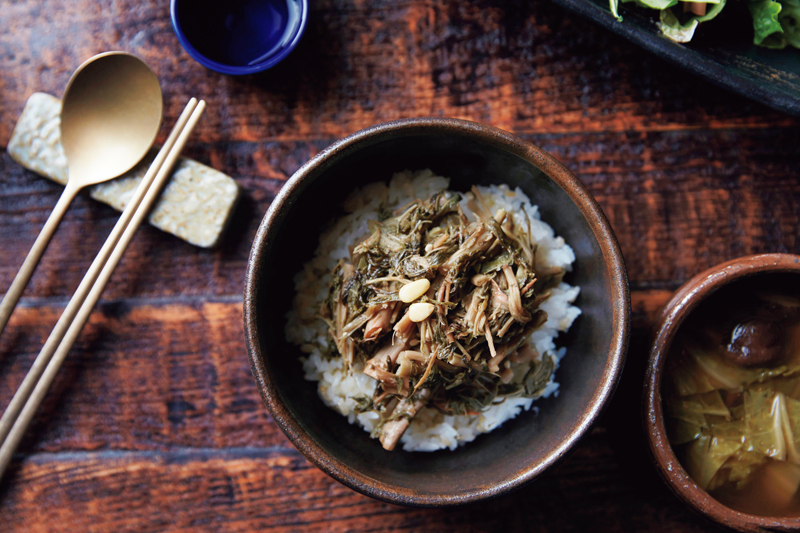
Historically, people gathered seasonal greens in early spring, drying them in the sun to store for the scarce winter months. Today, many continue to enjoy dried greens as a seasonal delicacy, even without the necessity of winter stockpiling.
ⓒ Korea Tourism Organization
Greens were also seasoned and served as side dishes with a bowl of rice. Rather than being simple accompaniments, however, these side dishes, simply called namul, often made up the bulk of the meal. Wild greens would be blanched, seasoned, and heaped into a large communal bowl for the whole family to share. The more greens there were, the less rice was needed. Even when eating was primarily a means of easing hunger, people did not entirely forsake the pleasures of taste. They carefully paired different kinds of seasoning — doenjang (soybean paste), gochujang (red pepper paste), soy sauce, and salt — to suit the specific type of vegetable.
Wild greens were also commonly mixed into batter to make namul jeon. In an era when wheat flour was scarce, greens formed the bulk of the batter, finely chopped and mixed with a small amount of grain flour. Households that did not have the luxury of wheat flour resorted to arrowroot starch, buckwheat flour, or acorn flour. The appeal of namul jeon lies in its adaptability, as it can be made with whatever vegetables are on hand. Toothed ixeridium jeon, mugwort jeon, and butterbur jeon were all popular springtime dishes. Pan-fried in what little oil was available, they provided a much-needed defense against hunger.
Before napa cabbage kimchi was available year-round, spring kimchi was made with seasonal greens like butterbur, Korean wild chive, canola, and bomdong, a type of spring cabbage. Unlike today’s deeply fermented kimchi, meant to be preserved and eaten over a long time, these versions were typically eaten fresh, almost immediately after being made. Sometimes the vegetables were simply pickled, but the guiding principle remained the same: to make kimchi with whatever ingredients were available. Mulkimchi (water kimchi) made with stonecrop is particularly celebrated for its delightful fragrance.
MAKING MEALS GO FURTHER
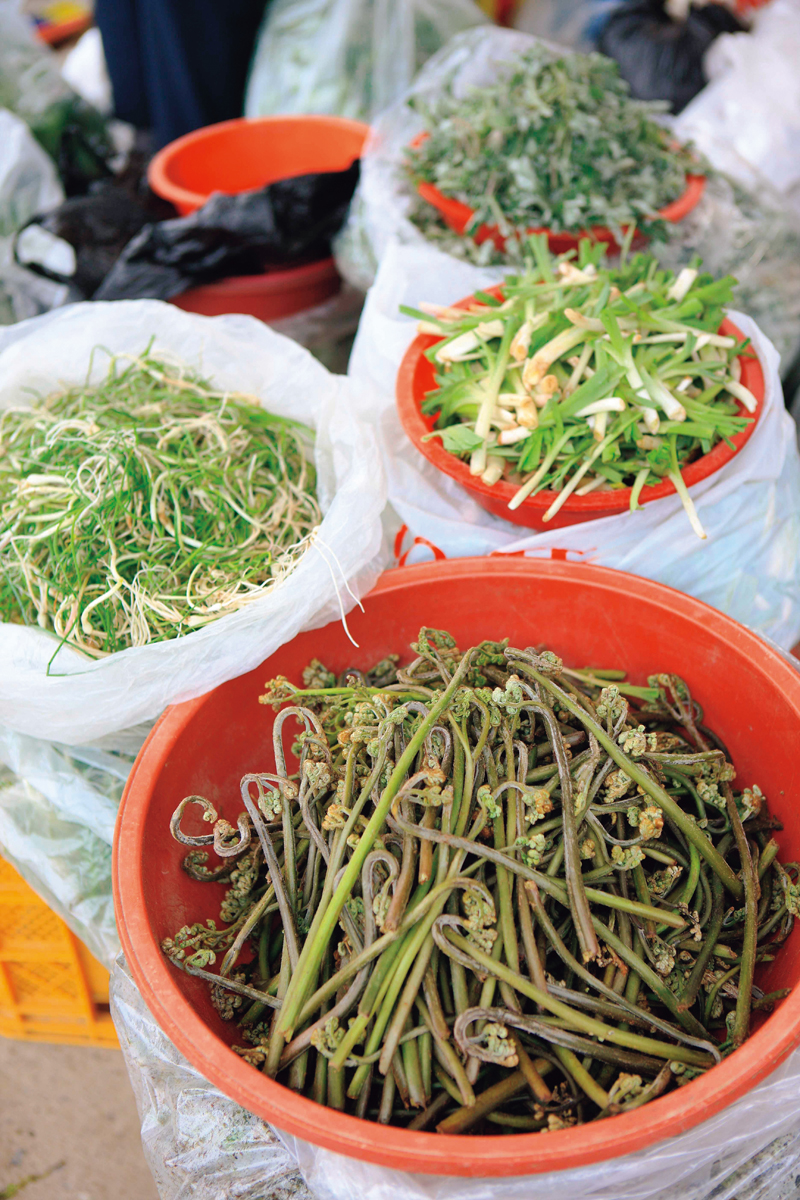
By late March, spring greens appear in abundance nationwide. At traditional markets, vendors can frequently be seen spreading out freshly foraged greens at their stalls.
ⓒ Korea Tourism Organization
Compared to namul jeon and kimchi, which required considerable time and effort, porridge (juk) was a far more practical choice during the lean spring season, offering a greater quantity of food with minimal ingredients. While namul jeon were usually made with one main vegetable, in the case of porridge, a variety of greens were thrown into the pot together and simmered at length to bulk up the meal.
Boncho jeonghwa — a compilation of excerpts from existing texts on medicinal plants — notes that shepherd’s purse porridge “brightens the eyes and benefits liver health.” Coastal hogfennel porridge is also mentioned in Domun daejak (literally, “smacking one’s lips at the butcher’s door”), a text written by Joseon scholar Heo Gyun (1569–1618) detailing local specialties and delicacies across Korea’s traditional eight provinces.
Spring greens also found their way into rice cakes. A prime example still enjoyed today is mugwort rice cake. While mugwort is now primarily appreciated as a flavor and color enhancer, its original purpose was to add bulk and reduce the amount of grain required. The more mugwort was added, the less grain flour was needed. Rice cakes were essential for ancestral rites and traditional holidays, but they also served a highly practical role of satiating hunger during the lean spring season.
The culinary culture of spring greens extends far beyond seasonal food. It embodies collective knowledge: how to observe the rhythms of nature, distinguish the edible from the inedible, and share scarce resources. Knowing exactly when wild greens sprouted, how to prepare them to reduce bitterness, and how to cook them to provide the greatest nourishment represents a wisdom built through generations of experience.
Today, spring greens are eaten as a seasonal pleasure, beloved for their fragrance and unassuming taste. Beneath this modern appreciation, however, lies a deep memory of survival. Spring greens were never a symbol of abundance but a means of enduring scarcity. A modest bowl of aetangguk or a simple serving of rice cooked with greens still echoes a resilient culinary tradition born out of the hardships of spring famine.
 한국국제교류재단