Follow the customs or be more original? When planning their weddings, many brides and grooms findthemselves having to walk a fine line between tradition and individual . Since it is a matter directlylinked to wedding expenses, it can be quite an agonizing dilemma.
These days, couples are increasinglyopting for a more intimate weddingwith close friends and family membersat an outdoor venue rather than a runof-the-mill wedding hall.
Until the late 1990s, when I got married, it was the normfor young people to live with their parents until marriage.Unless there was an unavoidable reason, such as school orwork being too far from home, marriage was considered the onlylegitimate reason for moving out of your parent’s house. Back then,I often met people who wanted to get married just for the sake ofescaping parental control.
Times may have changed, but it is still every bride’s wish to look her most beautiful onher wedding day with the perfect make-up and a glamorous wedding gown.
We are living in a different age now. I know a fair number ofsingles who are living alone. There is no fixed age at which peoplechoose to venture out on their own since it is possible once theyachieve financial independence. This may have played a part inthe changing attitudes toward marriage among young people whoincreasingly view it as an option, not a must. The concept of “theright age to marry” is also diminishing.
There are also quite a number of people who want to marrybut cannot, or will not do so, largely because of the hefty weddingcosts. A wedding can be a heavy burden for most young couples;they either have to work like a dog to save up enough money, orbe blessed with well-off parents. According to Statistics Korea, theaverage cost of marriage in 2015, including housing, amounted to250 million won (approximately US$218,000).
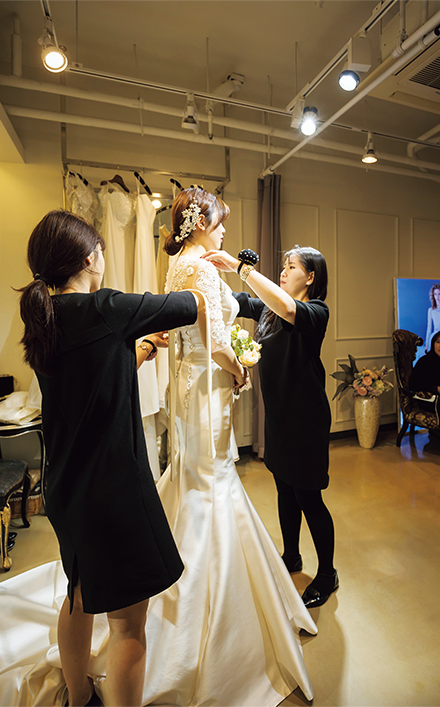
Times may have changed, but it is still every bride’s wish to look her most beautiful onher wedding day with the perfect make-up and a glamorous wedding gown.
Hurdle in the Road to Marriage
Hurdle in the Road to MarriageA man and a woman meet, fall passionately in love, and decideto tie the knot. The romance ends here! Once the parents meet andthe wedding date is set, reality hits hard. Looking for the right venueand finding the perfect wedding dress — there is an endless list ofthings to do.
Adding to the burden is the preparation of honsu, which aregoods needed for marriage and gifts exchanged between the familiesof the bride and the groom. The gifts sent by the bride’s familyto the groom’s family are called yedan and typically include beddingfor the parents-in-law, silverware, clothes, a handbag, and money.The range of items varies depending on the family’s financial situation.The gifts the groom’s parents give to the bride are calledyemul. They are placed inside a wooden chest called ham, togetherwith the honseoji (marriage letter thanking the parents for givingtheir daughter’s hand in marriage), and sent to the bride’s family. Afew days before the wedding, the groom’s friends carry the chest tothe bride’s house, where the family greets them with a feast of foodand drink.
The gifts inside the chest include jewelry, a watch, a handbag, apurse, clothes, cosmetics, and shoes, varying according to familycustoms and affordability. To display their wealth, upper-class familiesmay include pricey items such as fur or a leather jacket andhigh-end jewelry. This custom of exchanging gifts and money can,at times, become a source of conflict due to a mismatch of expectations;when relatives put in their two cents, adding fuel to the fire,it can cause a fall-out between the two families. A tradition that issupposed to be observed with decorum and respect becomes theseed of discord, and in the worst case, the wedding may even becalled off. To prevent such a calamity, some people choose not toexchange gifts or money at all.
The biggest concern for couples is finding a place to live. In thepast, the house was generally regarded the responsibility of thegroom while the bride prepared the necessary household itemsthat went in it. This hasn’t changed much today, but more couplesare sharing the burden due to the exorbitant housing costs.
This custom of exchanging gifts and money can, at times, become a source of conflict due to amismatch of expectations; when relatives put in their two cents, adding fuel to the fire, it can cause afall-out between the two families.
Jewelry Trends
Back when I got married, parents were usually the major decisionmakers when it came to choosing marriage items and gifts.Neither the bride nor groom had much say in the choice of watchand wedding ring. Nowadays, couples are not so willing to meeklycomply with the wishes of their parents or in-laws; they tend toactively voice their opinions, wanting to make their own choices. So,some parents give money to the bride and groom, leaving them tobuy whatever they want.
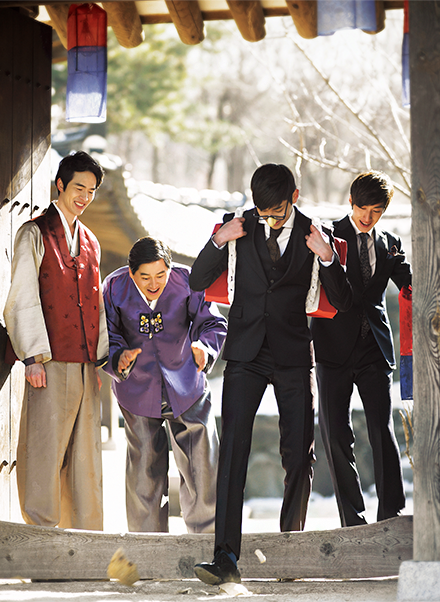
The traditional custom of the groom’s friends carrying the ham (chest filled withjewelry and other gifts for the bride) and “selling” it to the bride’s family hasnearly disappeared.
As for the wedding gifts for the bride, three, five, or seven jewelrysets were common in the past. The basic set is a diamond set consistingof a diamond ring, earrings and necklace, as well as a gold,sapphire, or ruby set. But most brides these days prefer a simplediamond or pearl set, which can be worn casually, rather than coloredgemstones that tend to look old. Some also prefer to spend allthe money on a larger diamond ring, but flashy, over-the-top pieceswith a giant rock are a thing of the past. Practicality has become thegeneral trend as brides prefer jewelry that is more appropriate foreveryday wear over pricey pieces that will end up in the safe or deepinside a wardrobe. For example, some couples prefer to exchangejust a simple Cartier wedding band. Pearls were shunned in thepast as they were thought to resemble teardrops, but now they arein vogue again due to the preference for jewelry that can be worncasually. According to jewelry industry statistics, around five millionwon on average is spent on jewelry and watches for wedding gifts.Tiffany & Co. and other top brands account for the major share ofwedding ring sales in Korea. Those who are less affluent crowd theJongno 5-ga jewelry district in the old city center of Seoul lookingfor “Tiffany-style” wedding bands.
Whereas it was customary in the past for the bride and groomto choose watches from the same brand and of similar design andprice, this is not the case anymore. Interestingly, brides today tendto place greater importance on watches compared to the past whenthe focus was more on rings or necklaces. A Rolex watch used to beby far the most popular wedding gift for grooms. But this is no longerso, as people now have greater access to diverse brands. Onereason why luxury watch sales in Korea are among the highest inthe world is their demand as wedding gifts.
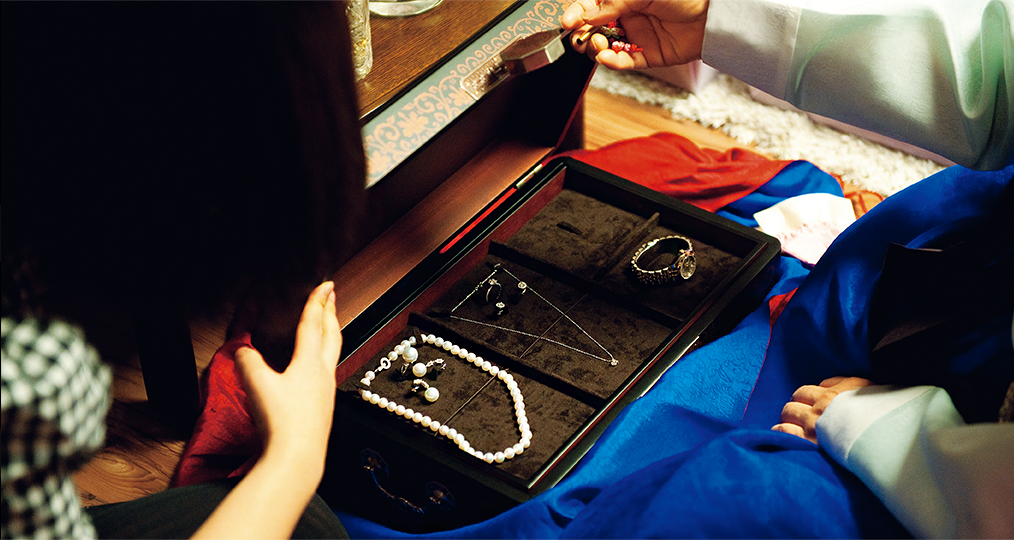
The traditional custom of the groom’s friends carrying the ham (chest filled withjewelry and other gifts for the bride) and “selling” it to the bride’s family hasnearly disappeared.
Bridal Dress and Ceremony
Western-style weddings have become the norm in Korea, but thetradition of pyebaek (bride’s formal greetings to her parents-in-law)is still observed after the ceremony. In the past, the bride left herparents’ house after the wedding and went to her in-laws’ and performedthe rite there, but now this is done right after the ceremonyat the wedding hall where a separate room for the rite is prepared.The bride changes from her Western-style wedding gown intoKorean traditional wedding costume and makes deep bows to herin-laws, and then offers them liquor. In return, her in-laws give herchestnuts and jujubes, which are symbols of fertility.
As all eyes are on the bride at the wedding ceremony, the weddingdress naturally attracts great attention. Wedding gowns with along majestic train are passé; now, rather than overblown dresses,brides prefer designs that allow them to express their individuality.When consulting with designers, instead of relying solely on theiradvice, many brides these days come equipped with a pretty clearsense of what they want, thanks to ideas and information from theinternet and social media. The current trend is that there is no particulartrend. What’s also interesting is that the boundary between everyday fashion and wedding fashion is blurring under the growingpreference for bridal dresses that can be used later. Lee Myungsoon,owner of a wedding dress shop that has been in operation for27 years in Cheongdam-dong in southern Seoul, says, “I switchedfrom renting out to selling some time ago. Brides no longer wantgrand and ornate wedding dresses that they will only wear once, butlook for designs that can express who they are.”
The change in wedding dress trends is closely related to changingtrends in venue. People are increasingly opting for a more personalizedwedding held outdoors in the countryside, a garden, ora house rather than the one-size-fits-all wedding hall. Even at awedding hall, couples wish to create an intimate atmosphere andexpress their personality through the interior decoration and attire.
WEDDING PLANNERS’ EVOLVING ROLE
Professional wedding planners first appeared in Koreasome 20 years ago and they now play an indispensable rolein the marriage process. From choosing the wedding venue,wedding dress, make-up, photographer, and wedding giftsto planning the honeymoon, busy couples entrust everythingto the planner instead of doing the legwork themselves.
Lee Mi-ja, director of the wedding consulting companyMarry On Wedding, based in Gangnam, Seoul, says, “Peopleare usually recommended wedding consulting firms by amarried acquaintance or family member, but they can alsocheck the company website for the vendors it uses and thewedding dress or jewelry brands it is affiliated with to determinethe level and quality of service. Consulting firms willtry their best to accommodate the clients’ wishes and workwithin their budget. After all, that is our role.”
Lee, who has been in the business for 10 years, says shesees increasing polarization in the industry, like any other.“The middle range has decreased drastically. Now, it’seither an extravagant wedding or a minimalist, frugal wedding.For example, in the case of wedding rings, except forthe very few who purchase several pricey gemstone rings,most settle for either a simple platinum or 18-carat goldwedding band. There’s even a brand that specializes in couplerings.”
Planners typically work on a project for several months,during which time they constantly communicate with theirclients to find out their preferences and tastes, and guidethem in making decisions. At times, they may play the roleof counselor because even a minor disagreement between the bride and groom or among family members can leadto a crack in the relationship. “Sometimes a couple willexpress their gratitude before leaving for their honeymoon,or I will receive a little token of appreciation. It’s thesemoments when my job is particularly rewarding,” says Lee.“On the other hand, it breaks my heart to see a couple breakup right before the wedding. I hope that the role of weddingplanners will expand to include not only finding the perfectwedding dress or recommending vendors, but also offeringadvice on marriage, in the future.”
A growing number of Korean universities are establishingwedding-related departments since wedding planningas a profession is expected to evolve further in a positivedirection.
Simple Wedding, Luxurious Honeymoon
In the past, the wedding was an occasion for the parents toannounce to relatives that their child had grown up and was startinga family, and in some aspects, to display the family’s wealthand stature. Therefore, the higher the social standing and financialmeans, the more lavish the wedding. Perceptions are changing,though, as the children of this generation become parents. Acceleratingthis change is the belief among young couples that they,not their parents, should be in charge of their own wedding; theirfocus is on content rather than formalities, on personal preferencesrather than custom. Unlike typical weddings of the past whereguests flocked to the wedding hall, placed their monetary gift atthe reception desk, and hurriedly exchanged hellos while not evenbothering to attend the actual ceremony, many couples today opt fora more intimate wedding where they share the special day with asmall group of family and friends celebrating the beginning of a newchapter in their lives.
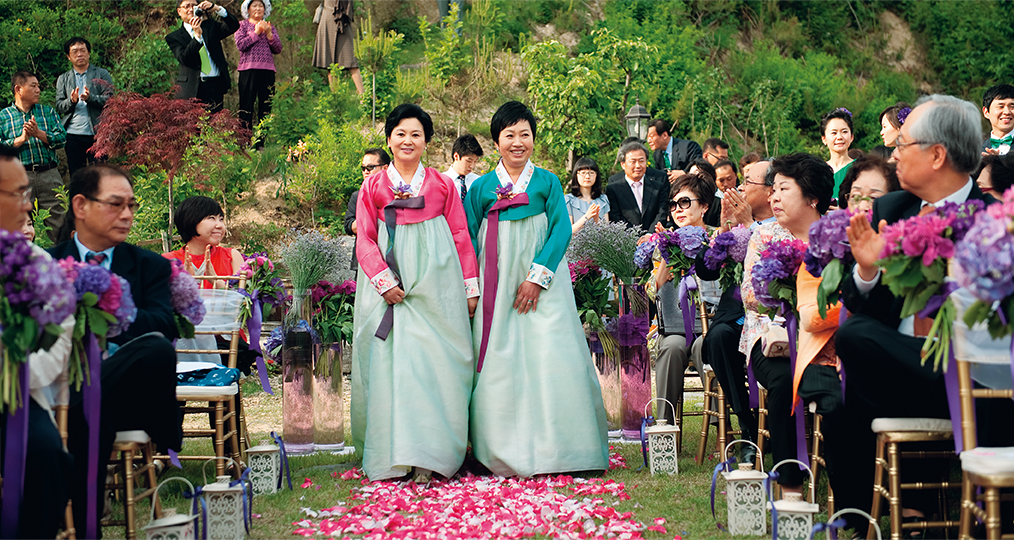
At Western-style weddings in Korea, it is common for the mothers to enter the hall ahead of the bride andgroom, and light the red and blue candles on the altar before taking their seats.
After the wedding ceremony, the bride and groom change from Western-style wedding clothes into traditionalwedding costumes for the pyebaek rite; they make deep bows to the elders in the groom’s family,who in turn throw chestnuts and jujubes, symbols of fertility, into the bride’s skirt which is held out in front.
There is also a growing tendency to keep the wedding simple andinstead splurge on the honeymoon. Lim Mi-sook, editor-in-chiefof The Wedding, says, “There’s this funny story that until recently,the Maldives was the most popular honeymoon destination amongnewlyweds in Korea because of an ad that said the island nationwas in danger of sinking in a few years. Hawaii is hot these days.Korean couples like to indulge a little when it comes to their honeymoon.They seek luxurious resorts with upscale facilities, particularlya pool villa.” Couples these days also prefer to plan their owntrips instead of following the wedding planner’s itinerary.
Lee Yoon-jungEditor-in-Chief, Noblesse
Ahn Hong-beom, Kim Dae-hyunPhotographers
 한국국제교류재단