Hanji has secured a vital place as an expressive medium in contemporary craft and design. It imposes no limits on form or detail, conveying artists’ intentions with a flexibility that few materials can match. Transcending its status as a cultural inheritance, hanji has been reinterpreted by contemporary artists to beautifully permeate the rhythms of modern everyday life.
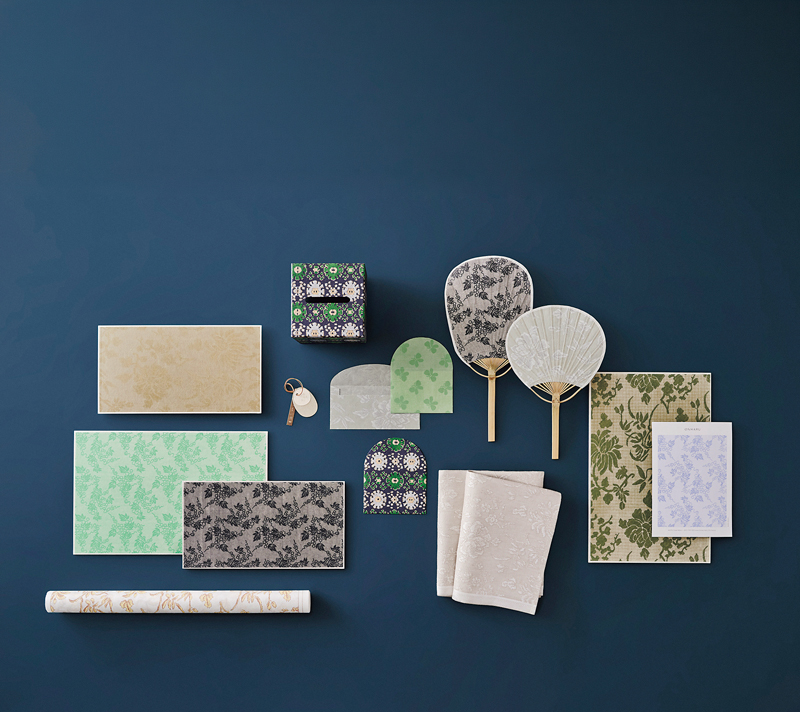
Hanji products created through a collaboration between ONJIUM and the graphic design firm studio fnt. Traditional Korean textile motifs were first transformed into digital patterns and then printed onto hanji using a silkscreen technique.
Courtesy of ONJIUM, Photo by Kim Jandee
In studios and workshops across the country, it’s hard not to notice that hanji has quietly made a comeback. The simplest explanation is that the paper is an extraordinary medium and material. Examining its production reveals an unparalleled level of devotion. Paper mulberry trees (dak) are planted and regularly pruned, and separate crops are cultivated solely to produce the lye water used in processing. As winter approaches, the harvested mulberry bark is steamed, dried, boiled, and rinsed, condensing a season’s worth of labor into a single sheet of paper.
Every material an artist works with carries the “soul of its substance” on its surface, and hanji is no exception. Run your hands across it and study it with your eyes; its quiet dignity speaks for itself, stirring an urge to create something worthy of it.
INFINITE POTENTIAL
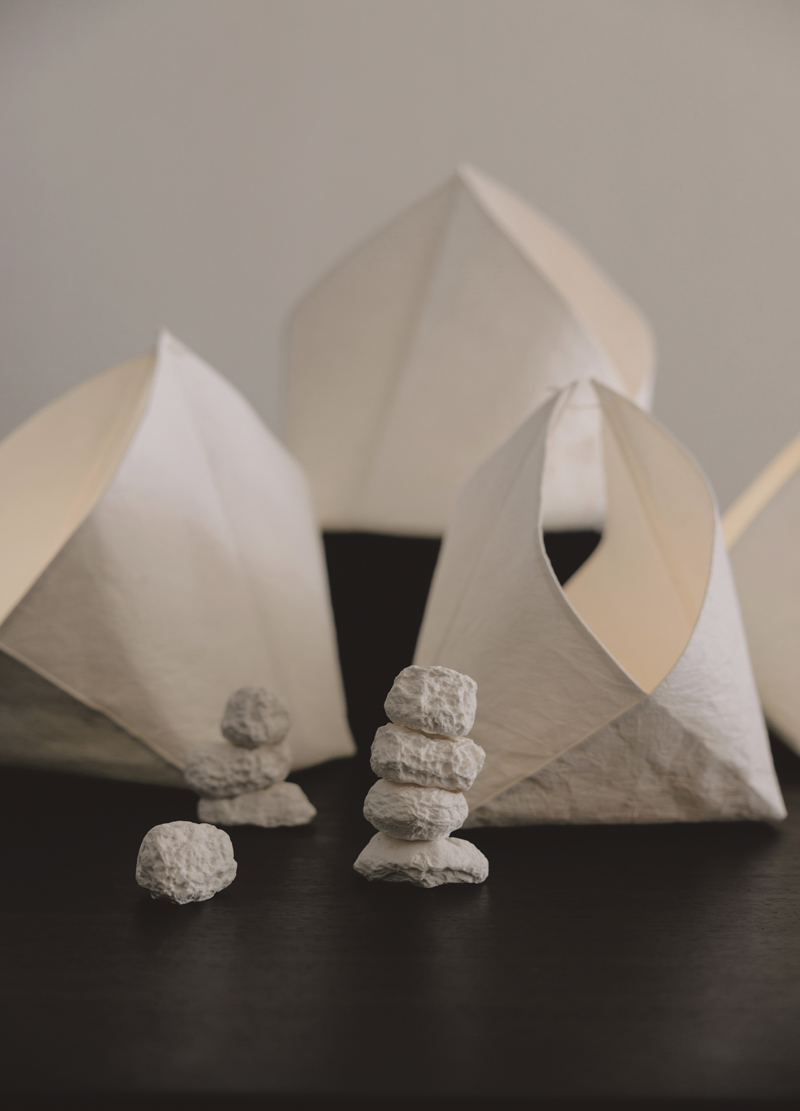
Released in 2026 by lifestyle brand hinok in collaboration with textile artist Ko Somi, this New Year edition features a hanji fabric basket made from layered sheets to create a sturdy and flexible texture. The accompanying Wish Stone, crafted from shaped hanji, draws inspiration from the traditional Korean custom of stacking stones to wish for happiness and good health.
Courtesy of hinok
Ko Somi is among the artists most effectively demonstrating hanji’s expansive possibilities. Her diverse portfolio includes screens, lighting, objects, and textile paintings, a range that might seem surprising for a medium most people associate with rectangular, neatly pressed sheets. This versatility rests on hanji yarn — a thread spun from paper of her own invention. Ko first cuts the paper into long strips along the grain of its fibers, then hooks them onto a spinning wheel and carefully spins them into thread. Initially, the thread frequently snapped, but by applying natural starch and spinning slowly, she gradually coaxed the strips into a durable yarn. She named the resulting thread “Somi-sa,” combining her name and the hanja (Chinese characters used in Korean) for “thread.”
The works Ko creates are remarkably varied, with her lighting pieces telling examples. She begins by bending and twisting wire into spherical forms and then laces them densely with Somi-sa. In the next step, this wire-and-thread skeleton is dipped into a vat of dissolved dak fiber, and every gap between the two different materials is filled with a soft paper pulp. Repeated several times, the process builds up a substantial “skin” of paper over the spherical body; once a bulb is placed inside, it emits a warm, subdued light.
The paper thread also finds its way into curtains, painstakingly crocheted into panels. Architect Byoung Soo Cho, known for his affinity for earthy, warm textures, is an admirer and has incorporated many of them into his projects. Compared to curtains of linen or silk, they are decidedly thicker and more intimate with a pleasantly rough texture. Textile painting is another hallmark of Ko’s practice. She builds canvases by layering thick sheets of hanji onto wooden boards, then covers them with crocheted “sweaters” made from the same spun thread. When parts of these sweaters are painted with blue pigment or traditional ink, the colors harmonize naturally with the mellow, undyed paper underneath.
More recently, Ko has expanded into installation art. At the 2025 Cheongju Craft Biennale, she drew considerable attention for a piece featuring Somi-sa twisted with silver thread — traditionally used for embroidery on hanbok — to create a dancing “fiber coat,” displayed atop a broad sheet of traditional floor paper.
“There are no limits to what you can make with this material,” Ko says. “You can stand it upright like a tree or hang it on a wall like a painting. Add silver thread, and it sparkles. The possibilities are simply endless.”
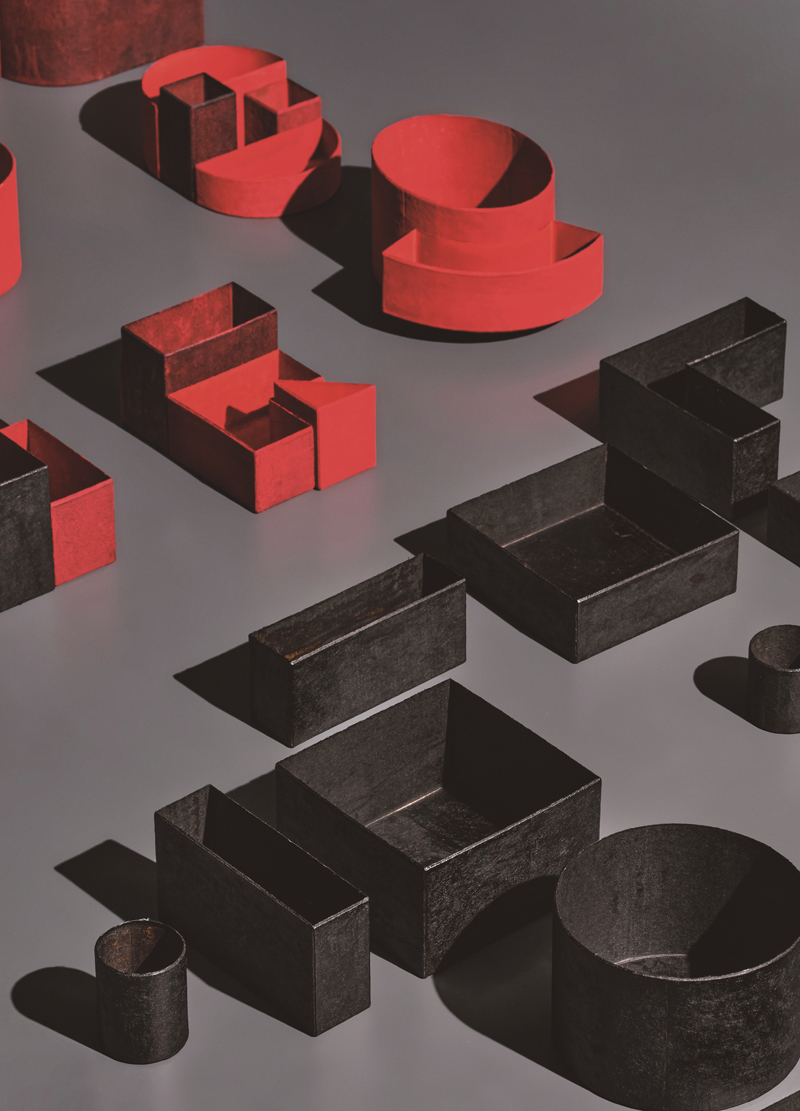
Inspired by Hangeul, Namgwon Lyu reinterprets the distinctive typography of modern Korean publications onto lacquered surfaces. These jitae chilgi works are made by applying lacquer to hanji, creating objects that are lightweight yet highly water resistant.
Courtesy of Namgwon Lyu
FROM FLAT TO SOLID
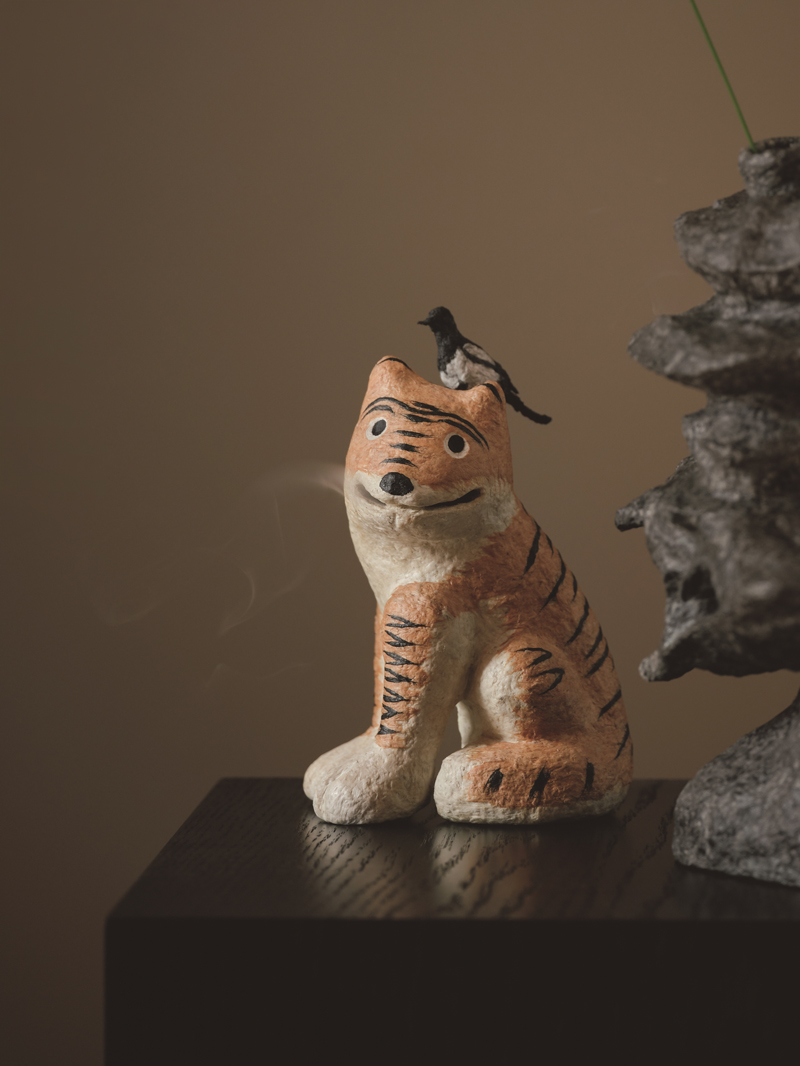
Presented in the YÉOL Foundation’s Nature, As It Is exhibition, “The Magpie and Tiger Incense Burner” is a playful piece by master artisan Park Gap-soon. Inspired by the classic magpie and tiger motifs of traditional Korean folk paintings, the burner is cleverly designed to release incense smoke directly from the tiger’s mouth.
Courtesy of YÉOL
While Ko has successfully expanded what hanji can do in two — and occasionally three — dimensions, Jungin Lee works with the material entirely in three dimensions. Lee studied woodworking and furniture design at Hongik University, and her recent work “A Soft Landscape” takes the form of a sofa that, at first glance, resembles carved white marble.
She began by tearing sheets of hanji into approximately three hundred small pieces, which were then bonded together with flour paste, before she stacked and pressed over a hundred of these composite paper panels into the shape of a sofa. The resulting work, sturdy enough to comfortably seat a muscular athlete, was shortlisted for the 2025 Loewe Foundation Craft Prize.
This unexpected strength counters a common misconception about hanji. In historical K-dramas, characters frequently poke holes through papered doors to peek inside, leading many viewers to assume that hanji is fragile, which is far from the case. Bonding even two or three layers together significantly increases its strength, making it highly resistant to tearing and flexing. This exceptional durability is linked to its production method. Unlike Japanese washi, made primarily with the twin-screen method (ssangbal in Korean) to form two sheets simultaneously, hanji relies on the single-screen method (oebal). By shaking the frame in all four directions, fibers are laid in a grid-like pattern resulting in paper that withstands rigorous use.
LACQUERED AESTHETIC
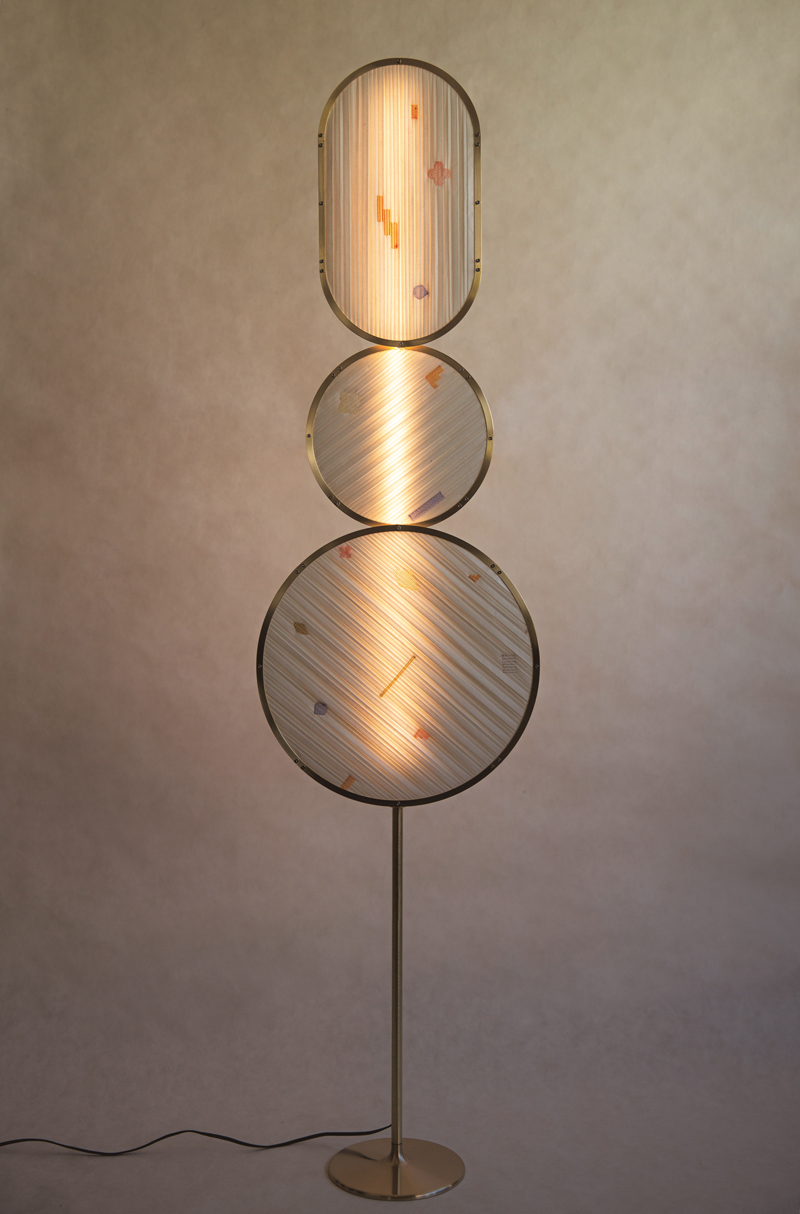
Inspired by the paper-covered windows of hanok (traditional Korean houses), lighting designer Jungmo Kwon creates illumination works using hanji, which is well-suited for expressing subtle gradations of light and shadow. As seen in “LF03_em,” Kwon expertly alters the paper’s translucency and light diffusion by folding it into pleated patterns or carefully layering sheets.
Courtesy of Jungmo Kwon
Park Gap-soon’s works exude a whimsical charm that would make them perfectly suited as props in an animated film like KPop Demon Hunters. Frogs, pumpkins, insects, and tigers — familiar motifs from minhwa (folk paintings) or chochungdo (paintings featuring plants and insects) — are brought to life as small figurines.
Park, who discovered traditional hanji craft in 1999, gathers discarded books or hanji scraps to serve as her base material. She boils the paper in lye water, rinses it clean, and then either tears it finely or pounds it in a mortar, mixing it with whole-wheat paste to create a sticky pulp. From this mixture she builds the form, applying layer upon layer of paper pulp over armatures or molds to achieve the desired shape. Natural materials like persimmon tannin and agar seaweed provide the color, and lacquer is often added as the finishing touch. It was works like these that earned Park the title of Artisan of the Year in the 2025 YÉOL × Chanel Project awards for craft excellence.
When used in conjunction with hanji, lacquer opens up an entirely different set of aesthetic and functional possibilities. Lighting designer Jungmo Kwon delicately folds hanji into rhythmic, flowing forms, or coats it in black lacquer, combining the resulting paper with various metal armatures. Each completed piece transforms into a lighting fixture that transmits light differently, depending on the treatment of the paper.
Namgwon Lyu is another notable artist who works in a field called jitae chilgi, a technique where objects are formed from hanji and then finished with lacquer. The repeated application and drying of lacquer creates unexpected textures and profound, mysterious shade variations. With their rich, layered colors, his pieces have become highly sought after by contemporary craft collectors.
Through the boundless imagination of contemporary artists, hanji continues to evolve far beyond its traditional use, adding new pages to its already rich history.
 한국국제교류재단