Korean crafts are creating a new paradigm. The use of non-traditional tools and materials is dispelling the conventional notion that craftworks are solely made by hand. The redirection is aligning crafts to today’s environmental challenges, as we see through the works of four notable artists.
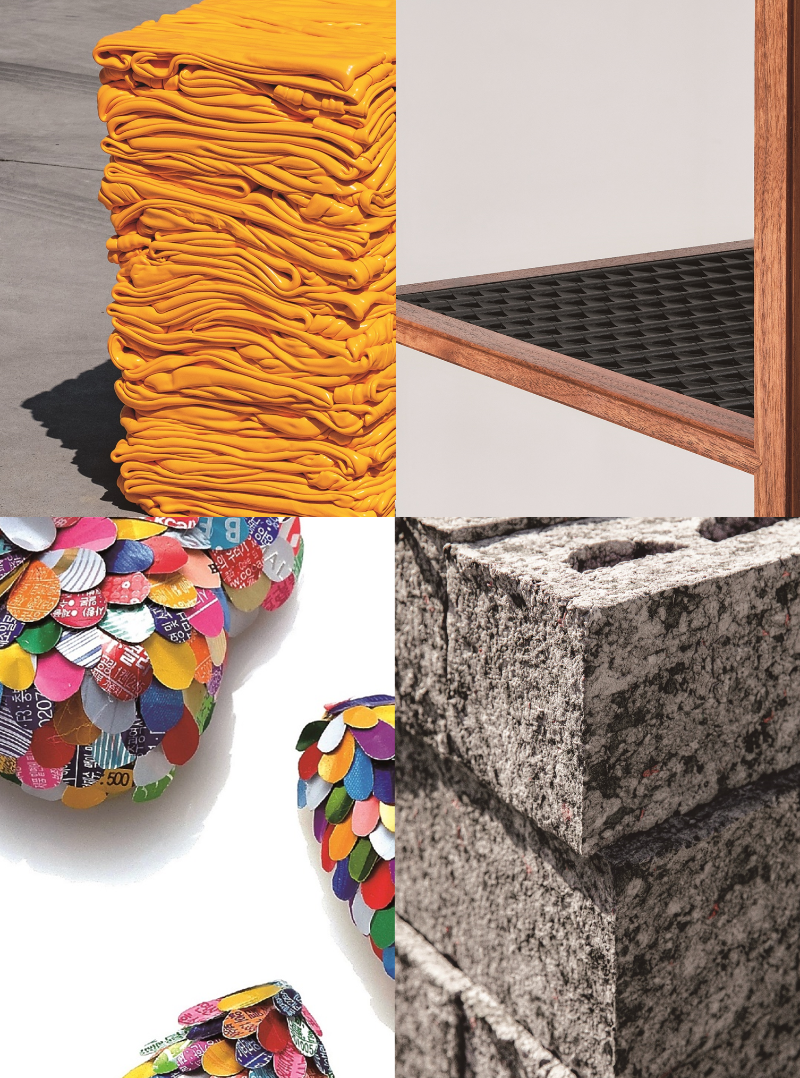
(Clockwise from left) “AFF Collection” of Youngmin Kang of 1s1t, Ryu Jong-dae’s “D-SABANG,” Lee Woo-jai’s “PaperBricks,” and Han Eun-seok’s art jewelry.
Courtesy of the artists
Korean crafts have carved out a new niche, thanks to social media. Platforms such as Instagram and Facebook are rife with photos not only of new works but also the process of making them. Even government agencies in the arts and culture field upload videos of artists sharing their know-how at demonstrations open to the general public.
The swerve from the traditional does not stop there. The sphere of craft is being expanded, and the exploration of new possibilities is multiplying. The craft community is answering the call of the times by adopting non-traditional materials and cutting-edge tools. Plastic, industrial waste recyclables, and high-tech materials can now be found in studios. Thus, the lexicon of contemporary Korean crafts is no longer cast only in porcelain, metal, wood, and fabric.
Each of the four artists profiled here engages in activities that are globally relevant and found in social media, as they explore the significance of their working methods and ways to sustain humankind.
Reinterpreting Material
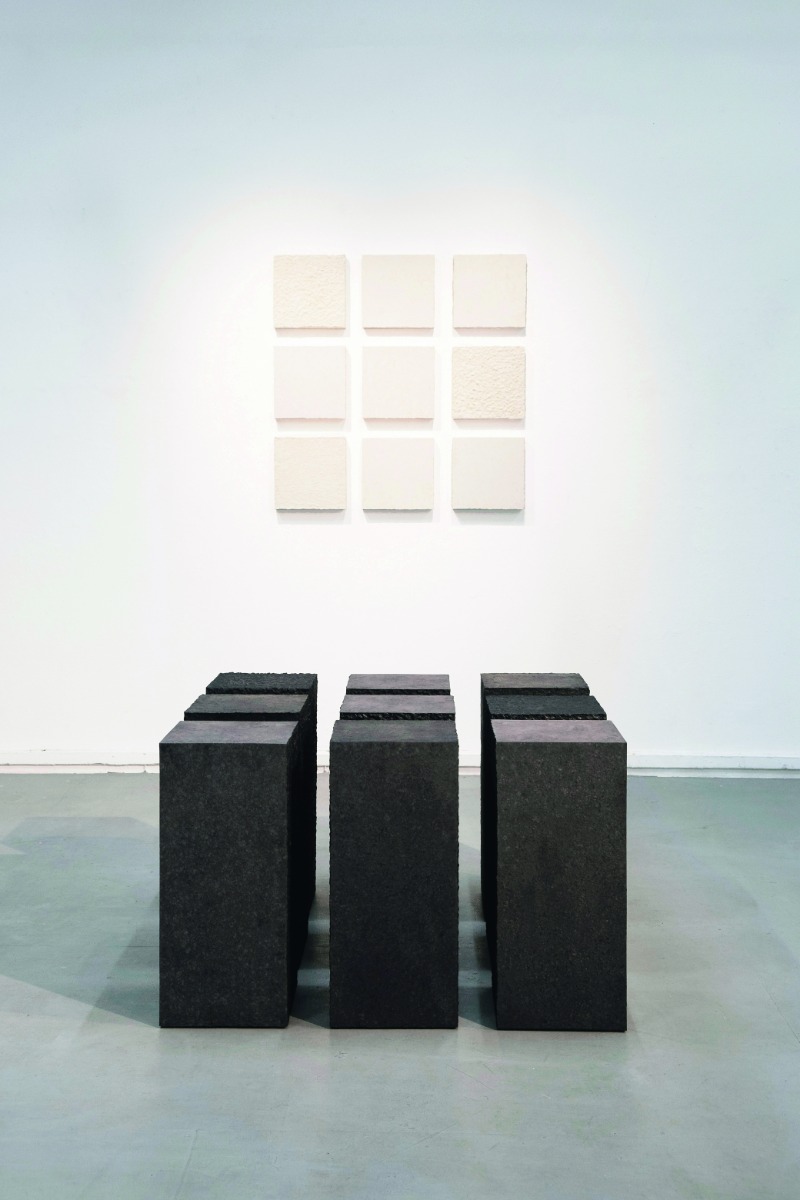
By transforming waste newspapers into sculptures, Lee Woo-jai challenges preconceptions about the physical properties of paper.
© Lee Woo-jai
At first glance, the waist-high rectangular pillars appear to be chunks of cement, but the irregular texture of the surface seems to emanate warmth. The black ones make you wonder just what they are made of. These pillars constitute Lee Woo-jai’s installation “In Presence.”
Turning his attention to old newspapers, Lee set out to discover an aesthetic order through paper. At the same time, he delved into synesthesia by combining vision and tactile sensation. Paper can be soft or stiff, light or heavy. Lee challenges these preconceptions, posing the question, “What is the true nature of paper?”
The texture of the surface varies according to the ratio in which water, adhesives, and pulp are mixed. After numerous trials, Lee discovered a formula that produced the desired effect. The intent was to revitalize discarded newspapers, but that did not mean preserving their words and pictures; instead, he pulverized them.
Lee works emit a calm and modest mood. Newspapers from around the world are neutralized into a common material. The political, social, or economic gravity of the news they conveyed is no longer visible. News reports transformed into an artwork no longer make any noise.
Thinking Outside the Box
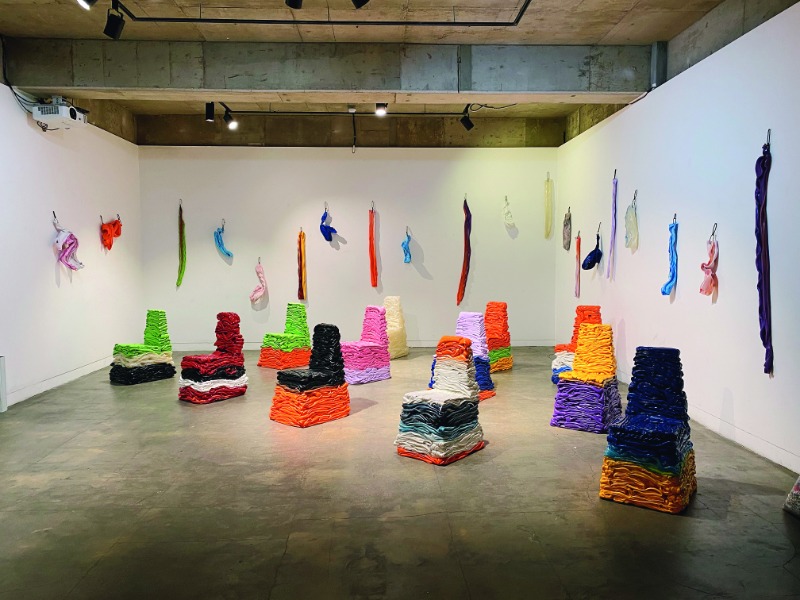
1s1t’s exhibition “Reborn,” held in December 2020, featured Youngmin Kang’s linkage of art and industry with the use of waste PVC to make furniture. The concept sparked a surge of orders from abroad.
© 1s1t Youngmin Kang
With vivid colors and wavy shapes, the works of Youngmin Kang resemble heaps of fabric or leather, but you cannot be sure what they are made of. It is amazing to see how they almost seem to defy gravity, standing tall without collapsing.
The first question that occurs when encountering Kang’s work “Platubo Collection AFF Chair” is: How on earth did he make those chairs?
Kang is a member of 1s1t, a group of artists whose work traverses between architecture, engineering, design, photography, and fine art. His main material is plastic waste that is generated when an unwanted color is formed in the process of applying polyvinyl chloride (PVC) or polypropylene (PP) to steel pipes to prevent rust.
While visiting a plastic pipe factory, it occurred to Kang that the waste could be used to fill variously shaped molds. At 200 degrees Celsius, this waste material becomes highly malleable, like dough, before stiffening at an ambient temperature. This new perspective changed the process of plastic waste handling into a process of artistic creation. Wearing heat-resistant gloves, Kang piled hot plastic, pouring out of the machine like ice cream, into molds made of steel or wood to produce pillars and chairs.
One of the virtues of Kang’s works is that they help enhance public appreciation of recycling waste to protect the environment. It is estimated that it takes PVC up to 500 years to decompose naturally. Considering that plastic was invented around 100 years ago, no plastic has naturally decomposed yet. The factory Kang works with used to discard about 50 tons of PVC waste annually. The artist has been altering the final destination of the industrial sludge.
Recycled Cans
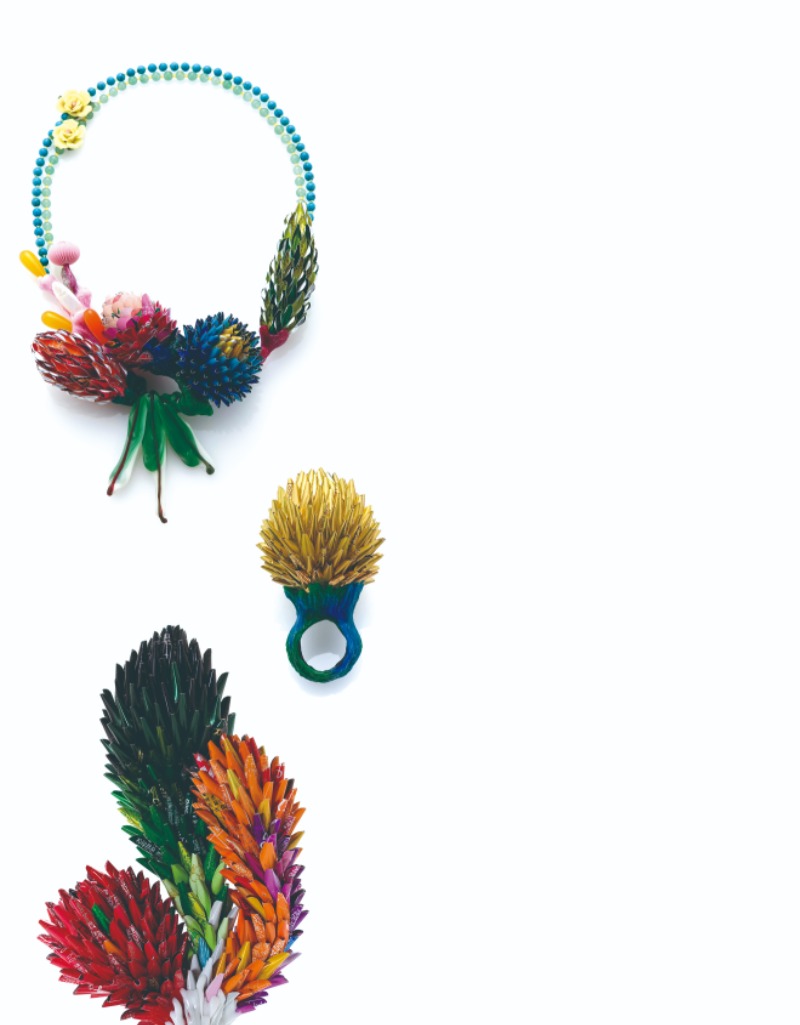
Han Eun-seok, a longtime maker of gold and silver accessories, jumped into avant-garde art in 2020, using aluminum cans and bioplastic to help curtail waste dumped into the environment.
© Han Eun-seok
Accessories design has long been an art form projecting the stature and privileges of the ruling class onto tangible s. Up until the mid-20th century, it was a field where creativity was practically moribund. Eventually, a new cohort of accessory designers began to confront the old traditions, bending the parameters of this centuries-old genre. Han Eun-seok is one of them. Her work shows that everyday materials like aluminum cans and bioplastic wastes can be transformed into attractive accessories.
Han uses a very basic working method: disassembly, assembly, arrangement, and combination. The fonts, marks, and colors printed on recycled cans are accommodated as design factors. Red jewelry has the red color of Coca Cola cans, while gold-colored pieces came from beer cans. By using soda cans widely sold in Korea, Han indirectly reflects Korea’s popular culture.
These accessories stir thoughts of marine creatures such as corals, giving a glimpse of the artist’s world view. Han became serious about making accessories amid the pandemic in 2020. She believes that the global crisis triggered by COVID-19 was related to climate issues, including the rising temperature of the oceans. Turning recycled cans into beautiful jewelry became her way of fighting it. In this perspective, Han’s works, though not made of expensive raw materials, are a convincing representation of the current era.
Turning to High-tech
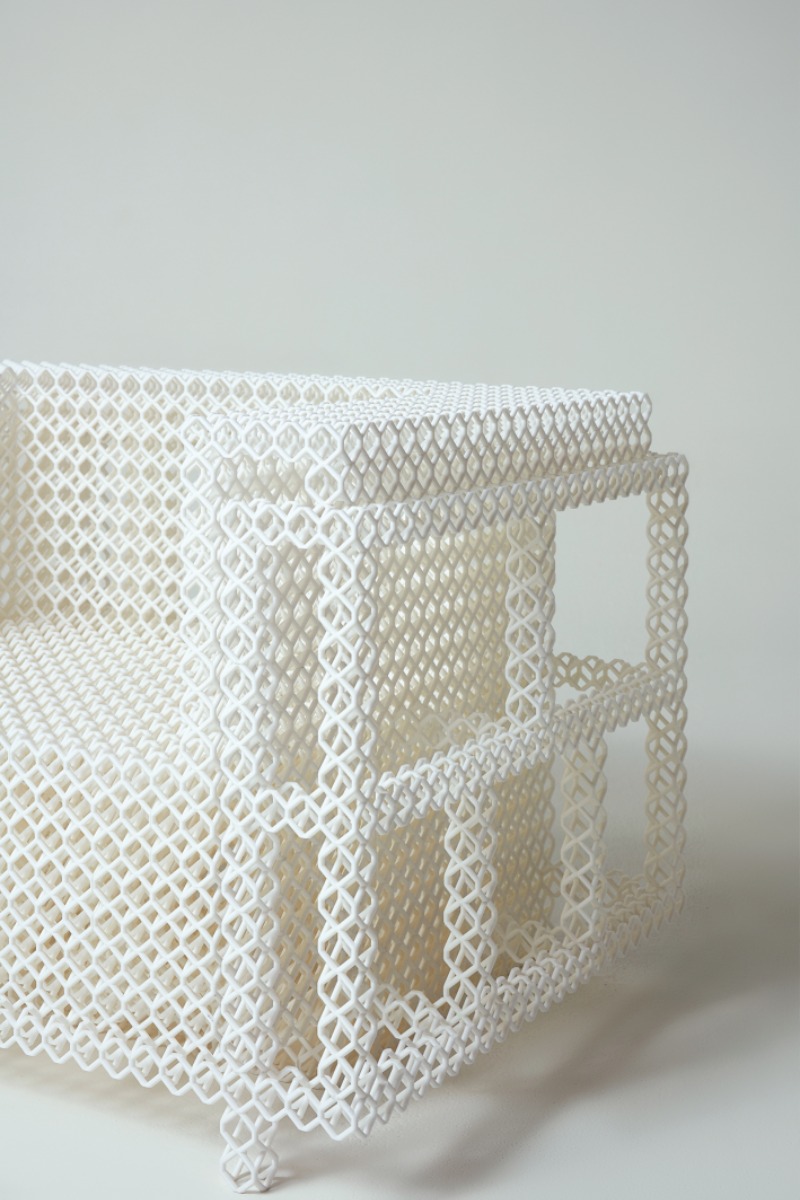
Ryu Jong-dae combines digital technology with contemporary materials toworks such as his bioplastic “Modern Modules.”
© Ryu Jong-dae
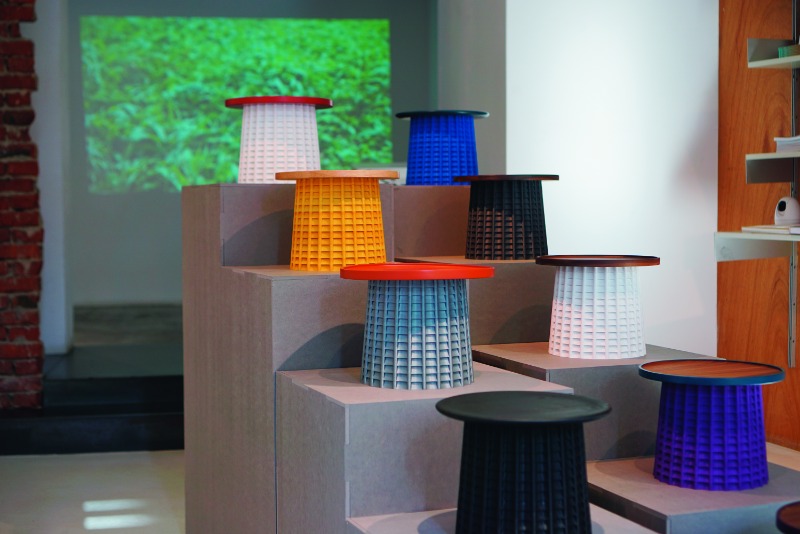
The “D-SOBAN” series, Ryu’s interpretation of Korean tray tables, consists of environment-friendly plastics formed in a 3D printer and ottchil, a traditional Korean lacquer.
© Ryu Jong-dae
With the advent of the new millennium, craftspeople and furniture designers have been trying to introduce 3D printing technologies into their works. While more and more artisans join the trend, Ryu Jong-dae’s works are particularly notable. One of his most famous works is the “D-SOBAN” series, which radiates the beauty of traditional tray-tables, called soban, crafted with new digital technologies. The slim, round top plate was made of walnut, and the barrel-shaped stem, inspired by traditional Korean roof tiles, was formed in a 3D printer.
“D-SOBAN” reflects the hybrid lifestyle of Koreans today, sitting on the floor at times in the traditional way and on chairs at other times. The height of the stem can be adjusted by digitally changing the input values in the printer, so the final work can either be a soban for the floor or a table used with chairs. The fact that 3D printing allows a palette of colors helps furniture designers give their creations a distinct personality for the post-postmodernism era.
Assembly and post-processing are important stages in Ryu’s works. 3D printers are not magic wands but they remove the hands-on effort and reduce costs. Like a child assembling Lego bricks, the artist puts together digitally made parts with those that went through sophisticated post-processing such as ottchil (lacquer work). He uses eco-friendly plastic materials made from corn starch. They are biodegradable and safe enough to be used for food containers because they do not generate hazardous substances such as endocrinal disruptors or heavy metals. By proactively introducing new technologies. Ryu has proven that craft is a genre calling for creative minds ready to take on challenges.
Artists are increasingly exploring new spheres of craft with non-traditional materials and new tools in response to the changing conditions of today.
 한국국제교류재단