Hanji, traditional Korean paper made from the bark of the paper mulberry tree (dak), was once an inextricable part of Korean life. Its wide range of uses — from paintings and calligraphy to books, household items, and furniture — led to the development of diverse hanji crafts. As a material used for a variety of purposes in traditional homes, it also became deeply embedded in Korea’s residential culture.
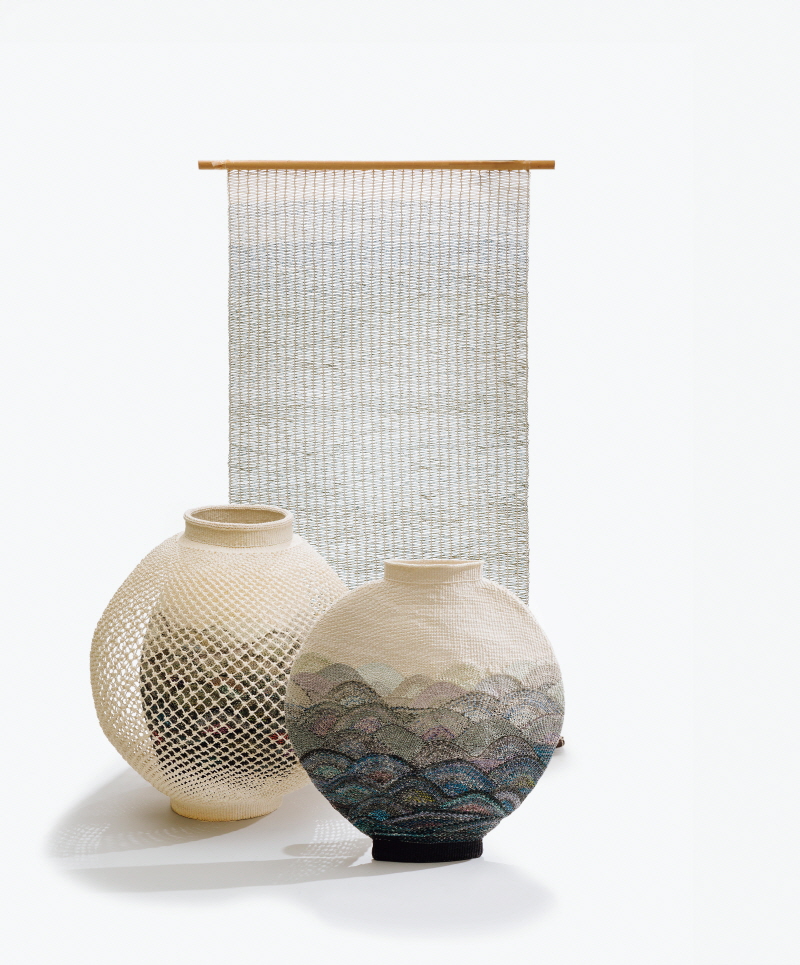
Featured in Encountering Spring Days: A Special Exhibition of Paper Through the Ages, held at the National Folk Museum of Korea in Paju in 2024, these two moon jars and the 153 cm long woven screen were created by master craftsperson Kim Seonae. The pieces showcase jiseung, a craft where hanji is cut into strips, hand-twisted into cords, and woven into vessels and other objects.
Courtesy of the National Folk Museum of Korea
Over a decade ago, I visited the Deutsches Museum in Munich, one of the world’s largest museums of science and technology, and had an unexpected encounter with a hanbok (traditional Korean garment) made entirely of hanji. It was my first time seeing everyday clothing made from Korean mulberry paper. Having previously only read about such garments in historical texts, I stood transfixed before it, overcome with emotion upon seeing one in a distant country.
Historically, hanji was used to make burial shrouds and garments for religious ceremonies. Annals of the Joseon Dynasty (Joseon wangjo sillok) frequently mention winter military uniforms stuffed with hanji, rather than cotton, being distributed to troops. Reportedly, King Sukjong (r. 1674–1720) even ordered that hanji clothes be supplied to itinerants so they could weather the freezing winters, a testament to the material’s surprising insulating properties. One might wonder about clothes made of paper, but considering that fabrics and socks woven from mulberry fibers are still sold today, hanji garments are an invaluable heritage reflecting the wisdom of earlier generations.
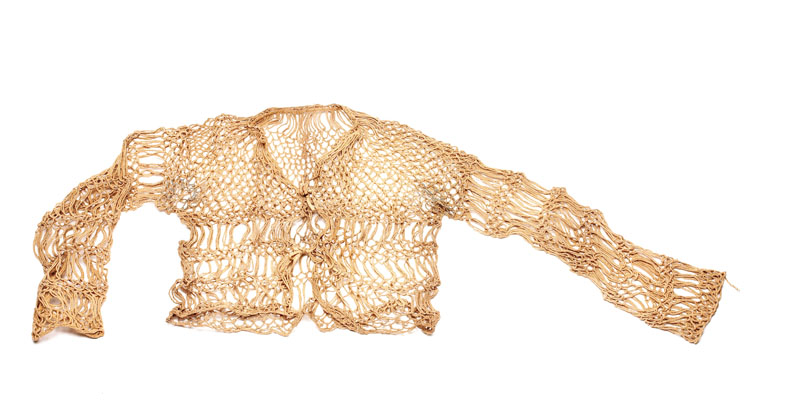
In the past, jiseung garments were sometimes worn to stay cool during the hot summer months. This piece, measuring 42 × 133.5 cm, is believed to have been produced after 1945.
ⓒ Wonju History Museum
ROOTED IN EVERYDAY LIFE
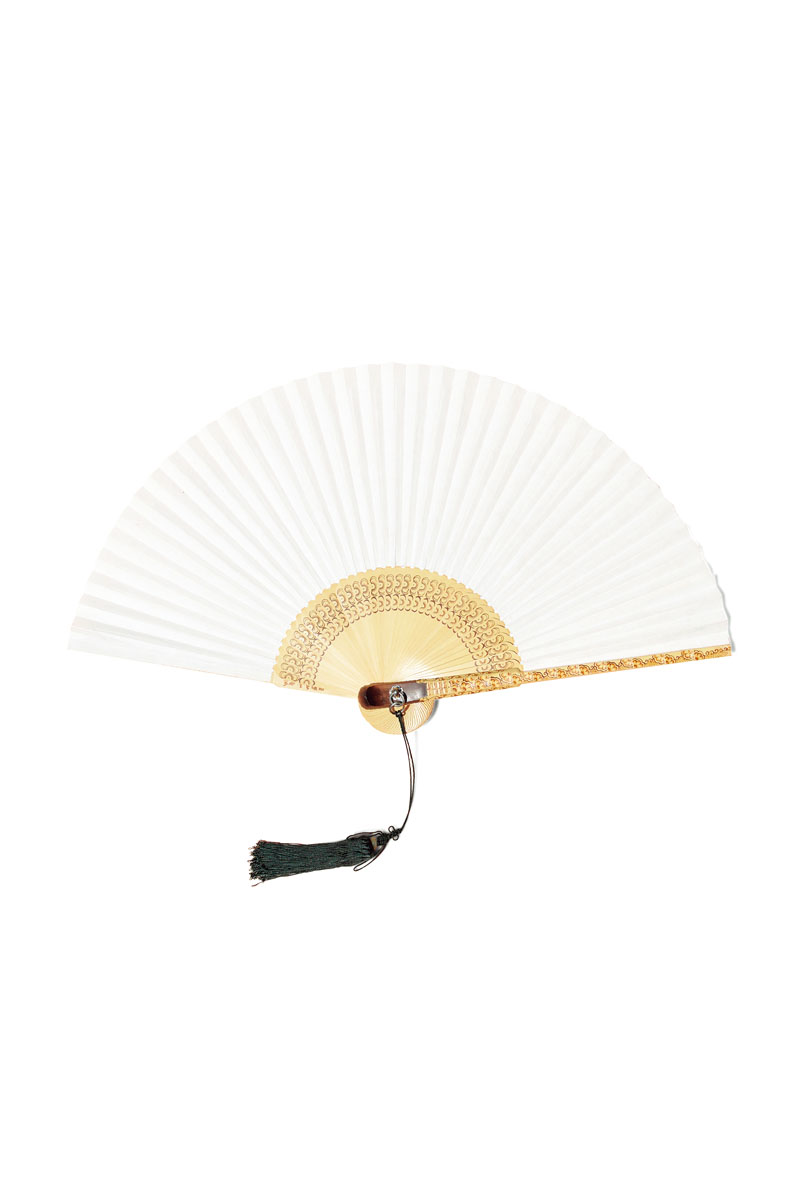
This hapjukseon, a folding fan historically used by the yangban elite of the Joseon Dynasty, was created by master artisan Kim Dong-sik. Designated a National Intangible Cultural Heritage title holder for fan-making in 2015, Kim is a fourth-generation artisan producing traditional fans using time-honored techniques.
Courtesy of Soluna Living
Making clothes with paper entails a significantly higher level of technical skill than using it for bookbinding and other crafts. While cutting and shaping fixed forms is relatively straightforward, designing garments that must both envelop the body and allow freedom of movement involves many complex considerations. Thus, the very existence of hanji garments attests to the unique qualities of traditional Korean paper, which far surpass those of ordinary paper. The sheer range of hanji’s utility is staggering; it was even used to fashion armor, with multiple layers of the durable paper providing sturdy protection that could stop arrows.
The applications of hanji extend far beyond conventional expectations. From birth to burial, it accompanied Koreans through every momentous life event. Previous generations were born in rooms with hanji-covered floors, lived in spaces with papered windows and doors, studied from paper books, and, after living a full life, were wrapped in paper to be interred. Before a marriage, the groom’s birth date and time details (saju) were written on hanji and sent to the bride’s home to formalize the betrothal. At funerals, the bier was adorned with paper flowers in five colors; paper spirit tablets and ritual prayers were fixtures of ancestral rites; and spaces for shamanic rituals were richly decorated with paper flowers. Among hanji’s diverse applications, its use in making paper umbrellas is particularly astonishing. The paradox of crafting an umbrella from a material inherently vulnerable to water perfectly captures the versatile and audacious nature of this paper.
ENDURING RESILIENCE
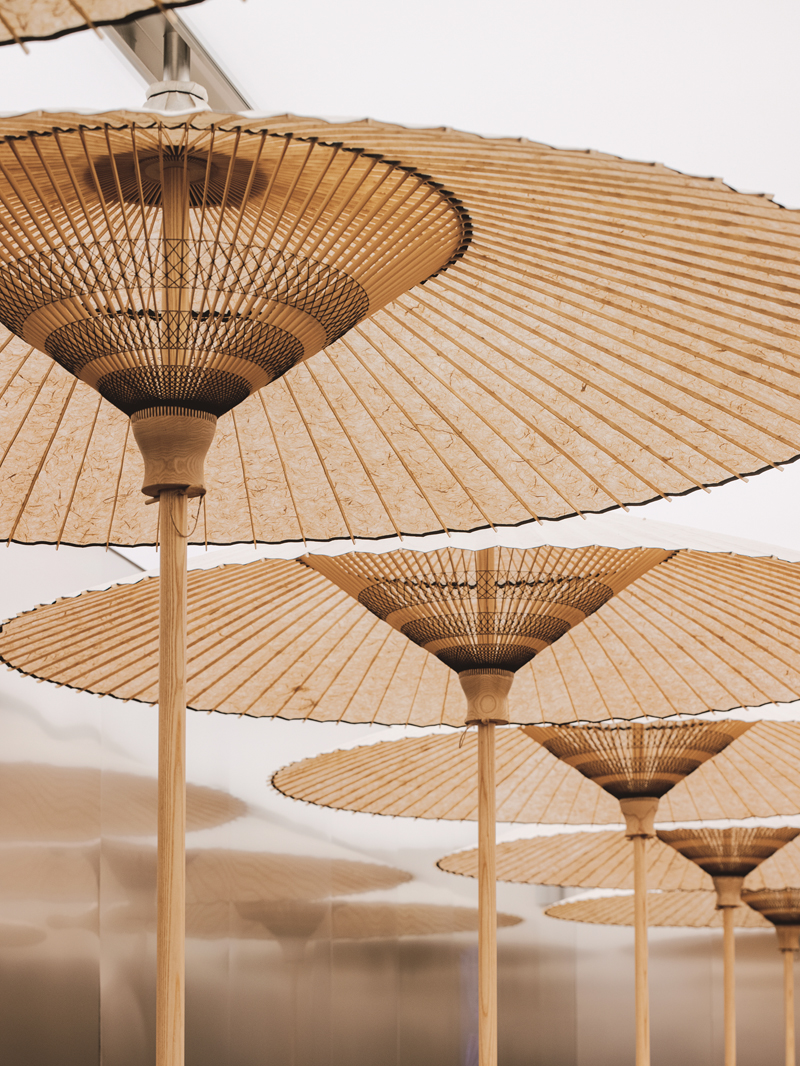
This traditional paper umbrella, made from fine bamboo ribs covered in hanji treated with perilla oil, was created by master artisan Yoon Gyusang and installed at Daewoo Engineering & Construction’s brand experience space SUMMIT Gallery in Seoul. Designated an Intangible Cultural Heritage artisan of North Jeolla Province in 2011, Yoon is Korea’s only remaining paper umbrella master, continuing the tradition with his son and successor, Yoon Seongho.
ⓒ SUMMIT Gallery, Daewoo E&C
Paper was introduced to Korea during the Three Kingdoms period (c. 57 BCE–668 CE) and evolved into high-quality, mulberry-based hanji during the subsequent Unified Silla and Goryeo dynasties. In China, where paper was first invented before the Common Era, coarse sheets were initially made from old rags or fishing nets. During the Tang Dynasty (618–907), Chinese artisans developed fine-textured Xuan paper (xuanzhi) from a mix of blue sandalwood bark and rice straw, a tradition that continues today. Hanji and xuanzhi differ not only in their base materials but also in their manufacturing methods. When making hanji, artisans distribute the mulberry fibers evenly in a crisscross pattern in a water vat, weaving them together like warp and weft threads. In contrast, xuanzhi fibers run in a single direction, similar to traditional Japanese washi.
There is good reason why, starting from the Song Dynasty (960–1279), China consis-tently sought out paper from Goryeo, referring to it as goryeoji. The hanji-making process involves an essential step called dochim, where the finished sheets are pounded with a wooden roller. This technique gives hanji its characteristically smooth texture and exceptional durability. The Northern Song poet Su Shi (1037–1101) and the Ming Dynasty painter Dong Qichang (1555– 1636), for instance, prized goryeoji for its quality; the Yuan Dynasty (1271–1368) even requisitioned 100,000 sheets; and the interior of the Forbidden City in Beijing was entirely papered with it.
Many hanji varieties exist, classified by material and purpose. Thanks to its great utility, people across the Korean peninsula planted paper mulberry trees wherever clean water flowed, making a living through paper production. The area around Segeomjeong, a pavilion outside Changuimun (also known as Jahamun), one of the four smaller gates of the Seoul City Wall, was particularly renowned for high-end hanji. Paper mills densely lined the banks of streams flowing through the valleys of Mt. Bugak. As the royal palace and government offices were nearby, master artisans from across the country flocked to the area, which also housed the government bureau overseeing paper production for official use. However, this thriving community of artisans was abruptly dismantled when modern paper factories were established during the Japanese colonial period.
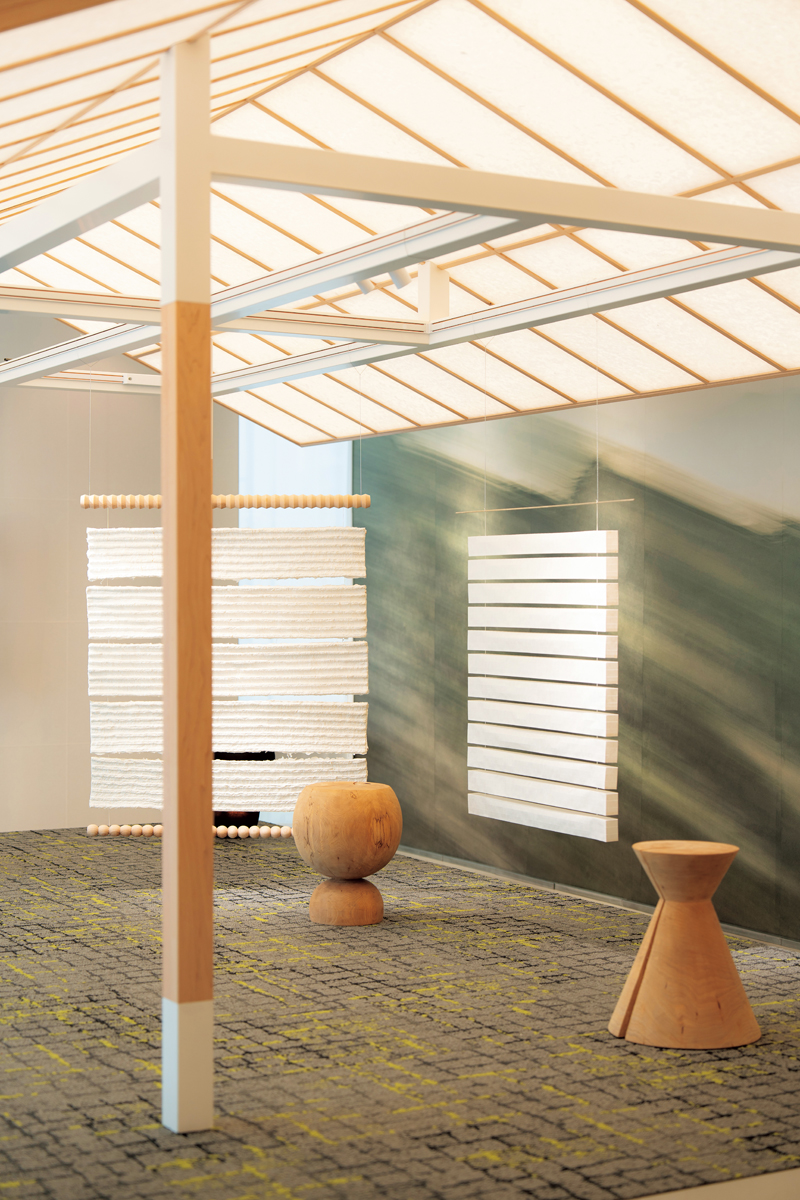
Installation view of Shapes in Mountains, a 2025 special exhibition at Hanji House, featuring pieces by contemporary craft artists who explore the boundless possibilities of hanji sourced from Goesan, Jeonju, and Andong. Located in Bukchon Hanok Village in downtown Seoul, Hanji House is a cultural complex operated by the Korea Craft and Design Foundation since 2020 to promote the excellence and diverse applications of traditional Korean paper.
Courtesy of the Korea Craft and Design Foundation
Hanji’s foremost strength lies in its durability: it is able to withstand repeated folding and unfolding. In an experiment by the National Research Institute of Cultural Heritage conducted in 2022, standard Western paper tore after approximately twenty folds, whereas hanji endured more than eight hundred folds. While this test utilized machine-manufactured hanji, traditional hand-pounded hanji, with its tightly compacted fibers, would likely perform even better. Given such lasting quality, even worn scraps were not carelessly discarded. Records from the Joseon Dynasty (1392–1910) reveal that paper used for drafting historical annals was repeatedly washed to remove the ink and then reused. Nakpokji, the answer sheets of those who failed the civil service examinations, were repurposed into household goods, clothing, and shoes, or woven into conical bamboo hats. The use of recycled hanji was so commonplace that it earned the moniker hwanji, “returned paper.” The paper gave its all until it was completely worn out.
Scrap paper from books found still other uses. Long strips of paper were twisted by hand into cords, which were then tightly woven to create household goods such as sewing baskets and storage boxes — a craft known as jiseung. Objects made in this way radiate a warm charm and are eco-friendly. When coated with lacquer, they become even more durable, further enhancing their utility. For example, a pottery terrapin bottle fastened to a horse’s saddle could be safely wrapped in lacquered paper cords to prevent breakage, ensuring travelers would not go thirsty on long journeys.
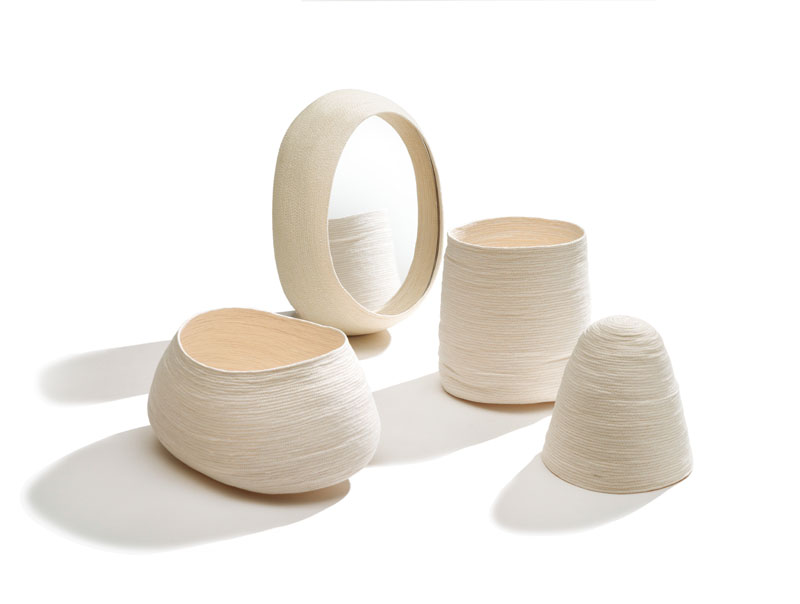
A piece from textile artist Eum Yoon Na’s “Baek Mi” (The Distinguished) series, featured in the Encountering Spring Days exhibition. Created by stacking and machine-stitching strands of paper cord one by one, the work demonstrates the vast possibilities of contemporary hanji crafts.
Courtesy of the National Folk Museum of Korea
THE ART OF RECYCLING
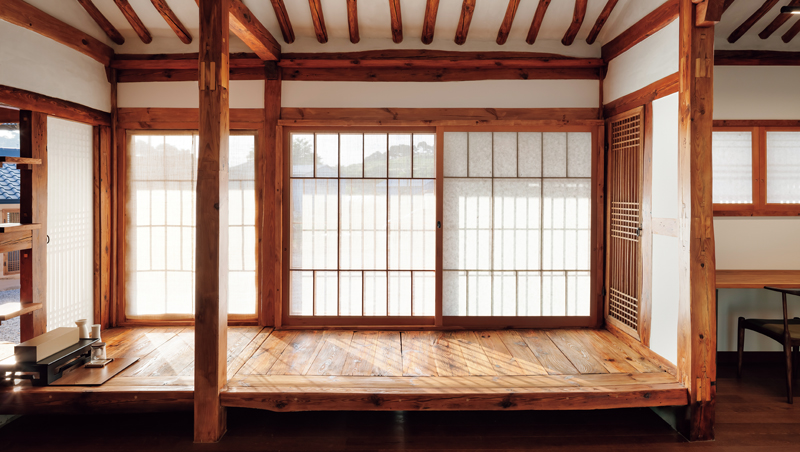
Hanji has long been used in hanok (traditional Korean houses) for flooring, window, and wall coverings. Designed by SUNJAE architects to enhance natural lighting and ventilation, this newly built hanok in Jeongeup, North Jeolla Province, illustrates a modern architectural application of these traditional materials.
Courtesy of SUNJAE architects, Photo by Park Young-chae
In 2025, hanji artist Park Gap-soon was named Artisan of the Year by YÉOL, a foundation devoted to preserving Korean cultural heritage. A master of jiho — so-called “paper-paste craft” — her works were showcased at the exhibition Nature, As It Is, held as part of the 2025 YÉOL × Chanel Project at YÉOL Bukchon-ga, the foundation’s multipurpose cultural complex in Seoul. Her pieces received an overwhelmingly enthusiastic response for their heartwarming charm.
Jiho has humble origins as a folk craft in which hanji pulp is kneaded with paste and hardened in molds to create various types of vessels, in a manner similar to papier-mâché. In the same vein as using scraps of fabric to make bojagi (traditional Korean wrapping cloths), it reflects the frugal spirit that treasures hanji as if it were fine silk. Repurposing materials for entirely new uses requires special skill and ingenuity. While jiho is similar to jiseung in its reliance on scrap paper, it has no limitations regarding the size of the objects that can be made, from small gourd dippers to massive storage jars. Among these, households that could barely afford standard earthenware favored paper jars, which they primarily used to store rice and other grains.
Valuing materials, conserving them, and extending their lifespans is the starting point of a sustainable life. The jiho craft embodies these virtues of humility and restraint. Modern civilization, however, has moved in a different direction: the relentless pursuit of material abundance has spurred a global climate crisis. Confronted with this reality, hanji can teach us to be more mindful of our environment.
Even so, an outstanding cultural heritage can struggle against the currents of time. Despite a growing public appreciation for the value of hanji, its disconnect from daily life casts a shadow over the work of today’s artisans. Many of us would struggle to remember the last time we wrote a letter by hand. An effective antidote to this discon-nect is to recognize the value of slowness. Though inconvenient, incorporating small unhurried acts into our daily routines may provide the stepping stone needed to carry the invaluable heritage of hanji into the future.
Choi Gongho Former Professor, Korea National University of Heritage
 한국국제교류재단