The culture of haenyeo on Jeju Island has been passed down through scores of generations, forming a distinctive community-based tradition. As K-dramas and documentaries celebrating the women divers reach global audiences on streaming platforms, international interest in haenyeo continues to swell. Against this backdrop, the Oxford English Dictionary added “haenyeo” to its lexicon in January this year.
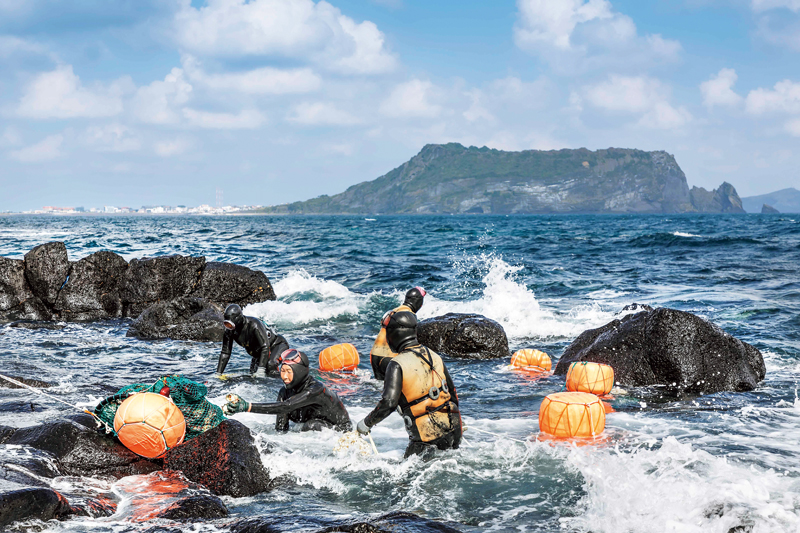
The Culture of Jeju Haenyeo refers to the practices of the distinctive female diving community on Jeju Island, located south of the Korean peninsula. In 2016, it was inscribed on the UNESCO list of Intangible Cultural Heritage of Humanity, and the word “haenyeo” was added to the Oxford English Dictionary this year.
ⓒ Korea Tourism Organization
Off the southern coast of the Korean peninsula lies Jeju Island, its basalt volcanic rock shaped by strong seasonal winds. For centuries, life on the island depended closely on the sea. Limited farmland and unpredictable weather made agriculture difficult, and marine resources became essential to survival. From this environment emerged the haenyeo, women who dive into coastal waters without breathing equipment to harvest seafood as a livelihood. Over time, their work developed into a distinctive cultural system that combines labor, environmental knowledge, ritual practice, and strong community ties.
Jeju’s natural conditions played a decisive role in shaping this tradition. Although men once participated, and a few still do, women gradually became the primary divers. By the eighteenth and nineteenth centuries, they had taken on most underwater harvesting and became central income earners within their families. The professional form of haenyeo recognized today began to take shape in the early twentieth century.
In older Korean records, these women were often called jamnyeo, meaning “diving women,” or sometimes jamsu. One of the earliest references appears in History of the Three Kingdoms (Samguk sagi), which mentions divers described as pearl collectors in the Goguryeo Annals, under the records for King Munja (r. 491–519) in 503. During the Joseon Dynasty (1392–1910), a clearer division of labor emerged. Male divers, known as pojak, harvested abalone from deeper waters, while female divers collected seaweed. From the late seventeenth century onward, male diving activity declined, and underwater harvesting became largely the responsibility of women. Over time, haenyeo, meaning “sea women,” became the standard term.
COLLECTIVE ETHIC
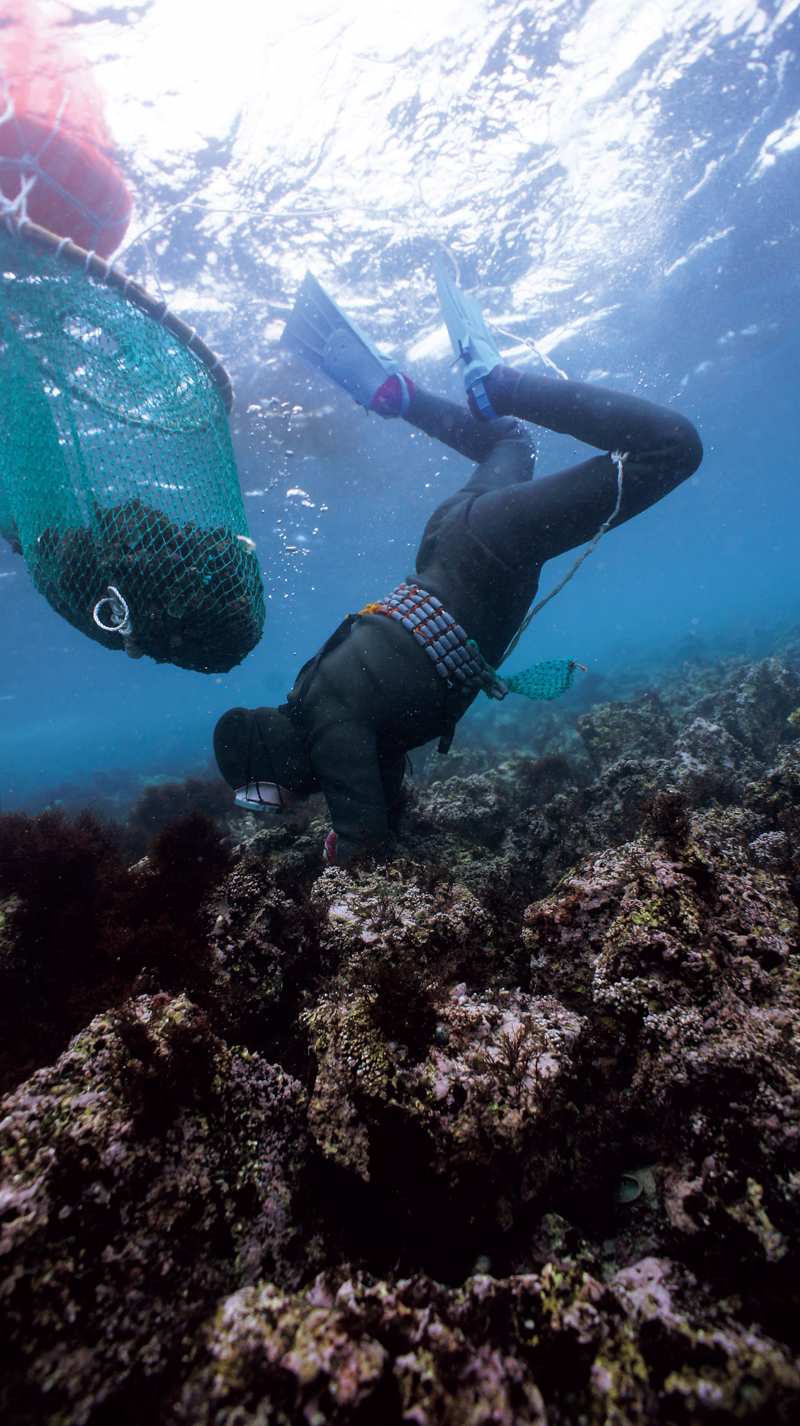
For generations, the haenyeo of Jeju Island have dived into the deep sea without the aid of breathing apparatuses, harvesting seafood to sustain their livelihoods. In recognition of the cultural and ecological value of this traditional fishing practice, the UN Food and Agriculture Organization designated it as a Globally Important Agricultural Heritage System in 2023.
ⓒ Haenyeo Museum
Haenyeo dive without air tanks, relying on breath-holding, experience, and physical endurance. Skilled divers descend to depths of up to about twenty meters to collect abalone, sea urchins, conches, and seaweed. When they surface, they release a distinctive whistling breath known as sumbi sori, which regulates breathing and signals safety. Haenyeo are organized in accordance with their ability: sanggun dive deepest, junggun at intermediate levels, and hagun closer to shore. They work in village-based groups and never dive alone. Cooperation is essential.
This collective ethic extends beyond the sea. Rituals known as jamsugut are held to pray for safety and abundance. Folk songs sung while rowing or resting express fatigue, humor, and resilience. Long before sustainability became a global concept, haenyeo practiced careful resource management, avoiding undersized abalone and refraining from harvesting during spawning seasons. In recognition of its ecological and cultural value, the Culture of Jeju Haenyeo was inscribed on the Representative List of the Intangible Cultural Heritage of Humanity by UNESCO in 2016.
Haenyeo history also extends beyond Jeju. From the late nineteenth century, women divers travelled for work to other parts of Korea and abroad, reaching Japan, China, and as far as Vladivostok in Russia. By the 1930s, thousands were working outside the island. Their mobility reflects broader patterns of labor migration and cultural exchange in modern Korean history.
The number of haenyeo peaked around the 1960s, when learning to dive was common for girls and young women in coastal villages of Jeju. Rapid economic change later transformed the island. Tangerine farming expanded, tourism developed, and industrial fishing altered coastal environments. As alternative livelihoods emerged, the number of haenyeo declined sharply. Today, most remaining divers are elderly, and the community continues to shrink.
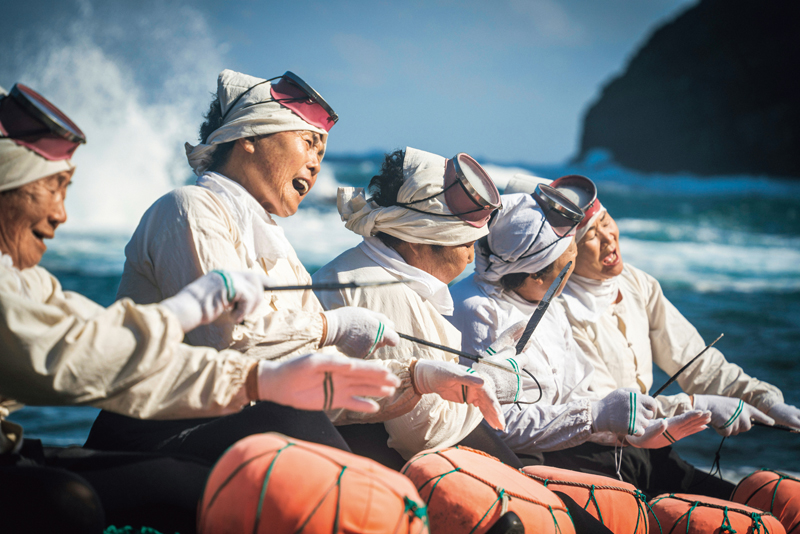
Among the haenyeo of Jeju, work songs have long been passed down, sung while rowing out to fishing areas or on the return journey after a day’s diving. Commonly referred to as “haenyeo songs,” they feature simple yet dynamic rhythms that follow the cadence of the rowing strokes.
ⓒ Unsplash
At the same time, international awareness of haenyeo has grown. For many years, although Korean historical documentation was extensive, the word “haenyeo” rarely appeared in English-language sources. Major historical dictionaries like the Oxford English Dictionary (OED) require sustained textual evidence before adding new words. Only recently, through academic research, documentaries, and global streaming platforms, has the term entered wider English usage. For instance, K-dramas set on Jeju, including the Netflix original series When Life Gives You Tangerines (2025), have introduced international audiences to the island’s coastal life.
In January this year, the word “haenyeo” entered the Oxford English Dictionary (OED) as a Korean-origin term, defined as “In South Korea: a female free-diver who harvests seafood as a means of livelihood.” Inclusion in the OED, the most authoritative and definitive record of the English language, carries lasting significance. The dictionary collects words that have shown sustained use in English and preserves them as part of the language’s historical record. Once entered, a word becomes a permanent part of English.
For generations, the lives of Jeju’s haenyeo were documented primarily in Korean sources. Their cultural presence was strong, yet the word itself was rarely seen in English or in any other language. The inclusion of haenyeo in the OED has earned the term an indelible place in the global vocabulary. It does not ensure the survival of the tradition, but it recognizes that this way of life has left an enduring mark on language and world culture.
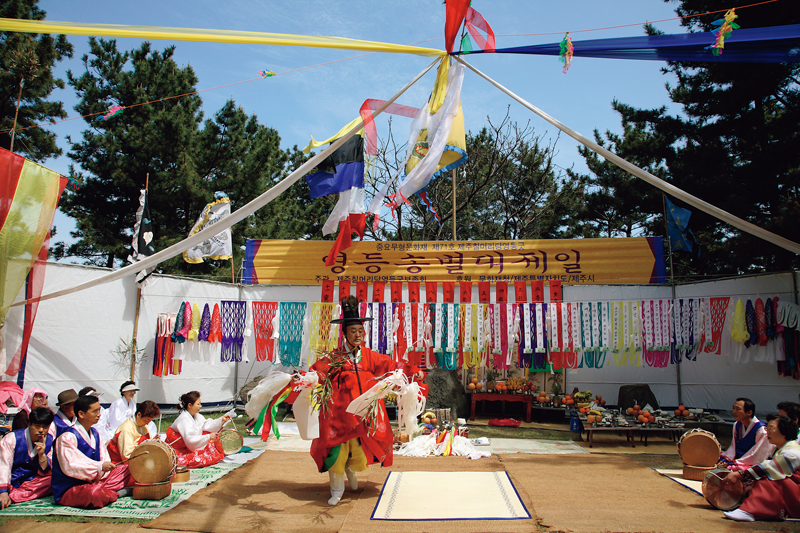
Because diving is an occupation fraught with the risk of death, haenyeo traditionally pray to the sea deities for safety and an abundant catch before plunging into the ocean depths. The photograph shows a Yeongdeunggut, one of the representative village rituals of Jeju.
ⓒ Korea Heritage Service
 한국국제교류재단