Korean cinema has spent the last few years mired in a state of crisis — viewing habits in flux, content development stalled, investment drying up. Yet a steady stream of talented new directors is making independent films that point to new possibilities for the domestic film industry. While in the past, Korean independent films leaned heavily on realism, dissecting social problems with a critical eye, lately, they are experimenting with various genres from science fiction and mystery to fantasy.
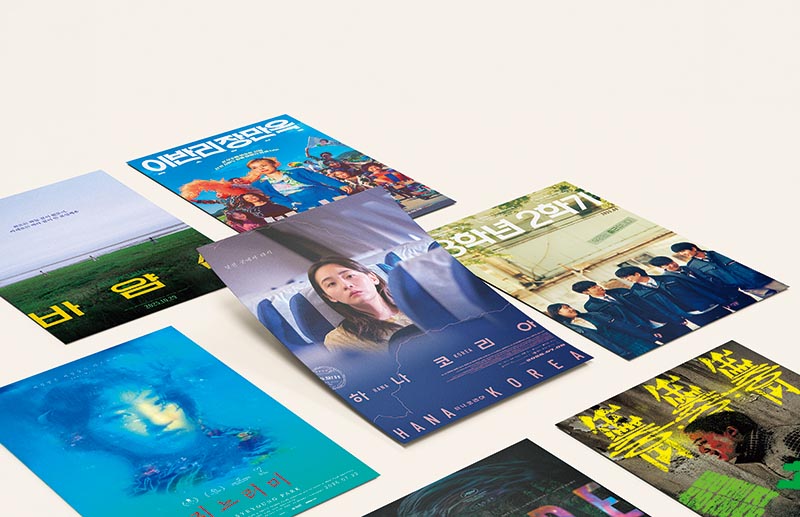
Posters for recent Korean independent films drawing attention at home and abroad show how each work approaches familiar social issues through a distinct visual sensibility and narrative lens.
© Film Dabin
© INDIESTORY
© Seesaw Pictures
© Seesaw Pictures
© STUDIO_bom
© ATNINE FILM
Familiar theaters are closing, one after another, and commercial film output has also dropped sharply. Yet, cinema has not vanished. Films are still being made because the creators who dream through film and of film are holding their ground. Recent Korean independent cinema shows that same determination, and its range is diverse from works that zoom in on the scars of Korean society to films that deliver genre-driven entertainment and projects that demonstrate what international collaboration can produce.
HERE AND NOW: A PORTRAIT OF YOUTH
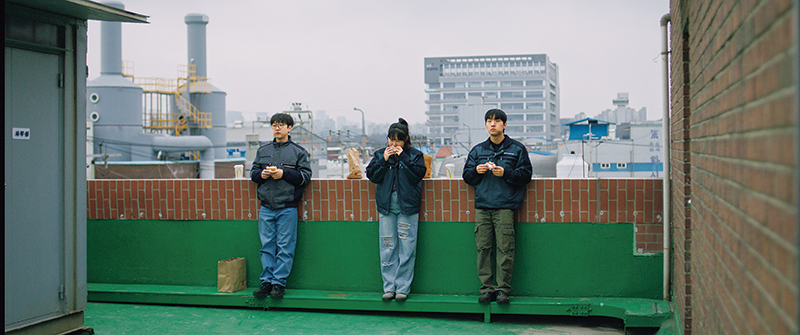
The Final Semester follows vocational high school students completing workplace training at a factory. Rather than foregrounding social issues, the film quietly observes the realities of teens taking their first steps into society.
© STUDIO_bom
“Youth” is a keyword inseparable from independent film — not only because it serves as the entry point for young directors, actors, and other newcomers, but because youth itself turns up constantly as subject matter. Films centered on teenage protagonists are numerous enough to constitute a subcategory of Korean independent cinema in their own right. However, that doesn’t mean the setting stays confined to schools. Two cases in point: The Final Semester, which premiered at the 2024 Busan International Film Festival before reaching theaters the following year, and Funky Freaky Freaks, which debuted at Busan in 2025 and hit theaters this year.
Despite its title, The Final Semester turns its lens to a factory. In a country where college enrollment tops 70%, the film follows vocational high school seniors who choose employment over further study. What their daily lives look like now and what future they picture for themselves: these are the questions driving the film. Why these teenagers chose work over more schooling, or what the factory was like before they arrived, is never explicitly stated but simply shown. Instead, the film fills that space with mundane things that make them laugh, like snacks, hobbies, and friends. As the camera lingers on these moments, the more the underlying systemic flaws come into focus, threatening to erase their modest smiles. By declining to address the issue directly through political language, the film gains a resonance of its own, and that’s precisely what makes its pulse beat.
By comparison, Funky Freaky Freaks is far more volatile. Its characters, all living on the edge, skip the subtle arguments and go straight to the raw screams. Images that move dynamically between online and offline realms carry this energy along. Here, the internet comes across as a space where teenagers, wound tight and ready to run wild, come tearing through, venting every impulse without a glance over their shoulder. A boy passes himself off as a girl. A girl goes hunting for diet pills. Someone else broadcasts their own suicide attempt live. All of it plays out on computers and phones — tools which allow a person to hide their identity while revealing it and keep others at a distance while still making contact. A deepfake-related crime, central to the plot, sits at the very top of that escalation.
Other films raise social issues in a similar vein while staying closely attuned to what today’s younger generation is feeling inside. Among them are Between the Two of Us (2025), Deprivation (2025), and Insomnia (2026), all three following young married couples who have taken on the “mission” of marriage and stand ready to build a life together, only to falter when faced with the challenges of raising a family and finding a home. In a country where low marriage and birth rates dominate the news day after day, the characters in these films struggle with issues like disability, infertility, and jeonse (Korea’s deposit-based rental system) fraud, as they strive to create the family life they’d hoped for. Together, these three films underscore a hard truth: in 2020s Korean society, merely dreaming of a normal, ordinary life can fracture not only a person’s relationships but their sense of self.
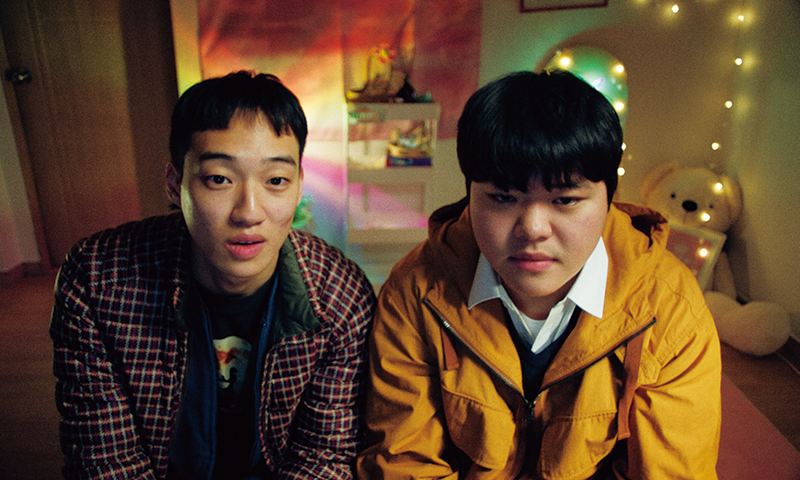
With raw, kinetic imagery, Funky Freaky Freaks captures the desires, anxieties, and impulses of teenagers moving between online and offline worlds.
© ATNINE FILM
A NEW WAVE IN QUEER FILM
Nowhere do the contradictions of the “normal” surface more sharply than in queer films. Among them, 3670, which swept four awards at the 26th Jeonju International Film Festival in 2025, drew the most attention this past year. Its protagonist is a gay defector from the DPRK (Democratic People's Republic of Korea) living in Seoul. He moves between church, language school, and workplace, adapting to his new surroundings, yet he never quite feels fully alive anywhere — not until he finally finds a community that has room for someone like him. The film lingers over this quiet unfolding of friendships taking root and love blossoming, following his journey of personal growth. By shifting its focus from existential struggle to the textures of daily life, the film expands the spectrum of queer films.
Manok (2026) and Ideal and Weird Family (2026), both fronted by lesbian characters, also stretch the boundaries of queer films. In the former, a middle-aged lesbian returns to her hometown and ends up competing with her ex-husband for the position of village chief; in the latter, a lesbian couple who raised two daughters together declares their divorce and navigates what comes after. These premises alone signal the arrival of a kind of queer narrative rarely seen in Korean film until now. The characters don’t stop at anguish and resistance — they confront challenges head-on instead of shrinking from them. That same sensibility runs through both the stories themselves and the way they’re told. Rather than treating sexual orientation or identity as a matter of grave significance, these films flesh out their characters with personality and temperament, and that choice is what makes them more enjoyable to watch.
CROSSING GENRES, TRANSCENDING BORDERS
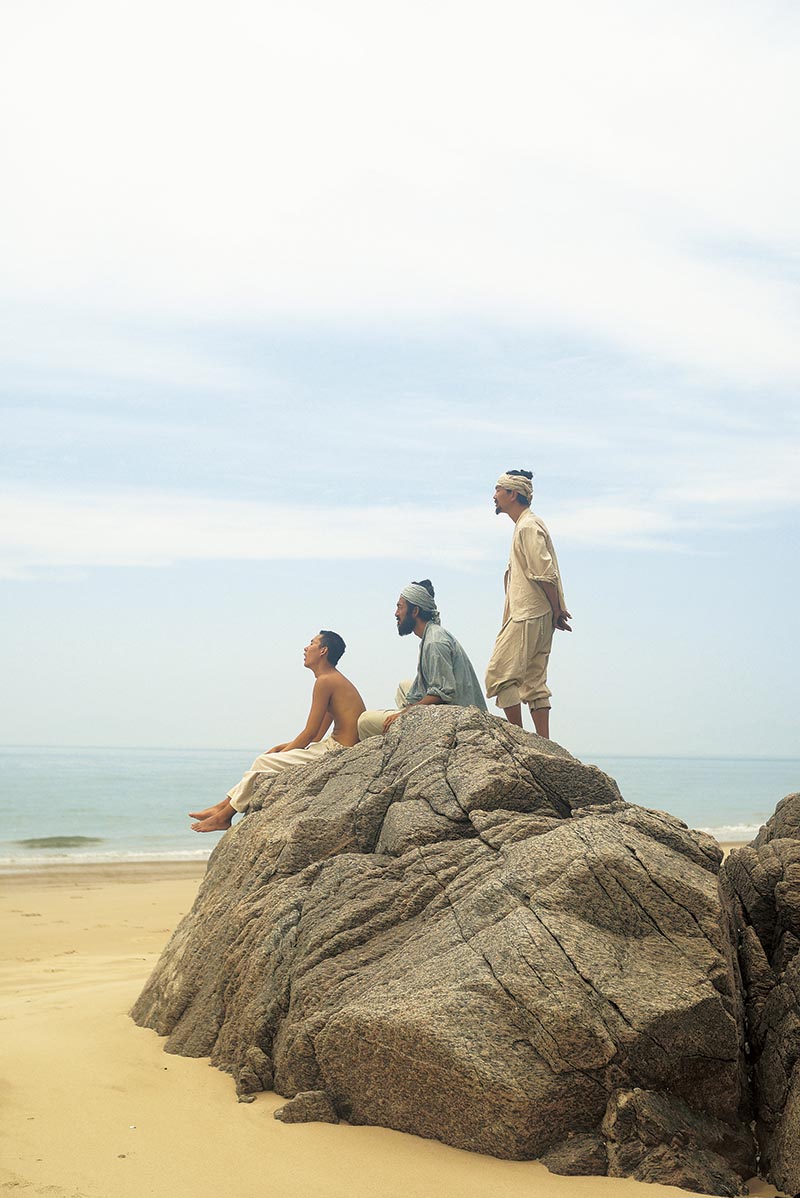
Through the strange odyssey of three castaways, Isle of Snakes blends period drama, mystery, fantasy, and humor to create a strange world where reality and illusion overlap.
© Film Dabin
These days, the gap between Korean independent films and “genre cinema” seems to be narrowing. Whereas works grounded in realism have held the spotlight until now, fictional devices that bend and reflect reality are increasingly prevalent. Isle of Snakes, released last year to critical acclaim, shows just how far that experimentation can go. Set on the mysterious island that lends the film its title, this period piece spans mystery, suspense, and horror all at once. The deserted island stands as a metaphor for the state of society, and the three Joseon-era castaways trapped on it mirror people today. The characters lose track of where they are, even who they are. The only thing that emerges with any clarity is confusion itself. Yet Isle of Snakes draws humor out of circumstances that could easily have drowned in misery. Along with soulful traditional tunes that weave through the film — such as a folk song known as baennorae (traditional fishing song) and Sugungga, a work of pansori (Korea’s tradition of musical storytelling) — mother-of-pearl paintings by the artist Jeong Zik Seong anchor its highlight sequences, both elements folding seamlessly into this genre-blending period drama.
Director Syeyoung Park also deserves a mention. After releasing The Fifth Thoracic Vertebra in 2023, he released Slide Strum Mute and The Fin one after another this year. His name now stands as a category unto itself in Korean independent film. His gaze starts from what’s close at hand and stretches toward unknown territory. And whether it's human bodies or material objects, he has a knack for making the familiar feel strangely alien. True to a career built across fashion film, music videos, and commercial work, his camerawork and editing sidestep convention. In The Fifth Thoracic Vertebra, mold blooming on a mattress is given agency, creating a creature unlike anything seen before. The Fin imagines mutants born in a near-future dystopia known as the “Unified Republic of Korea.”
Among those backing Syeyoung Park’s brand of science fiction, daring in both image and sound, is Philippe Bober, who produced The Square (2017) and Triangle of Sadness (2022), both of which won the prestigious Palme d’Or at the Cannes Film Festival. The Fin came together as a co-production between the domestic studio Seesaw Pictures and Essential Filmproduktion, the German company Bober founded. Efforts like Park’s — seeking out international collaboration outside the commercial film system — are only set to grow. On both the financial and cultural fronts, multinational projects serve as a gateway for broadening the scope of Korean cinema. Rei’s Winter Break (2026), where two ordinary teenage girls from Korea and Japan clumsily learn how to communicate, yielded meaningful results from its collaboration with Japanese actors and crew, while Hana Korea (2026), the story of a woman who fled the DPRK, is a joint Korean-Danish production. By remaining conscious of their roots while pushing past their limits, Korean independent films will become all the more resilient and robust.
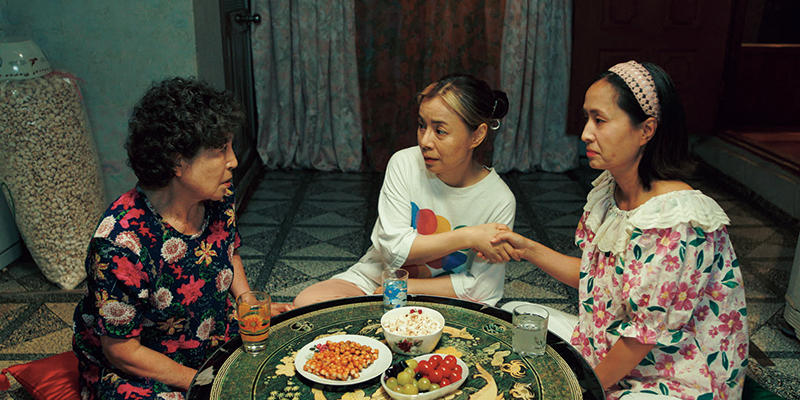
Refusing to confine queer life to tragedy or struggle, Manok approaches it through the lens of comedy.
© INDIESTORY
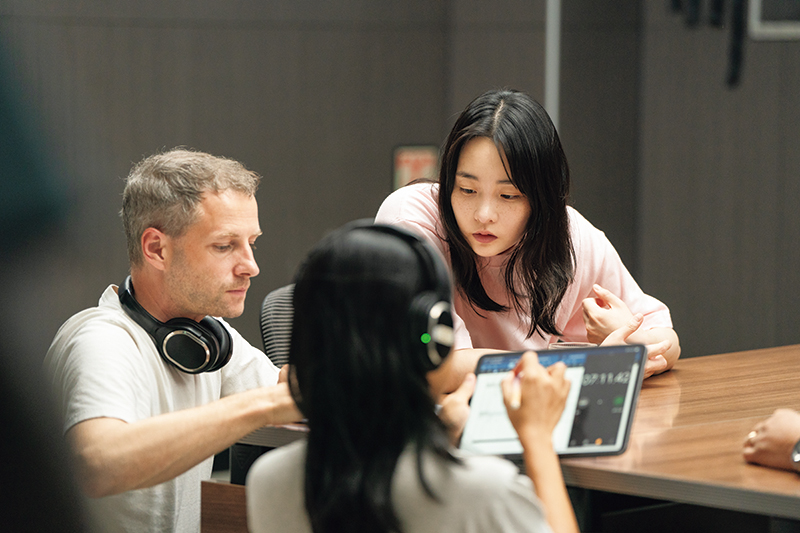
In the Korean-Danish co-production Hana Korea directed by Frederik Sølberg (left), a woman who fled the DPRK (played by Minha Kim, upper right) navigates the challenges of building a life in an unfamiliar society.
© Seesaw Pictures
Nam Sun-woo Journalist, CINE 21
 한국국제교류재단