Yi Ik, an 18th century intellectual who was a foremost proponent of Silhak, or “Practical Learning,” once noted: “If wedid not have beans growing in our country, poor people would hardly have survived.” Beans had long been a basic foodof the needy commoners and a low-cost source of protein for most Koreans. But today, beans of every kind, prepared inevery form imaginable, can be found on the finest dining tables.
“Field meat” is an old Korean reference tobeans, called kong. The United Nations hasdesignated 2016 as the international year ofpulses — beans and peas that are harvested dry — tounderscore the importance of beans as a highly nutritiousfood vital for people’s survival and sustainablefuture. As a hardy and versatile food crop much lessdependent on chemical fertilizer, beans are an idealand critical element of humanity’s food basket and ameans for attaining the goal of ecological food security.
Manchuria and the adjoining Maritime Province ofSiberia are known as the ancient Asian home of beans.The area includes former lands of the ancient Koreankingdoms of Gojoseon and Goguryeo. Between theMaritime Province and the Korean Peninsula flows theTuman (Tumen) River, whose name literally means“River Full of Beans.” The river is said to have been sonamed because after each autumn harvest, it wouldbe teeming with boats loaded with sacks of beans. Thehistory of growing beans in Korea dates back to antiquity,and the Korean people have eaten beans in various ways. According to recentdata, per capita annual consumptionof beans by Koreans is about 8 kilograms,ranking third after rice and wheat.
Soy Sauce and Soybean Paste
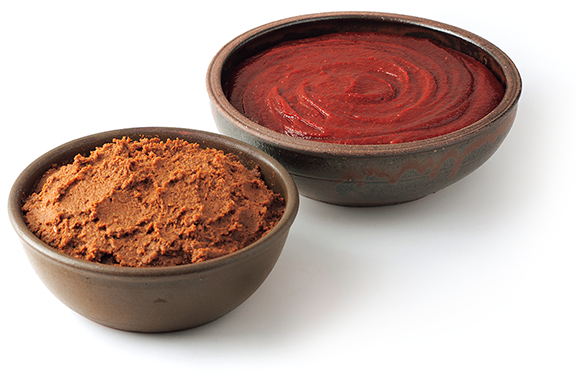
Condiments such asdoenjang (soybeanpaste) and gochujang(red pepper paste) arefundamental ingredientsin Korean cooking.
Beans are an essential food item in Northeast Asia,including Korea. It is part of traditional dishes as wellas contemporary cuisine in multifarious forms. Thisis due to a culinary culture rooted in fermented sauces,called jang. Korea’s traditional cuisine invariablyincludes one, two, or all three fermented condiments,as seasoning or a base: doenjang (soybean paste), ganjang(soy sauce), and gochujang (red pepper paste).Ganjang and doenjang are made with soybeans, calledbaektae (“white beans”), that are combined with waterand salt, and then are helped by the sun, wind, andtime.
To make meju, the base material for soy sauce andsoybean paste, the soybeans are soaked in water fora whole day in late autumn after the first frost, when the days are chilly. The beans are thencooked in an earthenware steamer andcooled. In the old days, just-cooked steaminghot soybeans was a special treat, witha delightful aroma and savory flavor, especiallyfor children, who could enjoy themonly once a year on the day when meju wasbeing made.
The cooled beans are coarselymashed in a mortar and then kneaded intoround wheels or square blocks, dependingon each family’s traditional preference.
One has to have much experience todetermine just how much mashing andkneading is right; mostly, it’s done by “feel.”If the beans are mashed too fine, or kneadedtoo dense, the inside of the meju blockmight rot because of lack of air circulation.In Korean cooking, we often use the sonmat (literally, “hand taste”)instead of precise measurement, probablybecause the success or failure in makingmeju, the base for every dish the family willeat all year, depends so heavily on “handtaste.” Delectable sauces for the year arederived from well-made bean blocks, andgood sauces lend tasty flavors to a family’sdaily food. An old saying tells us that a goodsauce flavor leads to sharing, and generosityis rewarded with good fortune.
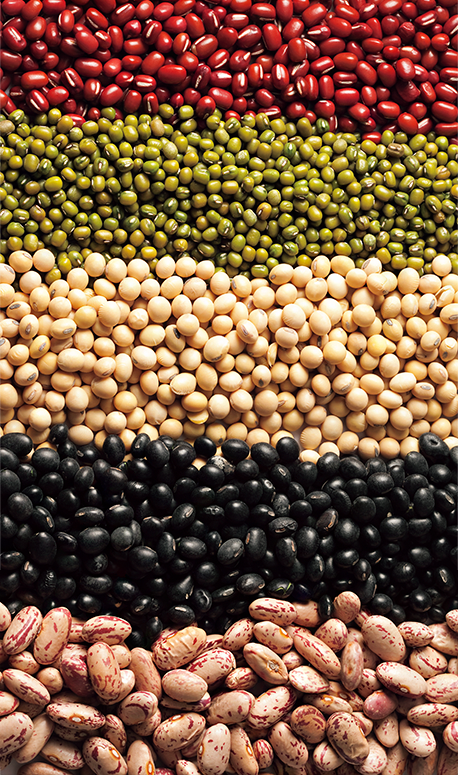
Superfood tower, fromtop to bottom: redbeans for topping overshaved ice (patbingsu);mung beans forbindaetteok pancakes;soybeans for tofu andfermented bean blocks(meju), the base materialfor sauces; blackbeans for sweet-saltykongjaban; and kidneybeans to cook with rice.
The painstakingly made meju has to firstbe left to rest in a warm room for severaldays for proper fermentation of its microorganismsto get underway, and then suspendedfrom a rope made of rice straw in abright, airy place, such as under the eavesof a house, which is exposed to direct sunlight.Before spring arrives, the fermentedand dried bean blocks are placed into alarge earthen crock, together with salt andwater, and left to further ferment. Afterabout two months, the well-fermented liquidis soy sauce, while the remaining mashis soybean paste.
The tradition of each household makingthe family’s supply of sauces has all butdisappeared these days, with most peoplebuying commercially made products at themarket. There are various brands of sauceson offer, ranging from those made bywell-known local clan families, using theirsecret recipes, to branded products of bigfood companies, available in a wide rangeof prices and quality. The choice is up toconsumers’ tastes and affordability.
Easy Tofu Dishes
One thing that simply must be mentionedwhen talking about beans is tofu,or dubu in Korean. Tofu is made by coagulatingthe soy milk produced by soaking,grinding, boiling, and straining soybeans.The soy milk is simmered and salt added,forming a curd which is then pressed intoa mold. Tofu can be eaten plain, drizzledwith spicy soy sauce, braised, or added to stews. Tofu fried in a hot pan with sesameoil or other vegetable oils makes a perfectside dish for steamed rice. Tofu fried withsancho (Chinese pepper) oils is special andtasty. The sharp tang of sancho goes wellwith tofu’s mild flavor. This dish is availableat popular tofu restaurants in Wonju, GangwonProvince and Jecheon, North ChungcheongProvince.
In Seoul, the Golden Bean Field (HwanggeumKongbat) in Ahyeon-dong, Mapo-guis known for its excellent tofu. The restaurant,which serves tofu made fresh dailywith locally grown soybeans, is regarded asone of the best tofu restaurants by gourmands.The fried tofu and tofu-and-mushroomstew are mouthwatering. Chilledmakgeolli, brewed by the restaurant onsite,is an ideal drink to accompany the tofudishes.
There is a variety of black beans calledseoritae (“frost beans”) because they areharvested after the first frost. Recently, ithas come to be hailed as a superfood, witha rich content of anthocyanin, an antioxidant.
The skin is black, but the seed insideis bright green. Today it is said that blackbeans are more nutritious than yellow soybeans,so some types of tofu are now madewith black beans. After being soaked inwater, the black beans can be added to ricebefore cooking, which coats the rice with asubtle purple gloss. An especially belovedside dish of Koreans is kongjaban, made ofblack beans boiled down in soy sauce, flavoredwith sesame oil and oligo-sugar, andtopped with a generous sprinkling of roastedsesame seeds.
From soy sauce and soybean paste, soybean oil to soy milk, bean curd to savory pancakes, beanscooked with rice or as side dishes and desserts — beans in every form and shape enrich and enliventhe Korean diet today as in the days of yore.
Injeolmi, a traditional rice cake, is a populardelicacy. It is made of sticky glutinousrice, which is soaked, steamed, poundedinto an elastic dough, cut into small pieces,and coated with bean powder. The beanpowder, called konggomul, is the mostimportant ingredient of this rice cake. Tomake the powder, steamed beans are dried,roasted, ground into powder, and mixedwith salt and sugar, to highlight the beans’savory taste. Of course, people nowadayswill rarely make this delicacy at home sinceit is available at any rice cake shop, whichpromotes it as a kind of health food.
Red Bean Desserts
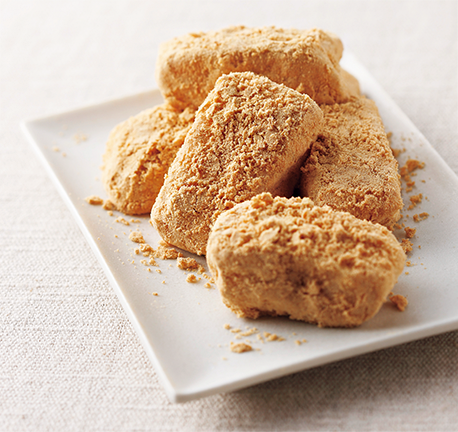
Savory-sweetkonggomul(seasoned beanpowder) is crucialfor the taste ofinjeolmi (stickyrice cake).
Danpatjuk , or sweet red-bean porridge,is a favorite dish eaten mainly inwintertime. It is available at traditional teahouses in Insa-dong, the popular touristdistrict in central Seoul. In summertime,it is replaced with patbingsu, sweetenedred beans served over shaved ice. Bothare sweet desserts made with red beans,called pat. In Nagwon-dong, an area connectedby footpaths that wind through narrowalleys from Insa-dong, famed rice cakeshops continue to draw loyal customers.Have a taste of their various rice cakesmixed with beans, including the injeolmidescribed above.
From soy sauce and soybean paste, soybeanoil to soy milk, bean curd to savorypancakes, beans cooked with rice, or asside dishes and desserts — beans in everyform and shape enrich and enliven theKorean diet today as in the days of yore.That is why the annual consumption ofbeans is the third highest in Korea, after thestaple rice and wheat.
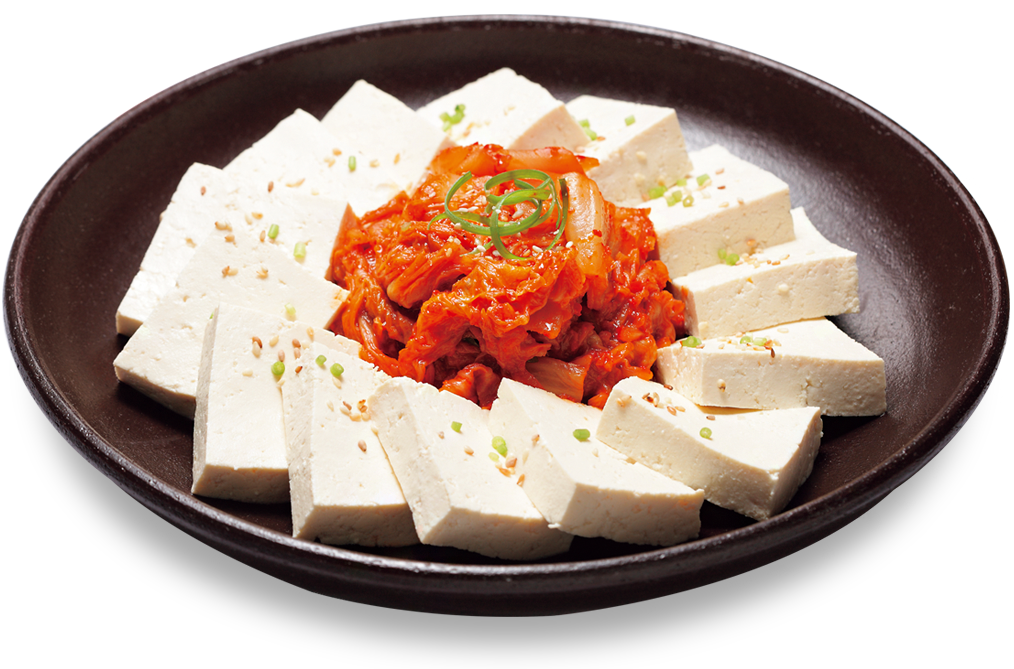
Boiled tofuserved with sautéedkimchi is apopular appetizerand bar food.
 한국국제교류재단