Hangwa is a collective term for traditional Korean confections. Driven by the global spread of K-content and the popularity of modern reinterpretations of traditional desserts, interest in these delightful treats is growing both domestically and internationally.
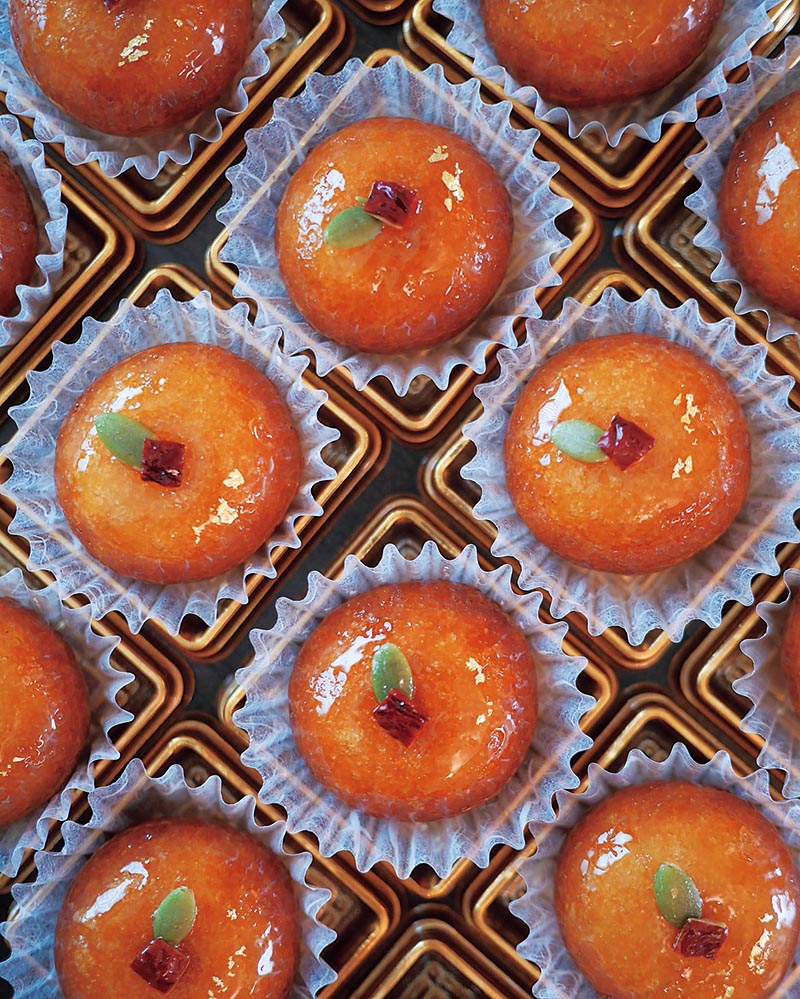
Gaeseong juak is a type of rice cake made by deep-frying a dough of glutinous rice, wheat flour, and makgeolli (traditional rice-based alcohol), then coating it in grain syrup. The traditional dessert house Muiyo honors time-tested recipes to create a chewy, delicately sweet confection.
© Muiyo
Korean confections called hangwa embody the philosophy and way of life of Korean forebears, requiring devotion, time, and skill to make. Tracing its origins as far back as the Three Kingdoms period (c. 57 BCE–668 CE), these traditional desserts bring together a diverse world of flavors and textures that have been passed down for centuries. During the Joseon Dynasty (1392–1910), traditional confections were widely enjoyed as a royal delicacy, and historical records from this period list over 250 distinct varieties. Deeply intertwined with the evolution of Korean culinary heritage, hangwa has long played an essential role at special occasions in Korea, from weddings and jesa (ancestral rites) to Buddhist rituals and important birthday celebrations. Even today, this living tradition continues to find fresh interpretations to reach a modern palate — both in Korea and abroad.
DISTINCT INGREDIENTS, TECHNIQUES, AND PHILOSOPHIES
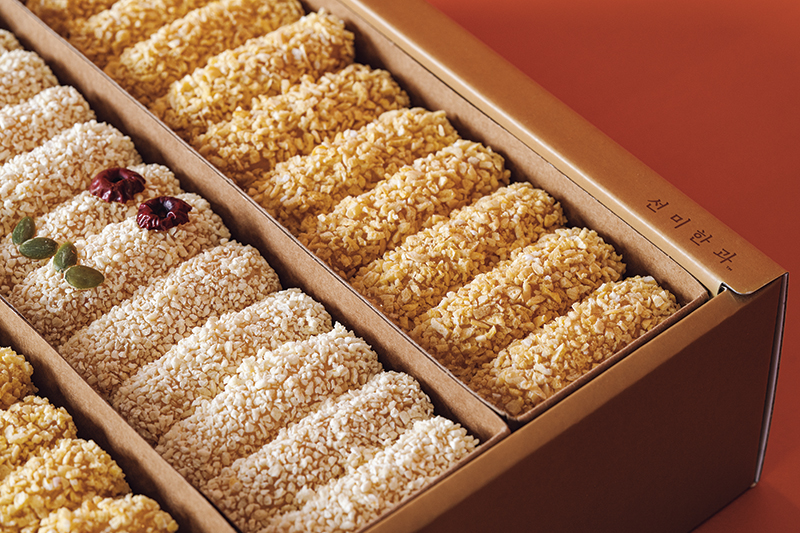
Sunmi Hangwa’s yugwa, characterized by a delicate, soft texture, is made using a traditional method passed down through three generations. Domestic glutinous rice is naturally fermented for over 20 days, then mixed with liquid extracted from soybeans to form the dough.
© Sunmi Hangwa
Depending on the ingredients and the cooking method, hangwa is largely classified into yugwa, yumilgwa, yeot-gang jeong, dasik, jeonggwa, and suksilgwa. Among the different types of hangwa, yugwa has the lightest texture, which requires a considerable level of technical skill and time-intensive preparation to achieve. Glutinous rice is soaked in water and fermented, then finely ground and steamed, after which the dough is cut into small pieces and left to dry and then deep-fried. During the frying process, hidden layers of air are formed inside the dough. These air pockets expand when the dough is fried in oil, which gives the yugwa its signature texture — crispy on the outside yet airy and soft enough to melt in your mouth. A short fermentation period means that the inside will be too hard, and if the dough is not kneaded sufficiently, it will not rise properly. Yugwa mass-produced in factories takes only a few days to make, whereas the traditional method usually requires more than two weeks. Those making yugwa by hand choose not to rush the process. They understand that the longer the wait, the airier and softer the texture becomes.
Different from yugwa, which is made with glutinous rice flour, the main ingredient for making yumilgwa is wheat flour. During the Goryeo (918– 1392) and Joseon (1392–1910) dynasties, yumilgwa was considered a luxury food so that bans were placed on its consumption on several occasions. The costly ingredients that went into making yumilgwa — namely wheat flour, honey, and oil — were the main culprits behind the rising prices of goods. Still, these traditional treats remained a fixture at feasts marking special occasions, and government officials would serve them with sool (alcohol) to get on the good side of their superiors. They were also included in the list of gifts exchanged at royal weddings.
Yakgwa (commonly translated as “honey cookie”) is a type of yumilgwa that is still widely enjoyed today. The traditional way of making yakgwa involves mixing wheat flour with sesame oil, honey, and the rice-based alcohol cheong ju, pan-frying the mixture in oil, then soaking in honey or grain syrup. High-quality yakgwa does not overpower the taste buds with sweetness right away. Instead, it delights with subtle hints of honey and sesame oil; then as the soft, moist texture slowly dissolves, a rich, nutty flavor fills the mouth. This kind of yakgwa is ultimately the product of time. The Chinese characters that make up the word yakgwa literally mean “medicinal confection.” There are various theories as to the origin of the name, but an undisputed fact is that the ingredients used to make yakgwa were all precious and hard to come by. Honey, the golden gift of nature, was not only a valuable sweetener but a medicinal ingredient; sesame oil was obtained through the laborious process of planting and harvesting sesame seeds, then roasting and pressing them. Likewise, wheat flour was not an easily accessible commodity, so serving a confection that combines these valuable ingredients was not merely a means of filling the stomach, but an expression of appreciation and high regard for someone.
Meanwhile, yeot-gang jeong is a type of hangwa that differs from yugwa in the way it is made as well as the ingredients used. Similar to a candy bar, this confection features a delightful assortment of ingredients such as sesame seeds, soybeans, pine nuts, and walnuts — a harmonious mixture that delivers a nutty flavor and a crunchy bite. Each ingredient is delicious on its own, but blended together, they produce a richer, more complex flavor. Yeot-gang jeong was typically made in the winter months using generous amounts of precious seeds and nuts, and served to guests on traditional holidays, such as Lunar New Year’s Day. More than simply a refreshment, it signified the joy of sharing the fruit of abundance with others.
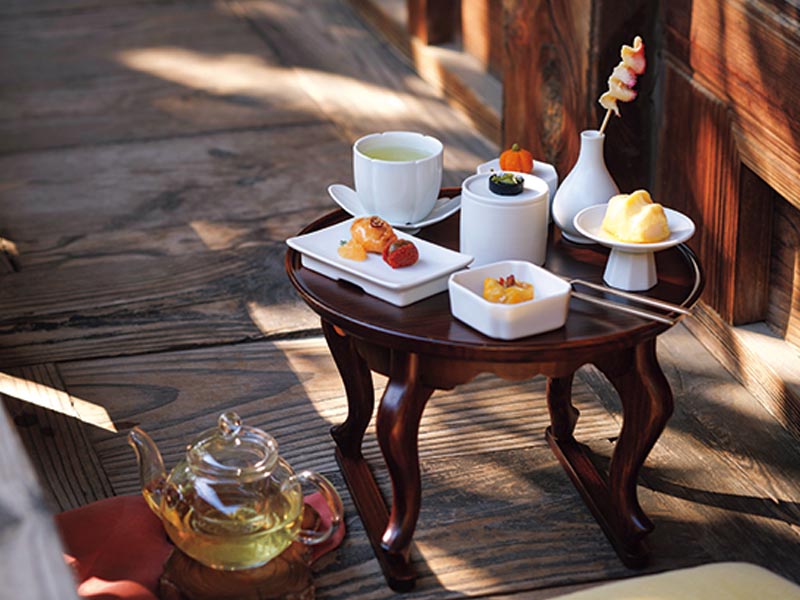
Kohojae is a brand of traditional tea-and-sweets offered by Korea House, a cultural complex operated by the Korea Heritage Agency. Visitors can experience traditional tea culture with a spread of seasonal rice cakes and confections served on soban (small wooden tables for dining).
© Kohojae, Korea House, Korea Heritage Agency
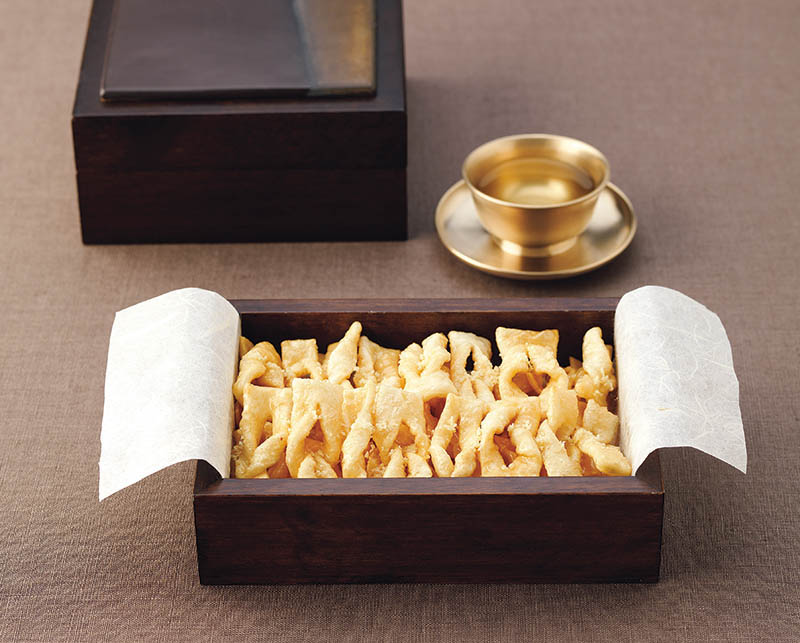
Maejakgwa is a deep-fried confection made from ginger-infused wheat flour dough twisted into a ribbon. The fried treat is then coated with honey or grain syrup and sprinkled with pine nut powder.
© Korean Food Promotion Institute
PRESERVING THE TASTE OF TRADITION
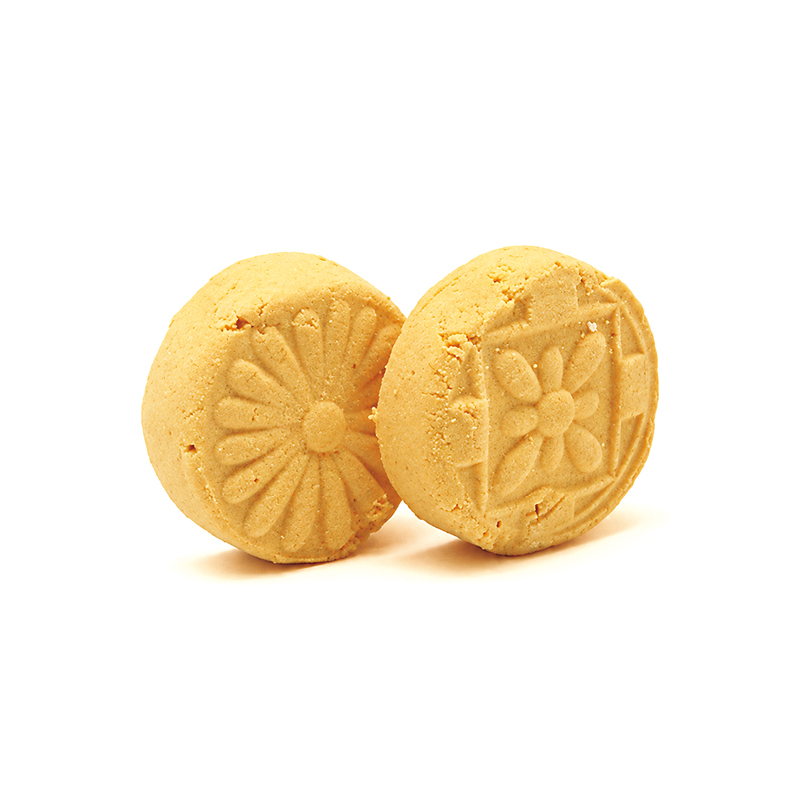
Howondang, known as Korea’s first specialty traditional confectionery shop, has been preserving the legacy of traditional Korean desserts across three generations. Pictured is its dasik, crafted from a pine pollen dough that has been pressed into a patterned mold.
© Howondang
For past generations of Koreans, hangwa was more than a sweet treat; it was an expression of the heart. As know-how and expertise accumulated over time, it was passed down through generations as a culinary tradition. However, preserving tradition is never an easy task. The more labor-intensive the process, the greater the temptation to cut corners; the older the method of preparation, the more likely it is to fade away, especially in an age that prioritizes efficiency. Despite the odds, there are establishments that have remained steadfastly committed to carrying on this tradition.
One of them is the traditional Korean confectionery shop Howondang. Its founder, Cho Jah-ho (1912–1976), was born into a distinguished family. She grew up surrounded by the culinary traditions of the aristocratic families and the royal court cuisine of the Joseon Dynasty. In 1939, she graduated from Tokyo Confectionery School, a rare feat for a Korean woman at that time. That same year, she published Joseon Cuisine Recipes (Joseon Yoribeop ), a cookbook sharing recipes and cooking methods that reveal the food culture of the aristocratic families and the royal court centered around Seoul. Then in 1953, she opened Hansik Dagwawon, the country’s first traditional confectionery store, in Seoul’s Jongno District.
That was the origin of Howondang, which is currently operating in the bustling Gangnam area. By meticulously documenting the flavors, crafting the confections by hand, and passing down its culinary legacy across three generations, this traditional confectionery shop has maintained its commitment to promoting the exquisite flavors of traditional hangwa.
TRADITIONAL CONFECTIONS BECOME EVERYDAY DESSERTS
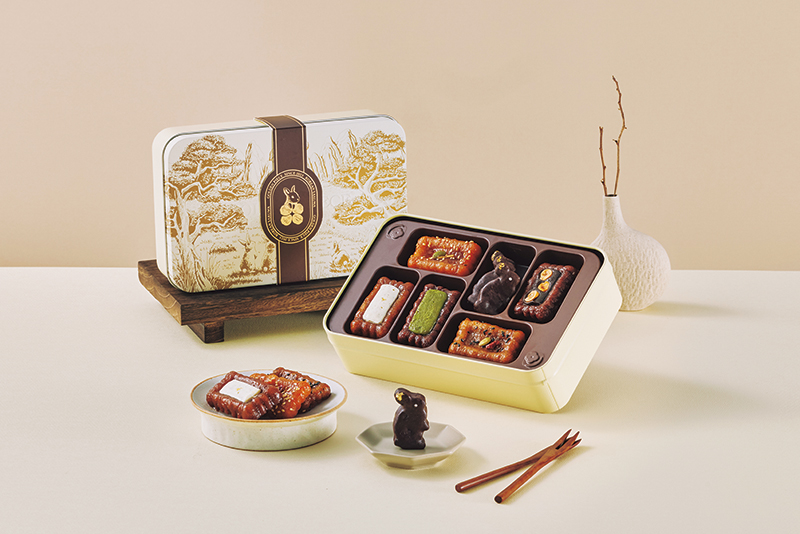
Golden Piece is a brand that reimagines traditional yakgwa as an elegant dessert that is ideal for gifting.
© Golden Piece
Once perceived as a special treat reserved for traditional holidays or festive occasions, hangwa has now evolved into a trendy dessert that has increasingly become part of everyday life. This is largely owing to brands that have infused traditional confections with a modern twist, which have appealed to the younger generation. A notable example is the premium yakgwa brand Golden Piece, which has appealed to younger consumers with contemporary design and packaging, on-trend branding, and a diverse array of products. What’s interesting is that the popular brand has preserved the familiar flavor of a traditional confection while adapting the size, texture, and design to align with contemporary trends, thus reimagining yakgwa as “a dessert you want to gift someone.” Such endeavors demonstrate that hangwa is not a food that is stuck in the past, but very much a part of contemporary culinary culture and continuously evolving.
The sweeping popularity of Korean cultural content is also spurring growing global interest in traditional Korean food, including K-desserts. Netflix’s cooking competition show Culinary Class Wars, which concluded its second season early this year, boosted interest in Korean food culture, while K-dramas featuring or themed on Korean cuisine, such as Bon Appétit, Your Majesty, brought renewed attention to Korean desserts. Further fueling this trend are short-form videos and social media content featuring young Koreans enjoying hangwa or lined up outside long-established confectionery stores.
Koreans these days eat yakgwa with coffee, top ice cream with yugwa, and pair yeot-gang jeong with wine or tea. Although the ways we enjoy these desserts have evolved with the times, the gracious hospitality extended toward others through food has remained unchanged. Traditions are not upheld by simply repeating something from the past. They endure when their spirit is preserved while adapting methods to align with contemporary sensibilities. Eating hangwa is more than simply relishing an old-fashioned dessert. It’s a way of rediscovering, through the palate, the care and devotion that goes into making these confections.
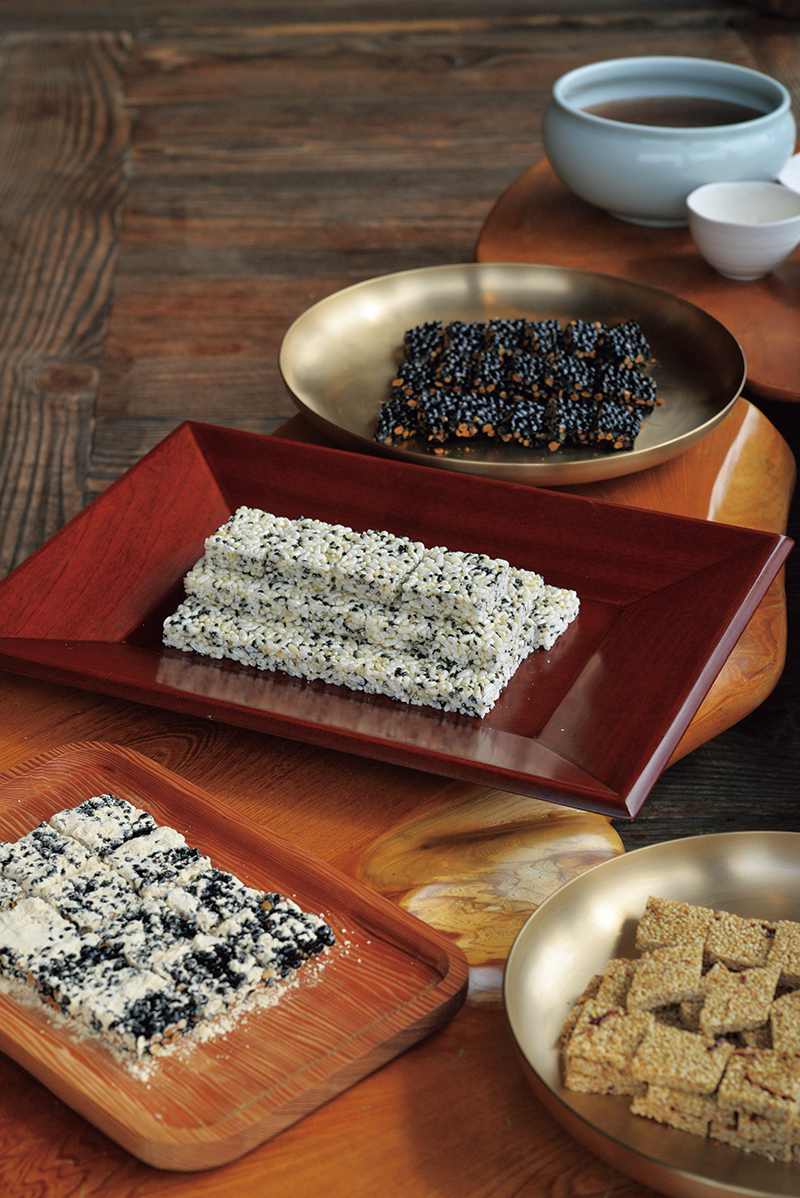
Yeot-gangjeong, a traditional confection made by combining ingredients like pine nuts, walnuts, soybeans, and sesame seeds with malt syrup and allowing the mixture to set, is prized for its nutty flavor and crisp bite.
© Korea Agro-Fisheries & Food Trade Corporation
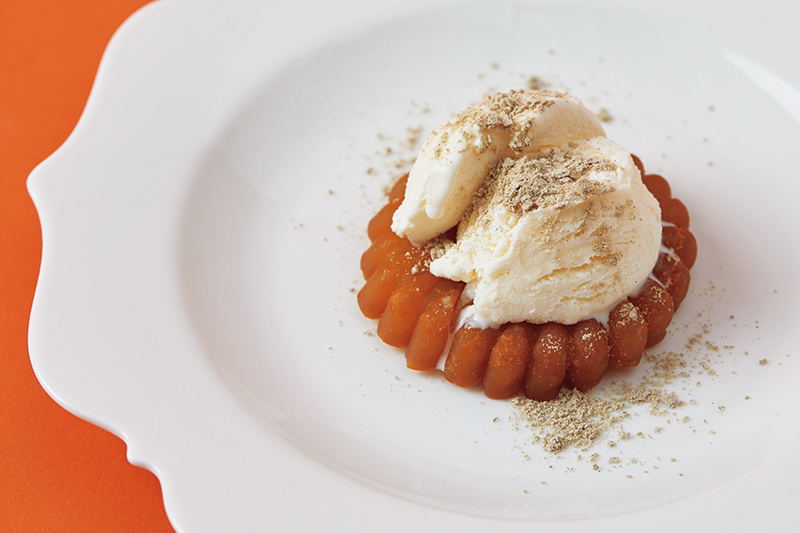
As yakgwa has grown popular among younger consumers, new ways of serving it have emerged, including pairings with vanilla ice cream and coffee.
© Getty Images
Lee Joo-yeon Gastronomy Columnist
 한국국제교류재단