YÉOL is a nonprofit organization founded in 2002 to raise awareness of Korean traditional culture and national heritage. It began with heritage preservation work and has since expanded to support both master artisans of traditional crafts and contemporary craftspeople. Its guiding belief is that tradition deserves a place in everyday life.
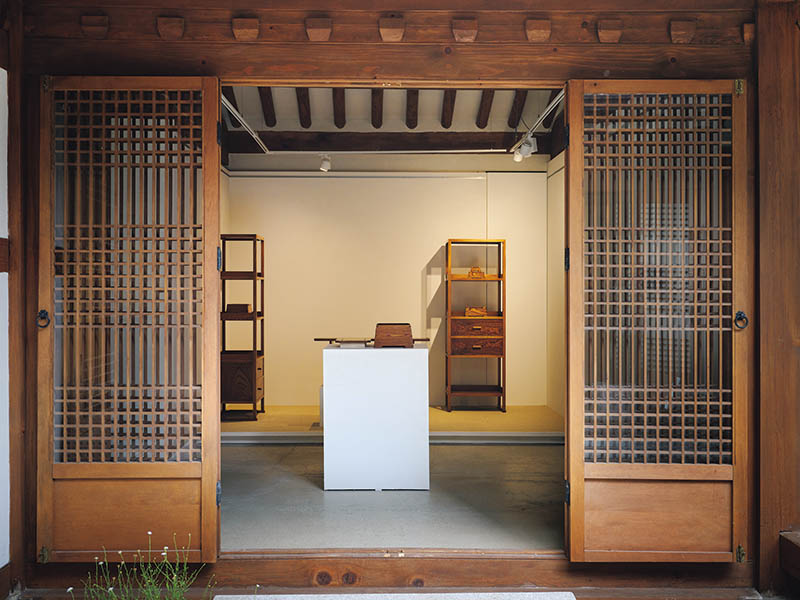
YÉOL Hanok (pictured) in Gahoe-dong, Seoul, primarily used to hold craft exhibitions, stands beside the modern YÉOL Bukchonga building, which hosts a variety of programs on traditional culture.
© Lee Min-hee
A total of 6.77 million people. This is not the population of a city. It is the number of foreign tourists who visited Korea between January and April 2026, as tallied by the Ministry of Culture, Sports and Tourism, and the figure marks an all-time high, up 21% from the same period a year earlier. As such, central and local governments are stepping up efforts to build infrastructure for this growing influx of visitors. The private sector has also joined the effort. A considerable number of organizations are running varied programs that promote the value of traditional culture, and YÉOL is one of them.
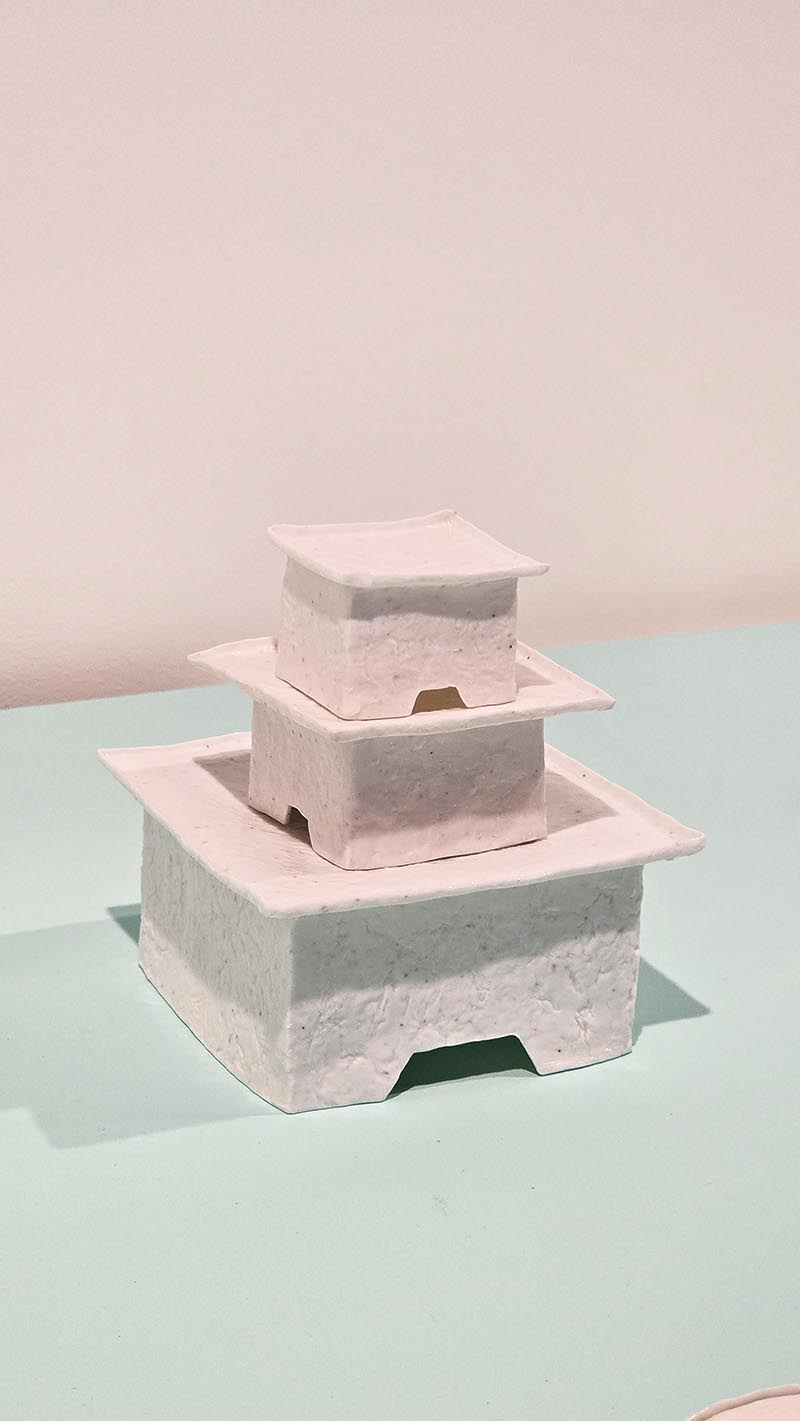
This ceramic work by Park Song-kuk, shown in YÉOL’s Soft Object craft exhibition in May 2026, translates the distinctive texture of hanji (traditional Korean paper) into ceramic form. Through curated exhibitions and craft sponsorship initiatives, YÉOL provides a public platform for accomplished craftspeople.
Courtesy of YÉOL
SMALL STEPS FIRST
“From around the mid-1990s, I often hosted foreign guests. I had nothing appropriate to show them or suitable to give as a gift. That felt like a real shame. At the same time, having lived abroad from a young age, my understanding of our culture was not particularly deep. Then, between the late 1990s and early 2000s, I got to know people such as Christine Bosworth, wife of the U.S. ambassador to Korea at the time, and their keen interest in Korean culture spurred me on. It also made me feel I needed to study more. Those experiences brought me together with others in circumstances similar to mine, and we pooled our resolve and founded YÉOL,” says Kim Young M’Young, a founding member of YÉOL and its chair since 2013.
YÉOL set out with the aim of bringing together a community of sponsors to study and promote the value of Korean culture. Its philosophy was firm from the start. Rather than pursuing grand causes, it focused on small, practical tasks and faithfully executed them. One telling example was an early flagship project: improving the signage at cultural heritage sites. Signage is often the first thing visitors encounter, making it an important part of a site’s first impression. This makes it essential for signage to offer accurate information and draw interest through clear, well-structured presentation. At the time, however, English-language signage at cultural heritage sites was thin on substance, inaccurate in wording, and unsophisticated in design. This project began in earnest in 2005 at Jogye Temple in Seoul, a historic temple at the center of Korean Buddhism. YÉOL produced a comprehensive sign outlining the temple’s history, along with additional signs explaining the significance of its cultural artifacts.
Ahead of the 2012 World Expo held in Yeosu, YÉOL carried out a project from 2008 to 2011 to improve the information system for cultural heritage sites, aiming to spread awareness of the value and significance of the city’s local heritage. Yeosu’s cultural sites were grouped by theme: sites linked to Admiral Yi Sun-sin (1545–1598), Buddhist sites, and landmarks from Korea’s modern history. The project installed 150 signs across the city and also produced a pocket guidebook and an audio guide.
YÉOL made cultural heritage preservation one of its earliest priorities, viewing such heritage as the clearest embodiment of the values and identity that Korean society had built over generations. Rather than pursue visible achievements, the organization focused on the groundwork necessary for the sound preservation and promotion of cultural heritage. This same conviction explains why Sajikdan (a Neo-Confucian altar) drew its attention from the very beginning. Located west of Gyeongbok Palace, it was the place where rites for the gods of land and grain were held during the Joseon Dynasty (1392–1910). Together with Jongmyo Shrine, which houses the spirit tablets of the kings and queens, it formed the spiritual foundation of the Joseon state. Where Jongmyo Shrine gained recognition for its value through UNESCO World Heritage inscription in 1995, Sajikdan was downgraded to “Sajik Park” during the Japanese occupation period and has suffered damage ever since. For this reason, YÉOL came to regard the maintenance and restoration of Sajikdan as an urgent priority. In 2003, it convened a forum with experts from various fields to explore ways of restoring the site’s historical integrity and improving its surrounding environment. The forum sparked public discussion on the need for restoration, and that same year, the protected area around Sajikdan was substantially expanded from 9,090 m² to 43,587 m².
YÉOL’s efforts to restore and preserve historical heritage extend beyond Sajikdan. One such example was its support for organizing and translating archival materials at Yeosu’s Aeyangwon History Museum from 2010 to 2013. Aeyangwon traces its roots to the Gwangju Leprosy Hospital, founded in 1911 by the missionary Robert Manton Wilson for patients with Hansen’s disease. The institution’s relocation to Yeosu began in 1927, and it took the name Aeyangwon in 1935 before growing into what is today Yeosu Aeyang Rehabilitation Hospital. Although this is not a widely known part of Korea’s heritage, the effort reveals YÉOL’s genuine commitment to documenting and preserving histories that might otherwise be easily forgotten.
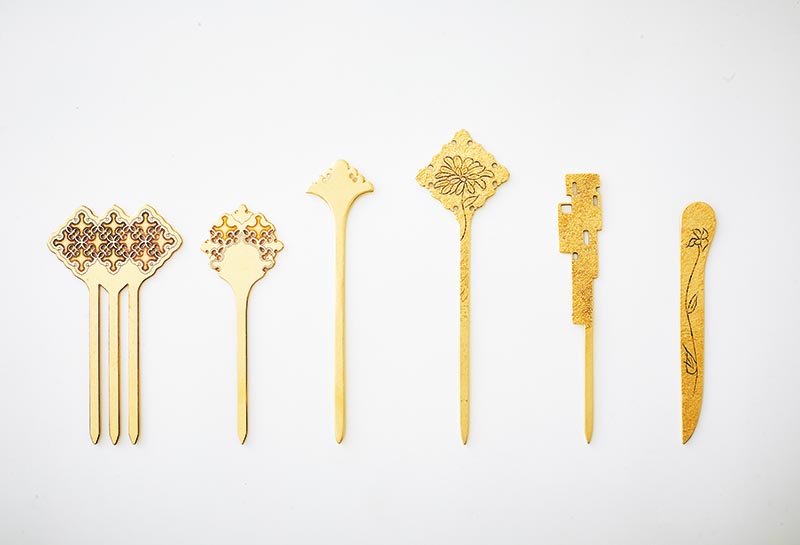
Heo Dae Chun and Ahn Yi Hwan, YÉOL’s 2017 Artisans of the Year, are makers of jangseok (metal fittings used on wooden furniture). By applying traditional metalworking techniques and motifs to make everyday objects such as forks (pictured), they demonstrate new possibilities for the craft.
Courtesy of YÉOL
THE PRESENT AND FUTURE OF TRADITIONAL CRAFTSMANSHIP
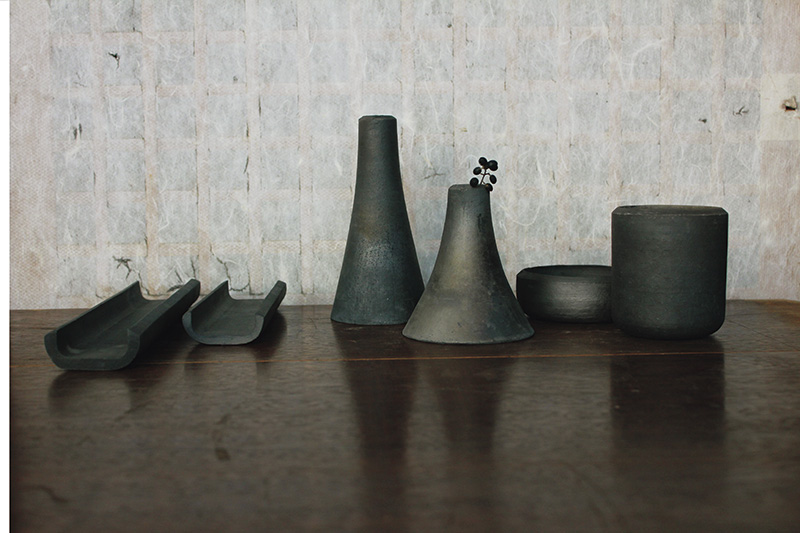
As part of the Buyeo: Sprouting of Regional Arts and Culture project, experts and local craftspeople collaborated to develop products — such as desk accessories made of local clay (pictured) — aimed at revitalizing Buyeo’s distinctive cultural and craft ecosystem.
Courtesy of YÉOL
YÉOL’s projects are based on collaborative efforts, with experts pointing the way forward, while citizens who care about Korean culture pitch in with donations and volunteer work. The Buyeo: Sprouting of Regional Arts and Culture project also took shape through consultation with specialists in the field. Located in the southwestern part of South Chungcheong Province, Buyeo served as the last capital of the ancient kingdom of Baekje (18 BCE–660 CE), which flourished there for over 120 years. As a result, the region retains a wealth of Baekje-era cultural heritage.
“I once saw the Great Gilt-Bronze Incense Burner of Baekje at the Buyeo National Museum, and it left a deep impression on me,” reflects Kim. “It’s a masterpiece of the era’s metalwork, striking for its sculptural artistry. But once I stepped outside the museum, I found little trace of Baekje culture in Buyeo. This led me to think it would be wonderful to build a sustainable cultural ecosystem, one that connects this region’s heritage, crafts, and its people. So I began working with several experts, including art director Rhee Sang Chol, who continues to advise us today, and designer Kosei Shirotani, who has worked in Japan to revive regional craft traditions,” Kim explains about how the 2012 project came about.
At the time, YÉOL developed cultural products that expressed Buyeo’s distinct identity. The project was developed under the overall direction of the now retired Professor Choi Gong Ho of the Department of Intangible Heritage Studies at the Korea National University of Cultural Heritage (now the Korea National University of Heritage) in Buyeo, in collaboration with students from the department and local artists such as potters, woodcraft artisans, and painters. Through this project, YÉOL arrived at an answer on how traditional regional culture might be reinterpreted for the present day. In this way, YÉOL has never viewed cultural heritage merely as something to be preserved in the past; instead, it has sought to bring it into the present so that people today can enjoy it. Culture, after all, is something carried forward by people.
The YÉOL × Chanel Project, running in partnership with Chanel since 2022, reflects exactly this belief. “This project, developed in partnership with a global brand synonymous with luxury and grounded in a shared commitment to honoring craftsmanship and its values, supports the future of Korean craft,” explains Kim. “Picture a piece of exceptional quality, made through a partnership between a master artisan of gold-leaf work and an ottchil (traditional Korean lacquer) artisan who works with natural sap from the lacquer tree. Now imagine that ordinary people could own such a piece at a reasonable price. That is how tradition escapes being preserved like a specimen and steps into everyday life.”
Traditional craft, unlike structures or historic sites, is perhaps most closely connected to everyday life among the various forms of cultural heritage. Small boxes, pen cases, vessels, and vases all combine tradition with practicality. In 2013, before the YÉOL × Chanel Project began, Kim took on the role of chairperson and launched YÉOL Artisan of the Year and YÉOL Young Craftsman of the Year programs. Through these initiatives, artisans who have mastered traditional techniques while remaining open to contemporary applications receive support at every stage — from development to exhibition, promotion, and sales. They also give young craftspeople a space for creative experimentation.
Of course, such projects come with their share of challenges. Selecting candidates alone is no easy task, since persuading traditional artisans, many of whom are firmly attached to established practices, takes considerable effort. According to Kim, “A committee of advisors from various fields meets to make the selection, weighing technical excellence alongside personal character and reputation. Just as important is whether the artisan stays true to tradition while remaining open to change, since the real challenge lies in producing work suited to the fast-changing conditions of modern life.”
The two central figures in the 2026 YÉOL × Chanel Project are somokjang (master artisan of furniture making) Cho Bok Rae, Artisan of the Year, and ceramic artist Baek Kyung Won, Young Craftsman of the Year. Their pieces were recently exhibited at the cultural complex YÉOL Bukchonga under the title Jinso Crafts: A Discerning Eye, A Shaping Hand.
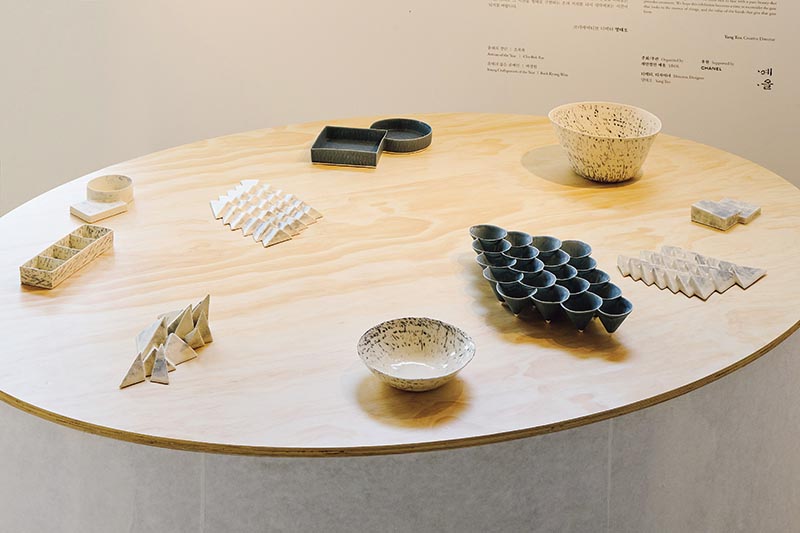
The 2026 YÉOL × Chanel Project exhibition, Jinso Crafts: A Discerning Eye, A Shaping Hand, held at YÉOL Bukchonga and YÉOL Hanok, featured works by Cho Bok Rae (Artisan of the Year) and Baek Kyung Won (Young Craftsman of the Year), who highlighted the inherent material qualities of wood and clay, respectively.
© Chanel
COLLABORATION AT THE CORE
“Teo Yang, head of Teo Yang Studio, is a designer whose work centers on interpreting tradition and regional character through a contemporary lens,” explains Kim. “He has collaborated with YÉOL on exhibitions and craft projects since 2019, later taking on the role of exhibition director for the YÉOL × Chanel Project in 2023.” YÉOL’s orientation toward reinterpreting and enjoying tradition hinges on the director, who coordinates participants’ perspectives while shaping each exhibition. Kim pointed to Yang, who has led the project for four years now, and credited him with helping YÉOL sustain a consistently high level of quality. With YÉOL’s support, artisans and artists can exhibit their work and earn income through sales. This also reflects YÉOL’s aim of turning consumers into patrons of these artisans.
Kim adds, “Many traditional craft artisans face difficult economic circumstances. A sense of duty alone isn’t enough to pass a skill down to the next generation, so we hope our efforts can offer even a small measure of help. There’s something else, too. Take jangseok, the metal fittings used for things like hinges and locks. People tend to see them as mere accessories to wooden furniture. But through our project, we found it fascinating to discover that jangseok can stand as artwork on its own, taking center stage through collaboration with a young woodcraft artisan. It was a personally memorable project for me.”
Beyond its main efforts in cultural heritage preservation and craft support, YÉOL also runs a range of other programs, including English classes, heritage site excursions, and special lectures. After more than two decades of working to sustain traditional culture, YÉOL now envisions something new. Alongside its domestic work, the organization hopes to present curated exhibitions in collaboration with museums and galleries abroad. Over the past two decades, YÉOL has fixed its gaze on preserving and rediscovering the value of Korean culture. Now, it is setting its sights on a wider world.
Choi Tae-won Writer
 한국국제교류재단