The Korean War (1950-53) claimed over three million lives and reducedthe Korean peninsula to rubble and ashes. For Koreans, the war was a cruel ordeal of internecine hostility. Popular songs reflected their shattered lives and the ultimate sacrifices that were made.
Modern popular music in Korea began to emerge in the 1910s, when components of Western music accompanied the start of Japan’s decades-long occupation. The traditional segregation of music according to socioeconomic class and region receded. Universality in melodies and lyrics moved to the forefront, mirroring the sentiments and tastes of the majority of the people.
In the 1930s, healthy growth of album sales and radio broadcasts placed these new types of songs onto the center stage of popular culture. By then, the Japanese had set up joint ventures with U.S.-based Columbia Records and Victor Records, who had entered Korea a few years before the occupation began. The Japanese attempted to use songs to facilitate their colonial control over Korea, and after World War II erupted, they also sought songs to lift the morale of troops.
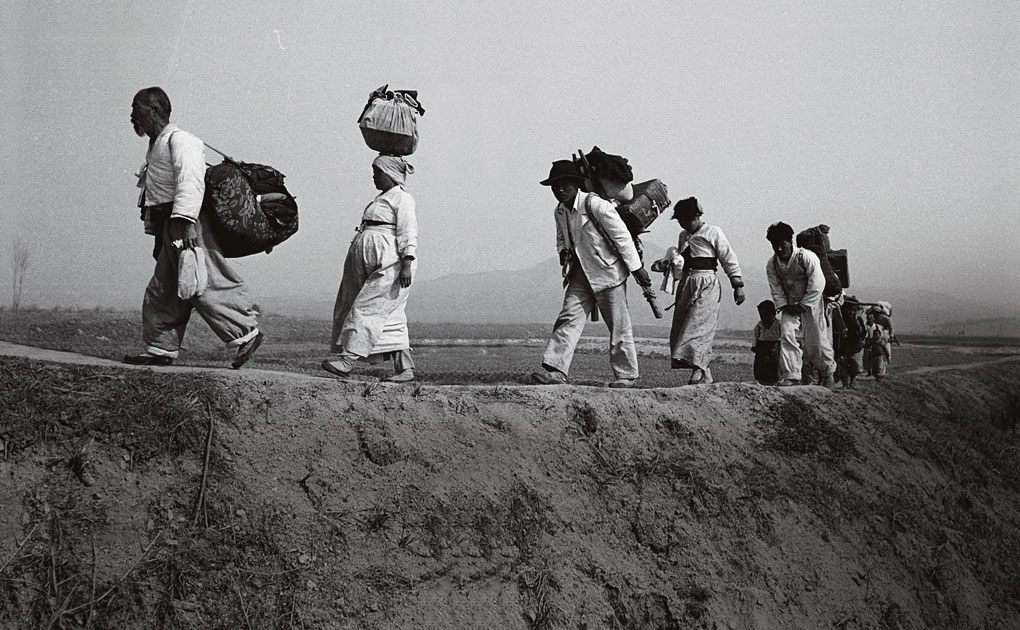
After UN forces stopped advancing Chinese forces at the Battle of Uijeongbu, north of Seoul, on January 1-4, 1951, residents flee southward on foot, leaving behind everything except what they can manage to carry.© gettyimages; Photo by Joe Scherschel
Independence
After liberation in 1945, the popular music industry was unable to exercise its independence. The equipment used for live performances remained when the Japanese occupiers left, so concerts could be arranged easily by Koreans who were versed in logistics. But producing records was another matter. Koreans lacked the know-how behind the record production that had long been done only in Japan.
Various difficulties hampered record producers, but in August 1947, exactly two years after liberation, the first record made solely with Korean capital and technology finally appeared. It was produced under the country’s first record label, Korea Records. The song was “The National Anthem.”
The second half of the 1940s was extremely chaotic. The division of Korea into the communist North and the democratic South, backed by the Soviet Union and the United States, respectively, made the peninsula a hotbed of civil strife and a Cold War flashpoint. Popular songs released during those years typically described the public’s responses to territorial division.
“Begone, 38th Parallel,” released in 1948 by Korea Records, was the first popular music record. It best expressed the uncertainty and fears that people felt, wishing for the day when the Cold War barrier, running along the 38th parallel separating the two Koreas, would disappear. (A link to the song can be found on page 8.) It inspired several other songs lamenting the reality of a divided nation.
Another notable development in the record industry at the time was the establishment of labels outside of Seoul. Corona Records was launched in Busan in 1948, and Orient Gramophone entered the industry from Daegu in 1949. These big regional cities suffered far less damage during the Korean War, and thanks to the record companies based in these relatively safer rear areas, the production of new songs never stopped during the conflict.
Fear of fratricidal hostility intermingled with the longing for reunification. The trepidation intensified in 1948, when separate governments were established in Seoul and Pyongyang. Border clashes erupted and pro-communist partisans mounted insurgencies in the South. One battle in 1949 that claimed the lives of 10 South Korean soldiers inspired a large-scale musical entitled “Ten Courageous Human Bullets.” Produced with state support, the show toured the whole country, performing in major cities. Later, during the war when the military became the major stage for entertainers, the Korean Artists’ Unit was formed in 1951 to perform shows for troops.
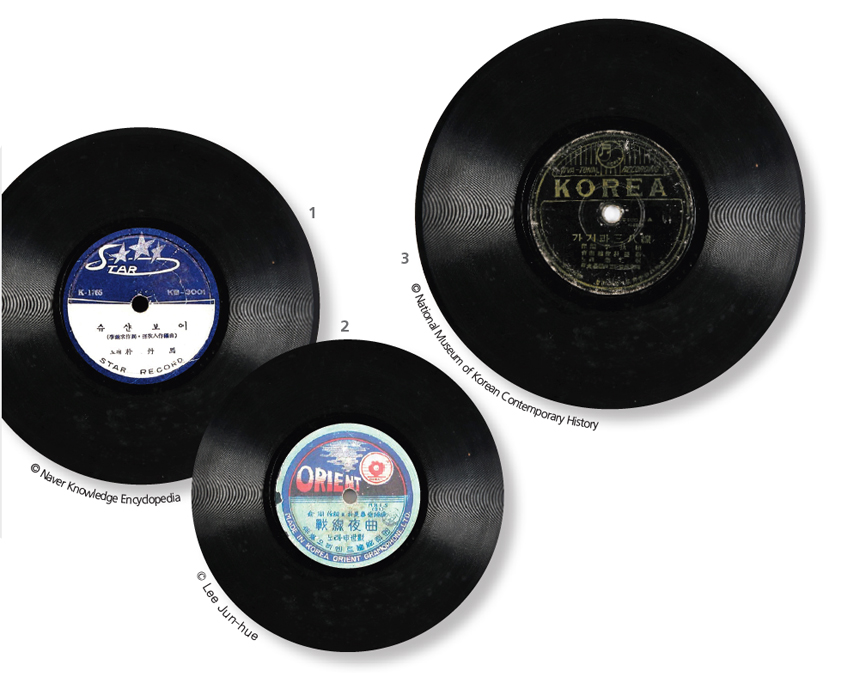
1.“Shoeshine Boy,” a 1954 single play gramophone record from Star Records,is a comical song about young men who barely eke out a living by shining shoes. ©Naver Knowledge Encyclopedia
2.“Frontline Nocturne,” a single released by Orient Gramophone in 1952. The title song is about a frontline soldier in mortal danger longing for his mother. ©Lee Junhue
3.“Begone, 38th Parallel” was the first popular music album produced solely with Korean capital and technology. Released by Korea Records in 1948, it bridged World War II and the Korean War. ©National Museum of Korean Contemporary History
Internecine Conflict
The Korean War began in the early morning of Sunday, June 25, 1950. North Korean forces poured across the 38th parallel, routing South Korean forces who were totally unprepared. Seoul fell in just three days and many residents were unable to flee ahead of the takeover. Among them was Park Si-chun, composer of “Begone, 38th Parallel” as well as the musical “Ten Courageous Human Bullets,” who had no choice but to go into hiding. It was uncertain what would happen if he were to be arrested by Northern troops. His friend and rival composer Kim Hae-song (a.k.a. Kim He-szong) was captured and died while being taken to the North.
By September 1950, the North Korean advance was stopped near the southernmost port city of Busan, the wartime provisional capital, with its supply lines in tatters. UN forces and South Korean troops counterattacked, recapturing Seoul and pushing steadily into the North. This was the background for Park Si-chun’s new song “Sleep Well, Comrades in Arms.” A military anthem and popular song at the same time, it was such a success that even children sang along to it.
After the UN forces and South Korean troops captured Pyongyang and approached the Yalu River on the border with China, anticipation of victory and reunification by the end of the year swelled. But China suddenly threw its army into the fight in October 1950, and the war reversed course once more. When Seoul was occupied again in January 1951, anyone who could flee the capital headed to southern regions for refuge. Entertainers were among them. Some crossed the sea to Jeju Island and joined the artists’ unit, while others found temporary homes in Daegu or Busan and continued to work there as musicians.
Naturally, most of the new songs were directly or indirectly related to the war, but their subjects and methods ofvaried widely. For example, “Frontline Nocturne,” describing the soldiers’ situation and mental state when they straddled life and death, was a huge hit (link on page 8). Other favorites focused on family and non-combatants. “The Wife’s Song” expressed the heartrending feelings of a woman sending her husband to the front line. “Be Strong, Geum-soon” dramatically narrated the lives of those who had lost their families and homes in the war (link on page 9).
Not all of the songs were doleful croonings about the harsh realities of war. “Shoeshine Boy” comically described everyday life in rear areas as experienced by a young shoeshine boy. Songs like “Why the Watermill Turns,” a lyrical eulogy to pastoral life, helped ease the fatigue and desolation of war. Similarly, songs about faraway lands provided a welcome escape for a few moments. Among them was “Incense of India.”
An armistice agreement signed in July 1953 stopped the roar of guns but not the stream of songs with war-related themes. The complex feelings of those leaving Busan and returning home to Seoul were given shape in “Farewell at Busan Station,” and the despair of refugees from the North who had nowhere to return was depicted in “Hometown in My Dreams.” The tragedy of families torn apart by war, which never ended with the silence of guns, was embedded in “Miari, Hill of Wrenching Sadness” (link to the song on page 9; related story on page 62).
Still Ongoing
Throughout the 1950s, popular songs continued to recall the wounds of war. It was a period of horrific pain and loss. Everyone lost something, whether their life or part of their body, their family or hometown, or a house or money. Popular songs were a source of strength that helped them rise and move forward again with purpose.
The influence of the Korean War on popular music was felt beyond these wartime songs. During and after the war, tens of thousands of American soldiers were stationed in South Korea. The Korean musicians recruited for their entertainment absorbed American pop music, which later had a tremendous impact on the Korean pop music scene of the 1960s. The works of many musicians who had gone to the North, either willingly or as abductees, also had a delayed influence. Their music was banned in the South until the 1990s, when the Cold War system collapsed.
Even today, when memories of war are dimming, wartime songs are still listed among beloved oldies. The exact relationship between war and Korean popular music has yet to be succinctly explained, and in some ways must be seen as a history still in the making. After all, although the country has overcome devastating poverty, national division remains a somber reality that threatens peace.
The exact relationship
between war and Korean popular music
has yet to be succinctly explained,
and in some ways must be seen as
a history still in the making.
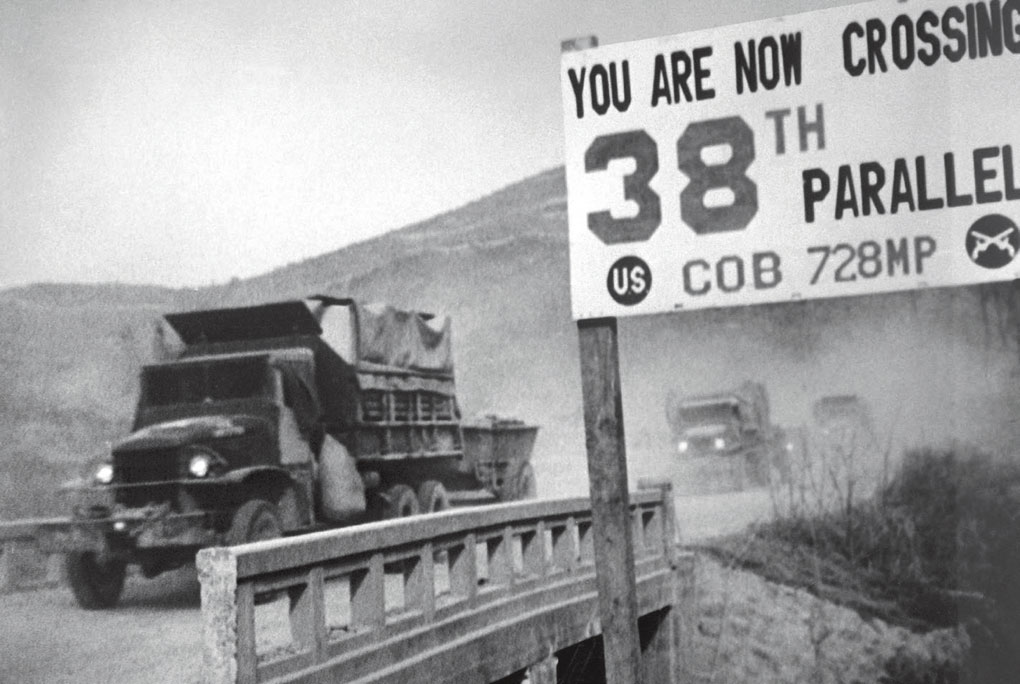
UN forces cross a bridge spanning the 38th parallel in 1950 after retreating from Pyongyang. In the wake of the 1953 Korean War armistice, many popular songs lamented national division, as symbolized by the border. © gettyimages; Photo courtesy of Interim Archives
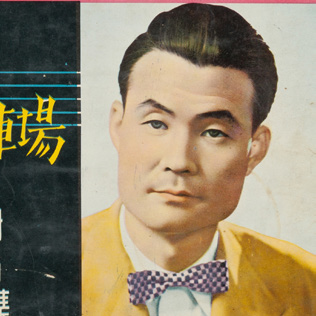
Begone, 38th Parallel
Lyricist Lee Bu-pung
Composer Park Si-chun
Singer Nam In-su
Ah– does the mountain block your way to me?
Ah– does the water block your way to me?
It’s the same homeland we all crisscross, but
Blocked to North and South, the endless bitter road
In every dream– I search for you
In every dream I search for you
The 38th Parallel is to blame
Ah– when the flowers bloom, will you finally return?
Ah– when the snow falls, will you finally return?
The ridge we crossed, packs on our backs
The mountain birds, crying, crossed with me
Oh Freedom– for you
Oh Freedom for you
I give this life
Ah– How much longer ‘til it all blasts open?
Ah– How much longer ‘til it all disappears?
Who first called it the 38th Parallel
Making us weep so, across every ridge?
I put my hands together– and pray
I put my hands together and pray
Begone, 38th Parallel

https://youtu.be/jqkh26uaMAU
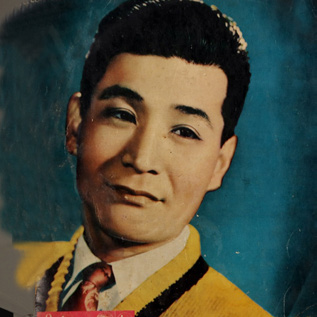
Frontline Nocturne
Lyricist Yoo Ho
Composer Park Si-chun
Singer Shin Se-yeong
Dry leaves flutter on this
Frontline moonlit night–
Soundlessly touching down
Even the dew is cold
No rest to be had, tossing and turning
In my sleepless ear, the voice of my mother
Who taught me
How to be a man–
Ah–
How I long to hear that voice
The distant ringing bells
I make my lullaby–
Dreaming, I run through my hometown
Right up to our old house, where
Over a bowl of water freshly drawn
She prays for her son
My mother, her hair
So blinding white, I weep–
Ah–
How I longed to sweep her up in my arms

https://youtu.be/ZjjqCRGZXgI
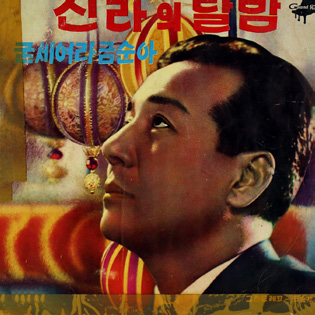
Be Strong, Geum-soon
Lyricist Kang Sarang
Composer Park Si-chun
Singer Hyeon In
Snow whipping, storm rising
On windy Hungnam pier–
Throat open, I tried calling out
I tried searching
Oh Geum-soon, where did you go,
Were you lost and wandering?
Weeping tears of blood,
After the retreat I’ve come alone
A body without kith or kin
What are you doing?
This body of mine
Is a peddler now at Gukje Market
Oh Geum-soon, I miss you so
I long for those dreams of home
On Yeongdo Bridge, above the handrail
The new moon floats, lonely–
Iron Curtain, harshest sorrows
We must live with it all, but–
Here, between heaven and earth
It’s still you and me–
That will never change
Oh Geum-soon, be strong for me
When the day finally comes
Of North-South reunification
We can hold hands and cry together
We can embrace and dance together

https://youtu.be/KQazL-qi2_Y
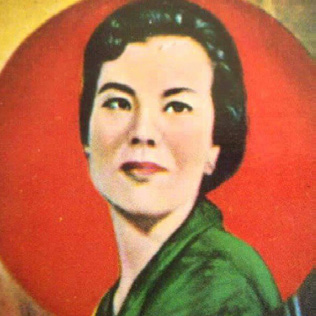
Miari, Hill of Wrenching Sadness
Lyricist Ban Ya-wol
Composer Lee Jae-ho
Singer Lee Hae-yeon
Miari–hill of tears
Crossed by my love, this hill of farewells
Blinded by gunpowder, eyes shut,
I staggered through the smoke, while
You– hands tied up tight with barbed wire,
Looked back, looked back again
Your feet bare, limping, limping,
As they dragged you over this hill
Miari Hill, so full of sorrow
(Narration)
Darling, where are you now? What are you doing? Little Yeong-gu spent another evening asking for his father before finally falling asleep just now. On these endless midwinter nights when the northern winds and snow start to rage, how you must suffer in your prison cell. Whether ten years pass, or a hundred, just come back to us alive, won’t you? Darling, oh darling–
Asking for his father,
The young child falls asleep
On these endless midwinter nights
When the northern winds and snow start to rage,
You– how you must suffer in your prison cell
Whether ten years pass, or a hundred,
Just come back to us alive
Oh, this hill, this hill we crossed in tears
Miari Hill, so full of sorrow

https://youtu.be/2Zz77mDiA-U
Lee Jun-hueAdjunct Professor, Sungkonghoe University
 한국국제교류재단