Movie actors and actresses are a mirror of the times. So who are the favorite film stars of Koreanaudiences today? On whom do we project our dreams and aspirations? Here we picked out threewho have dominated the big screen and seem set to continue to do so for quite a while.
Song Kang-ho
Tectonic Shift that Began 20 Years Ago
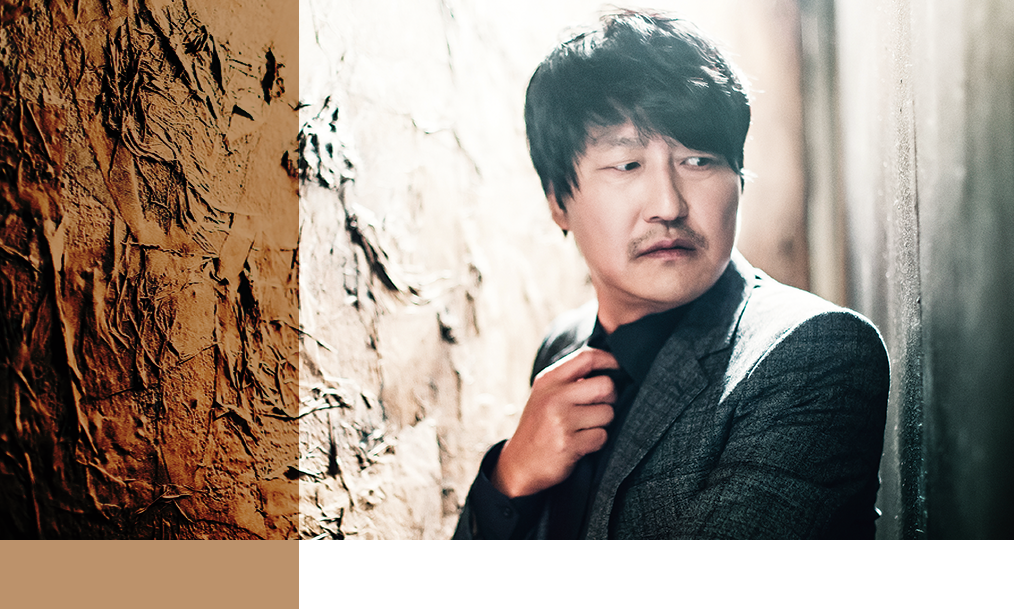
With the success of his most recentmovie “The Age of Shadows” (2016), SongKang-ho has become the first actor in thehistory of Korean cinema to attract a cumulative100 million viewers for the movies hehas headlined. His achievements cannot begauged by numbers alone, but the 22 moviesthat he has starred in during his 20-yearcareer are sufficient proof of why he iswidely regarded as one of Korea’s greatestand most influential screen actors.
“I can’t picture
myself
playing the
part of a
super rich,
intelligent
guy or a
melancholic
character.”
“I can’t picturemyselfplaying thepart of asuper rich,intelligentguy or amelancholiccharacter.”
Song Kang-ho is the face of our day,shaped by the changing times. He made hismark as a third-rate gangster in “No. 3” in1997. It was a minor role but he captivatedaudiences with his comic acting, heightenedby his strong Busan accent. Koreanstylegangster movies combining comedyand action were enjoying a boom at thetime, and Song just seemed to be a standoutamong the many supporting actors inthat genre. Unknown to many, his entry intothe movie scene had set off a tectonic shiftin the Korean movie industry.
Song did not fit the movie star moldof that time. He did not have the chiseledfeatures of popular actors, and his Busanaccent was far from chic. Back then, no onethought that he would one day become ahousehold name, helping to attract audiencesof over 10 million each with “TheHost” (2006) and “The Attorney” (2013),and break into the Hollywood scene with“Snowpiercer” (2013).
Firmly grounded in the solid acting skillshe cultivated on stage, Song’s understatednaturalistic style, coupled with his distinctiveaccent and gestures, were a freshdeparture from the norm. Director ParkChan-wook, who worked with Song on suchfilms as “Joint Security Area” (2000) — inwhich Song gives an impressive, pathosfilledperformance as North Korean SergeantOh Kyeong-pil, solidifying his statusas a leading actor — “Sympathy forMr. Vengeance” (2002) and “Thirst” (2009),describes Song’s acting: “I think the wordthat defines Song Kang-ho’s 20 years ofacting is ‘modernity’ — modernity in acting.He started out in genre movies, but eventuallyexpanded his scope to encompassall types of movies. I think that is what’s sospecial about him.”
Song does not hesitate to work withnew directors. Han Jae-rim, who workedwith Song on his second movie, “The ShowMust Go On” (2007), recalls how Song willinglyagreed to do it without even seeing thescreenplay, though he had already workedwith several prominent directors. Song hasone rule for choosing the movies he wantsto do; he steers clear of similar charactersto avoid being typecast.
The keyword of Song’s acting is the“ordinary man.” “I get offered a lot of thoseroles. They’re right up my alley. I can’t picturemyself playing the part of a super rich,intelligent guy or a melancholic character,”he says with a laugh. His characters thatstand up for the regular guy have resonateddeeply with audiences. In “The Show MustGo On,” he turns in a convincing performanceas the underboss of an organizedgang who struggles to provide for his familylike any ordinary middle-aged man. In“Memories of Murder” (2003), he blurts outthe impromptu question, “Have you eaten?”to show that detectives are human, too. In“The Host,” he plays an ordinary father whoruns a small food stand with his family at theHan River Citizen’s Park. He then strugglesagainst all odds to save his daughter from themonstrous creature that has abducted her. Asfor this type of character, the most prominentis Song Woo-seok in “The Attorney,” modeledafter former president Roh Moo-hyun inhis early years as a human rights lawyer. Thecourt scene where he declares passionately,“Sovereignty lies with the people. All authorityis granted by the people. The people are thenation!” is a brilliant example of Song’s powerfulscreen presence.
Regarding the close-up of Song’s face atthe end of “Memories of Murder,” film criticKim Yeong-jin says, “It is anthatsums up an era in Korean history.” He goeson: “Song is an actor who is capable of internalizingany character he takes on and transformingit into a Song Kang-ho type persona.He s the aura of his character accordingto its occupation, social status, and personality,and in this sense he is an artist whobrings the sensibilities of ordinary, everydaylife to the screen.”
Song is currently shooting “Taxi Driver” inwhich he plays yet again an ordinary citizen, ataxi driver named Man-seop, who happens topick up a German reporter and takes him toGwangju, where the reporter risks his life tocover the May 18 Democratic Uprising of 1980.
Jeon Do-yeon
World Star Respected by Fellow Actors
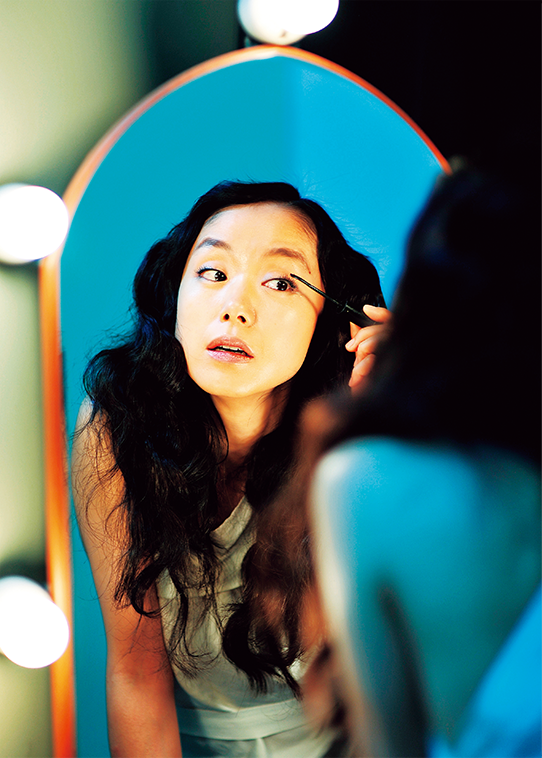
On May 27, 2007, at the closing ceremonyof the 60th Cannes Film Festival, Jeon Doyeonreceived the Best Actress award for herrole in “Secret Sunshine” (2007) — the firstsuch honor for a Korean. She earned criticalacclaim for her intense performance as Shinae,a woman who has to live with the heartrendingloss of her child. Jeon smiled radiantlyas she accepted the trophy from actor AlainDelon. At the time, her co-star, Song Kang-ho,was mentioned as “one of the future faces ofCannes.” The modifier “world star” has beenattached to Jeon’s name ever since.

“I just go with
whatever
speaks to my
heart. I don’t
obsess over
having to play
a different
character from
my previous
works.”
“I just go withwhateverspeaks to myheart. I don’tobsess overhaving to playa differentcharacter frommy previousworks.”
Jeon worked part-time as a magazinemodel in high school, and began her actingcareer in TV dramas before turning to the bigscreen. Her baby-faced, plain looks didn’tstand out among the glamorous actressesand she was simply considered “a supportingactor who knows how to act.” Her debutfilm, “The Contact” (1997), produced byMyung Films, unlocked her star potential. Tostart with, she made some bold style choicesfor the role. Putting aside a desire to appearpretty on screen, she opted for light makeupand a rather ordinary short perm, a daringlook for a lead actress at that time. With itsmodern directional style, the movie presenteda new type of melodrama in Korean cinema,and Jeon played a key part in its novelty.
Jeon’s filmography covers a wide dramaticrange: “A Promise” (1998), “The Harmoniumin My Memory” (1999), “Happy End” (1999),“I Wish I Had a Wife” (2001), “No Blood NoTears” (2002), “Untold Scandal” (2003), “MyMother, the Mermaid” (2004), “You Are MySunshine” (2005), “My Dear Enemy” (2008),“The Housemaid” (2010), and “Memories ofthe Sword” (2015). It’s hard to define in oneword, for there doesn’t seem to be a commonthread or a well-calculated purpose inher choice of movies or characters. In “HappyEnd,” Jeon took on the role of a woman whohas an adulterous affair, acting some steamylove scenes. She said that the movie markedthe start of the second act in her actingcareer. It is well known that when her parentsexpressed their concern about her starring ina sexually explicit movie, saying, “You won’tbe able to marry if you do it,” Jeon persuadedthem by responding, “You didn’t have mebecome an actress so that I could marry well,did you?”
Apart from “Secret Sunshine,” which shereadily agreed to do because of director LeeChang-dong and co-star Song Kang-ho, shechooses movies strictly based on the screenplay.If it’s convincing, then she shirks at nothingto fill the role.
“I can’t really pinpoint what I look for in ascreenplay,” she says.
“I just go with whateverspeaks to my heart. I don’t obsess overhaving to play a different character from my previous works. I realized early on that thingsdon’t pan out the way you wanted or planned.So, I just try to make the best choices whenthe opportunity comes my way.”
From the very beginning, looking gorgeouson screen has never been Jeon’s primeconcern. To prepare for the action scenesrequired by her role as an underworld characterin “No Blood No Tears,” she did 3,000push-ups a day. As a female diver of JejuIsland in “My Mother, the Mermaid,” shedidn’t hesitate to do the diving scenes, despitenot being able to swim.
Jeon is respected by her fellow actors.Gong Yoo, who starred opposite her in “A Manand A Woman” (2015), lavished praise onher acting: “She is a meticulous actress. Shegives tremendous energy to other actors onthe set.” Last summer, she generated enormousbuzz for her return to the small screenin 11 years with the TV drama series “TheGood Wife.” People are anxious to see whather next move will be.
Ha Jung-woo
A Venturesome Star Actor
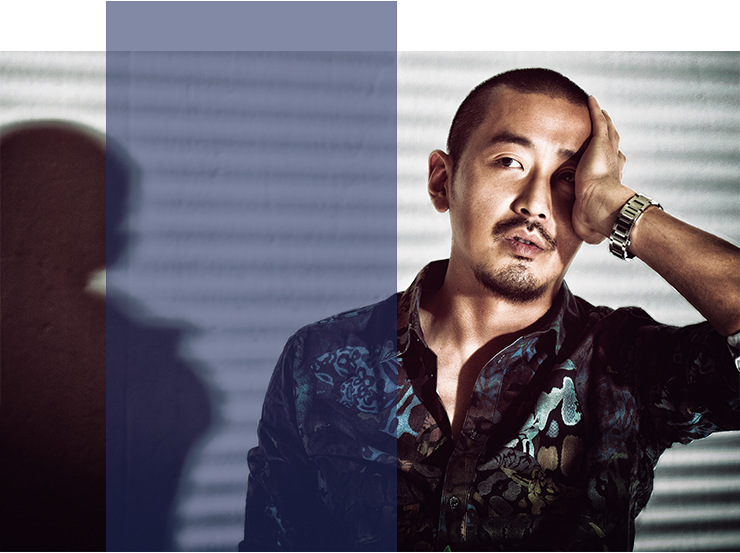
Ha Jung-woo proved his star power onceagain with the runaway hit “Assassination”in 2015, which drew over 12.7 million moviegoers.Then in 2016, he further demonstratedhis box office prowess with “The Handmaiden,”directed by Park Chan-wook, and“The Tunnel,” directed by Kim Seong-hun.Ha’s first starring role was in the movie “TheUnforgiven” (2005) by Yoon Jong-bin. Thereafter,he took on widely differing roles in films,such as Kim Ki-duk’s “Time” (2006) and“Breath” (2007), and Hong Sang-soo’s “LikeYou Know It All” (2009), consolidating his statusas a screen idol.
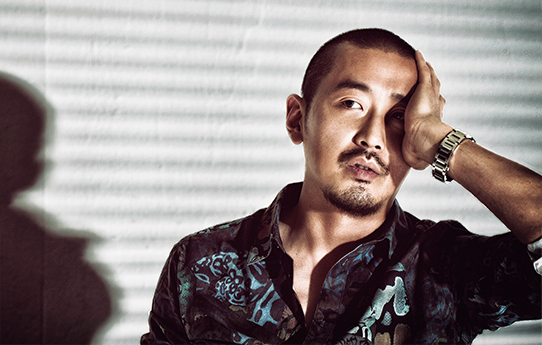
“It is better
to do
something
and regret
it afterward
than regret
not doing it.”
“It is betterto dosomethingand regretit afterwardthan regretnot doing it.”
Ha was the vivid persona delivering the storylinesof director Yoon Jong-bin’s “The Unforgiven,”“Nameless Gangster: Rules of theTime” (2012), and “Kundo: Age of the Rampant”(2014). He was an icon of Na Hong-jin’s bloodcurdlingmovies, “The Chaser” (2008) and “TheYellow Sea” (2010), and the driving force behindlarge-scale projects, like Ryoo Seung-wan’s“The Berlin File” (2013) and Choi Dong-hoon’s“Assassination” (2015). His body of work runsthe gamut from blockbusters to low-budgetflicks to movies by first-time directors, such asKim Byung-woo’s “The Terror Live” (2013).
Ha’s multifaceted talent as an actor who canshine in widely differing roles, from the heinousserial killer in “The Chaser” to the charismaticgang boss in “Nameless Gangster” and a novelistinept at romance in “Love Fiction” (2012),blows the mind.
Behind his versatility is anarduous zeal to take on new challenges, and anunswerving self-confidence and jocularity thatborder on audacity. Audiences are easily captivatedby the allure of his distinctive on-screenpersona.
“The Unforgiven,” directed by Yoon Jong-binfor his graduation project at Chung-Ang Universitywith a budget of just 20 million won (about$18,000), has been hailed as an exceptionalwork that exposed detestable abuses in theKorean military. The movie was invited to theUn Certain Regard section of the 2006 CannesFilm Festival. Ha teamed up with Yoon again on“Beastie Boys” (2008) and “Nameless Gangster.”
Despite his influence and star power, earninghim the nickname “Great Ha,” he doesn’thave grand or ambitious plans for the future.To him acting is just a part of life; he focuseson doing his best each day and deciding whatto do the next day. He is a venturesome actorwho prefers to knock down a stack of bricks andtry something new rather than simply continuingto pile up more bricks, believing, “It is betterto do something and regret it afterward thanregret not doing it.” He has steadily broadenedhis boundaries, getting involved in planning theary “577 Project” (2012), and directingthe movies “Fasten Your Seatbelt” (2013) and“Chronicle of a Blood Merchant” (2015). He alsoloves to paint in his free time.
 한국국제교류재단