Korea’s merchandise culture took root in the mid-to-late 1990s as a consumer phenomenon fueled by the rise of K-pop fandom. Since then, it has spread to other popular genres — such as webtoons, movies, and TV dramas, and eventually to art and literature — becoming a shared language across a wide range of cultural products. Recently, its reach has expanded into everyday consumption, transcending specific fandoms and taking on the characteristics of a universal consumer culture.
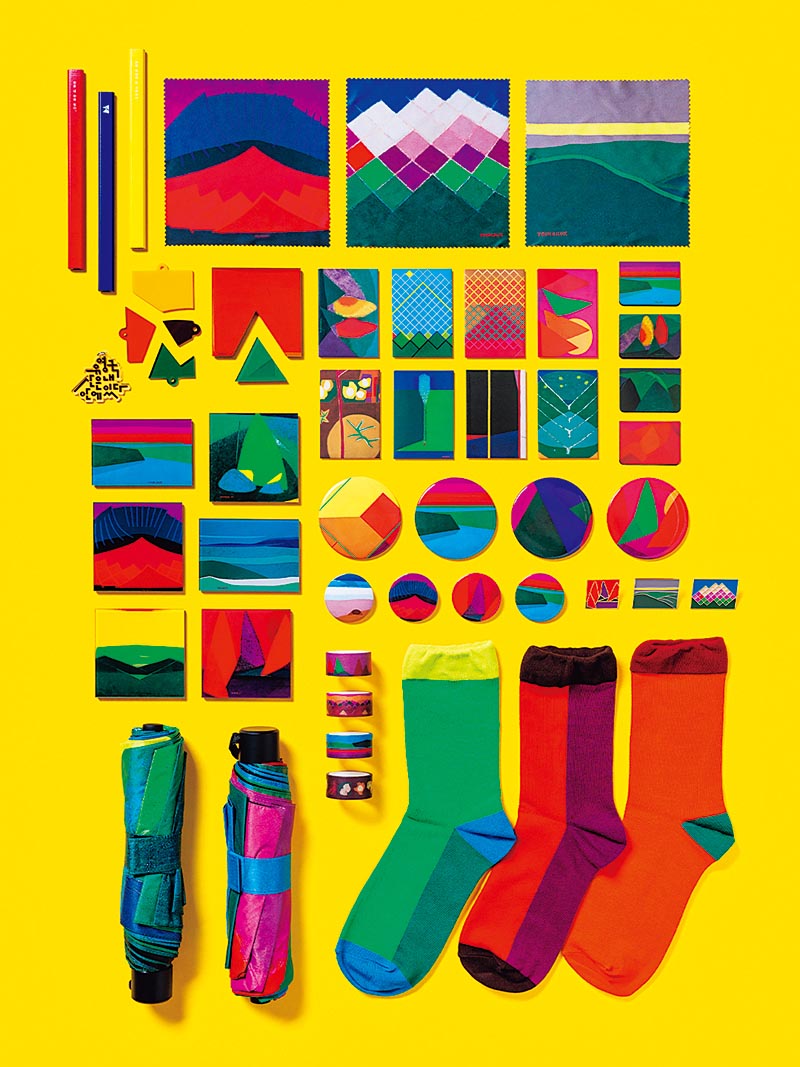
Created for the Seoul Museum of Art’s 2026 Korean Modern Masters exhibition Yoo Youngkuk: A Mountain Within Me, graphic design studio Everyday Practice translated the works of Yoo Youngkuk, a pioneer of Korean abstract art, into everyday products.
© Everyday Practice
One of the early precursors of today’s merchandise industry can be traced back to pilgrimages in medieval Europe. At the time, upon visiting churches and monasteries, pilgrims purchased souvenirs such as badges, pendants, and crosses made of lead-tin alloys to carry with them. These items revealed where the pilgrims had been, what beliefs they held, and which community they belonged to. This historical practice resonates with today’s merchandise culture, in which goods can likewise serve as a powerful symbol of identity.
Fast forward to the early 20th century and the beginnings of the modern merchandise industry can be seen with British author Beatrix Potter, who turned the main character of her children’s book, The Tale of Peter Rabbit, into a doll in 1903. She later introduced a variety of other character products. A few decades later in the United States, merchandise emerged as a full-scale industry when Disney systematically expanded its licensing business in the 1930s by introducing popular characters like Mickey Mouse across a wide range of products. Over the next century, the merchandise market grew dramatically. According to a 2025 report by License Global, the Walt Disney Company generated approximately USD 62 billion in global retail sales in 2024 by leveraging its extensive IP portfolio. This figure gives a clear sense of the current scale of the industry.
In Japan, the commercialization of products utilizing anime and manga characters began in earnest in the 1960s. Released in 1980 and based on the television anime series Mobile Suit Gundam, Gunpla (Gundam plastic models) became a massive sensation, a representative case showing the growth of the character merchandise market. Moving into the 1970s and 1980s, as Japan’s idol fan culture spread, the consumption of related merchandise also flourished. And in Korea, the stationery industry laid the groundwork for merchandise culture in the 1980s, which took off in the 1990s with the emergence of first-generation idol groups. Fan club members visited concert halls and broadcasting stations carrying balloons or wearing raincoats in colors symbolizing their idols: white for H.O.T., yellow for Sechs Kies, orange for Shinhwa, and light blue for god. Aside from this fan gear, which served as an important expression of fandom identity, products such as posters, fragrances, and beverages were introduced, positioning idol merchandise as an important aspect of fandom consumption.
KOREA’S MERCHANDISE CULTURE, FOSTERED BY FANDOMS
In the U.S., IP licensing expanded the merchandise market, while in Japan, otaku subculture — devoted fandom of anime and manga — fueled demand for related products. In Korea, merchandise evolved into a medium that strengthens solidarity within fandoms and enhances fan engagement.
This phenomenon is also evident in other content industries. In the case of webtoons and web novels, IP has expanded across various formats, including screen adaptations, games, publishing and merchandise, all built around the characters and their fictional universe. Solo Leveling serves as a prime example. Written by Chugong, it began as a web novel and successively expanded into a webtoon, animated series, and game. The franchise also established a physical presence through pop-up stores. Fans can read the webtoon, watch the animation, play the game, and purchase merchandise at pop-up stores, engaging with the work and its characters across multiple touchpoints. Serving as a bridge, merchandise allows fans to stay immersed within a narrative universe. At a 2026 exhibition-style pop-up store in Changwon, a major city in South Gyeongsang Province, visitors could even enjoy an AR experience summoning the “shadow army” from the webtoon. Fan engagement was further fueled by the issuance of personalized “hunter licenses” featuring instant photos taken directly at the venue.
Fandom-based merchandise culture is crossing over from popular culture to a variety of genres. In the art world, it has become natural to plan merchandise with the exhibition, and in publishing, reading-related merchandise such as bookmarks, book covers, and paperweights is creating yet another consumer culture along with the books. As such, goods have become a vital medium connecting content and fans in culture and art in general.
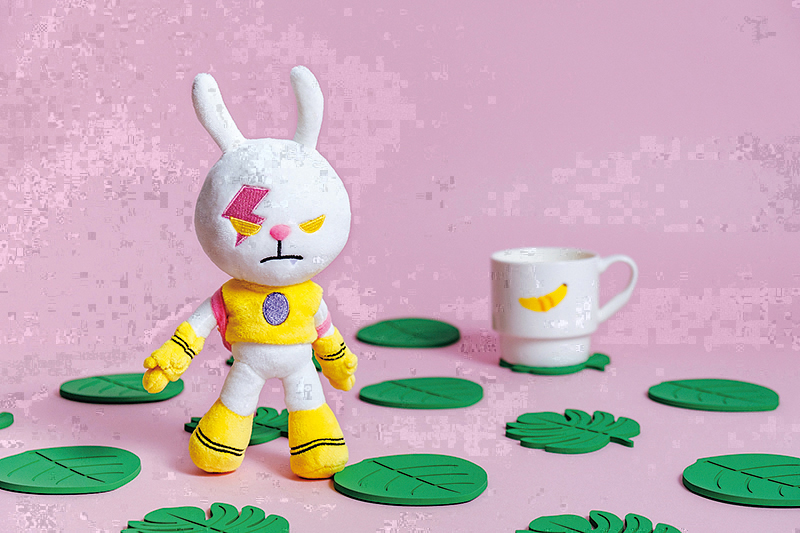
Originally produced as a filming prop for Season 1 of the TV drama Yumi’s Cells (2021), this Space Rabbit doll was later made available to the public as merchandise due to the show’s massive popularity.
© STUDIO DRAGON
MERCHANDISE IN EVERYDAY LIFE
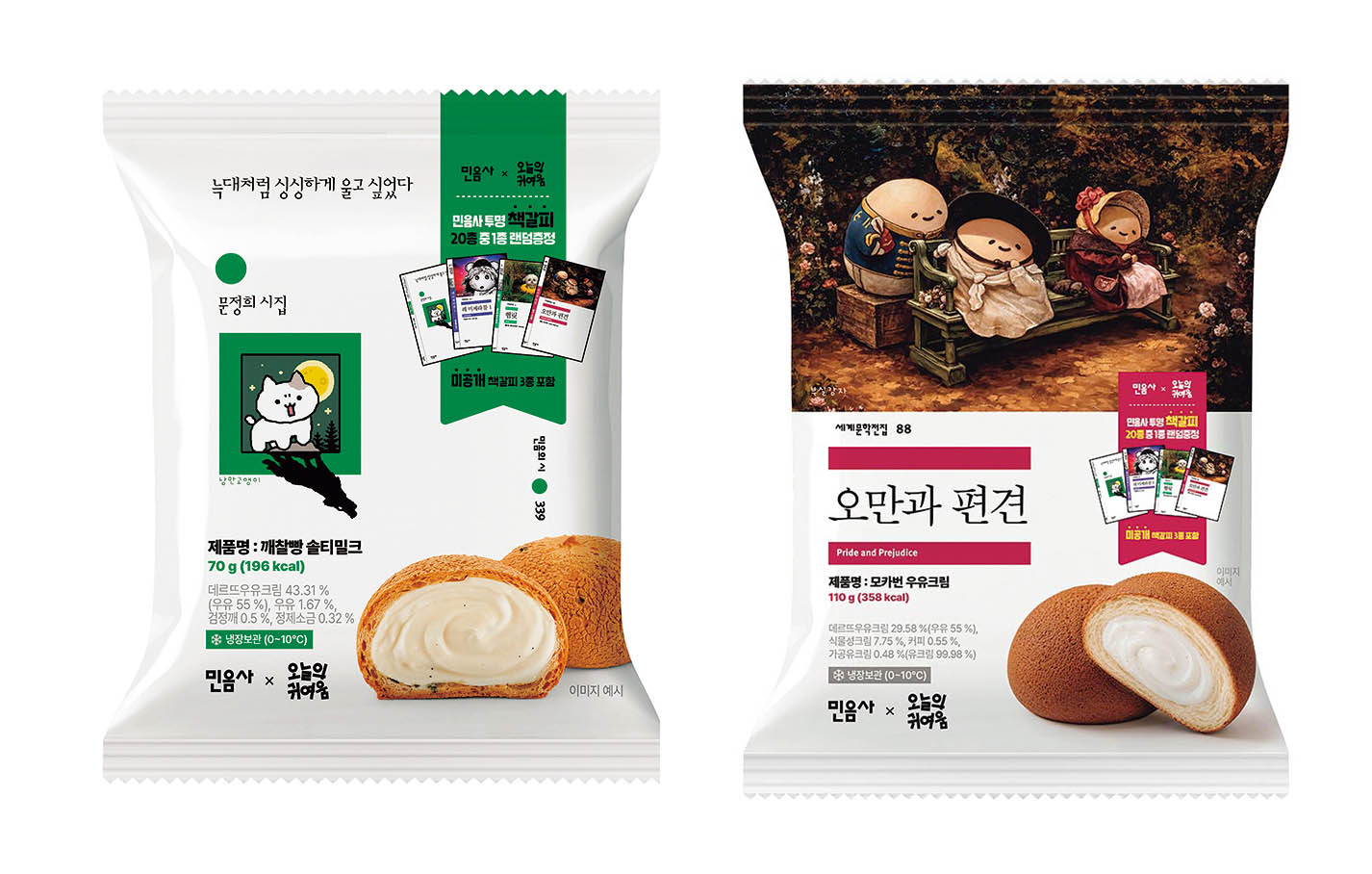
Launched by the convenience store chain GS25, in collaboration with publisher Minumsa and the character brand Oneul-ui Gwiyeoum, this pastry line features packaging inspired by the publisher’s classic literature and poetry collection covers. Pairing literary works with collectible goods, each package comes with one of 20 book-shaped bookmarks selected randomly.
© GS Retail
One does not need to seek specialty character shops or pop-up stores to buy merchandise. Even neighborhood convenience stores now carry them. While typically known for food, beverages, and daily essentials, these stores also serve as a major distribution channel for official brand collaborations. A prime example is Pokémon bread, which was first introduced in the late 1990s and included a character sticker inside the packaging. When SPC Samlip brought this product back in 2022, sticker collectors rushed to convenience stores, leading to massive sell-outs and long lines forming before stores opened.
Sometimes, convenience store chains directly participate in merchandise planning. In 2025, CU partnered with the Korea Professional Football League (also known as K League) and the Walt Disney Company Korea to produce limited-edition merchandise — including scarves, T-shirts, and key chains — all themed around the animated film Zootopia. These collaborations are not limited to major corporations or institutions. In the same year, GS25 achieved great popularity by joining hands with the popular YouTube creator Jamtteul TV (Sleepground) to introduce convenience store-themed acrylic diorama kits and key chains. As a result, neighborhood convenience stores have become everyday hubs to discover and collect unique merchandise.
The changes taking place in fandom merchandise culture are not limited to the expansion of retail venues. Driven by advances in digital technology, merchandise no longer needs to be tangible. What matters most is the experience of possessing an item and demonstrating one’s connection to their favorite artist. A good example of the shift from physical to digital merchandise is the digital photocard, a collectible card featuring an image of a K-pop idol. The girl group tripleS, which debuted in 2023, introduced digital photocards powered by blockchain technology. Fans collect and trade these cards through the official app, earning voting rights that allow them to participate in decision-making processes such as member composition or choosing title tracks. Fandom merchandise has transcended its role as a mere collectible, evolving into a digital asset that can mediate the relationship between fans and artists. This shift is fundamentally transforming the very concept of merchandise.
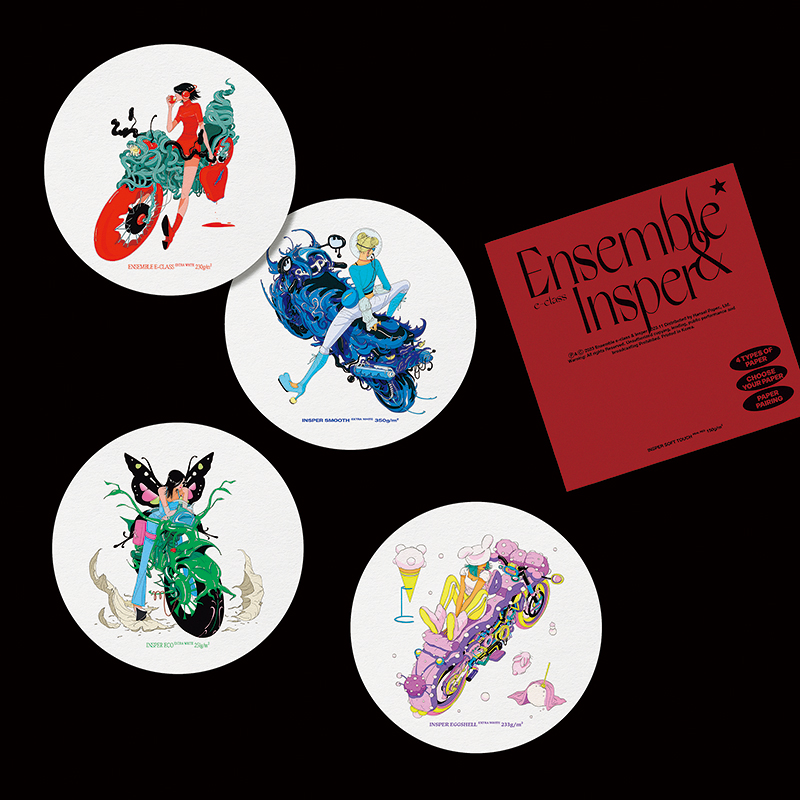
Produced by Hansol Paper in the style of a K-pop album, this sample book showcases the print quality of premium art paper, bringing the conventions of K-pop merchandise to the paper industry.
© Studio Gomin
ARTIFACTS OF AFFECTION AND COMMUNAL CONNECTION
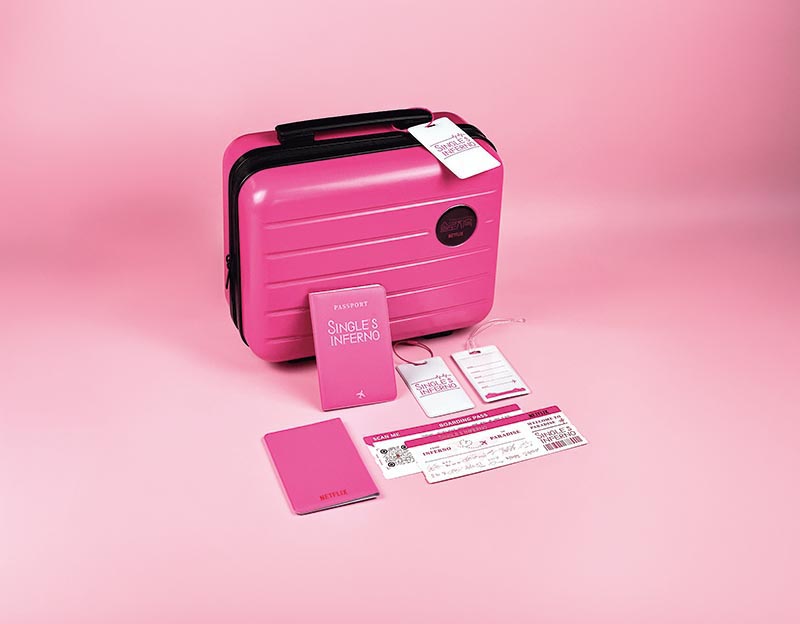
Merchandise for the Netflix dating series Single’s Inferno, which premiered in 2021, is translated into travel-themed objects such as a suitcase, passport, and airline tickets — all inspired by the show’s premise of couples leaving the “Inferno” for “Paradise.”
© Netflix; courtesy of CINEPINHOUSE
Merchandise consumption may seem irrational at times. You might already possess something similar, but when a new product is released, you open your wallet anyway, joining long lines simply because an item is a limited edition, even if you have no practical need for it. People are drawn to fan merchandise not because of the physical object itself, but because of the meaning it carries. Attaching your favorite artist’s key chain to your backpack, hanging an exhibition poster on your wall, and wearing the uniform of the sports team you cheer for are all ways of expressing your taste and identity. They also signal shared interests, allowing like-minded people to recognize one another. In this way, merchandise can foster a sense of belonging and solidarity.
Scarcity can also heighten the desire to purchase an item. Promotional phrases like “today only,” “limited quantity,” or “exhibition exclusive” trigger a powerful fear of missing out. The desire to complete a collection is another powerful driver of merchandise consumption. When a single design is released as a series or in multiple versions, it sparks a need to have the complete set. This psychological trigger explains why random photocards and series-based merchandise fuel the appetite for repeat purchases.
Far more than a souvenir made of plastic or paper, merchandise anchors our memories. A small item purchased at a concert, exhibition, or pop-up store allows us to relive the experience of a special moment long after it has passed. Ultimately, merchandise is a world of its own — a way to express our identity, connect us with others, and cherish fleeting moments.
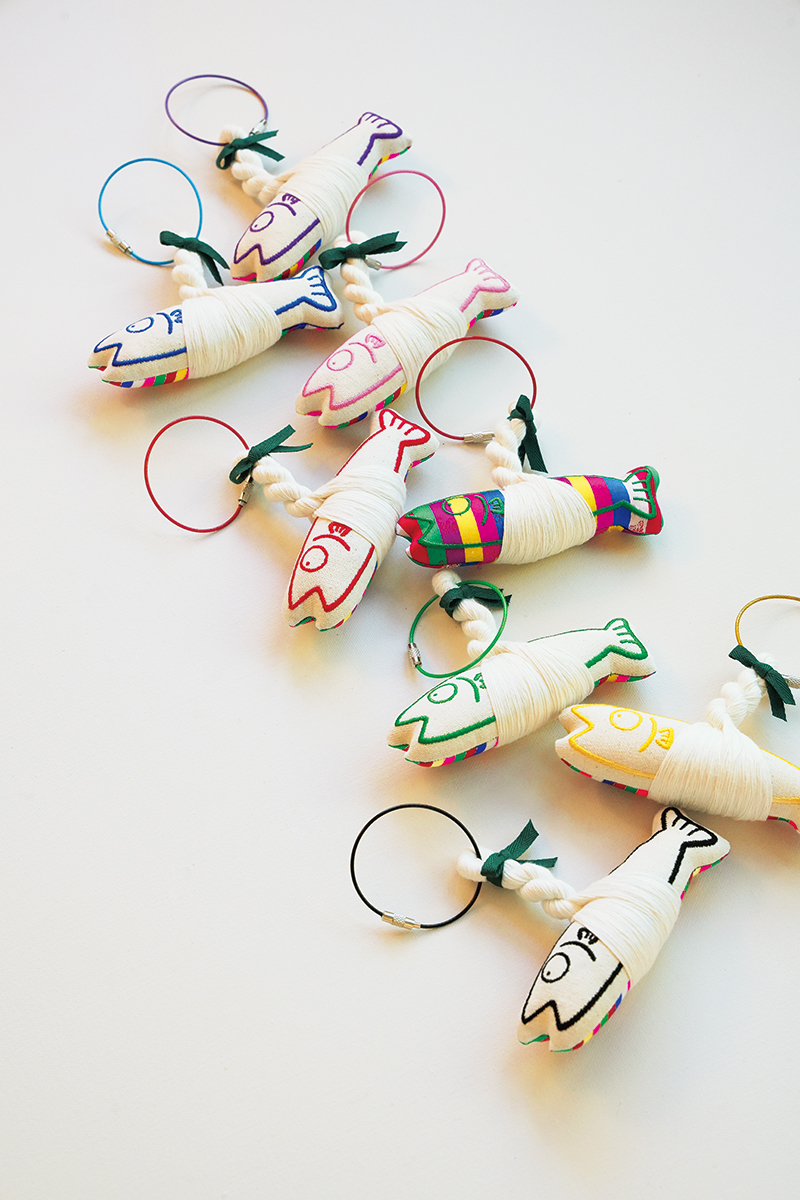
Created by greenflair, a fabric brand that reinterprets traditional Korean motifs with a modern touch, the Boktae key chain draws on the Korean custom of hanging dried pollack to ward off misfortune and bring good luck.
© greenflair
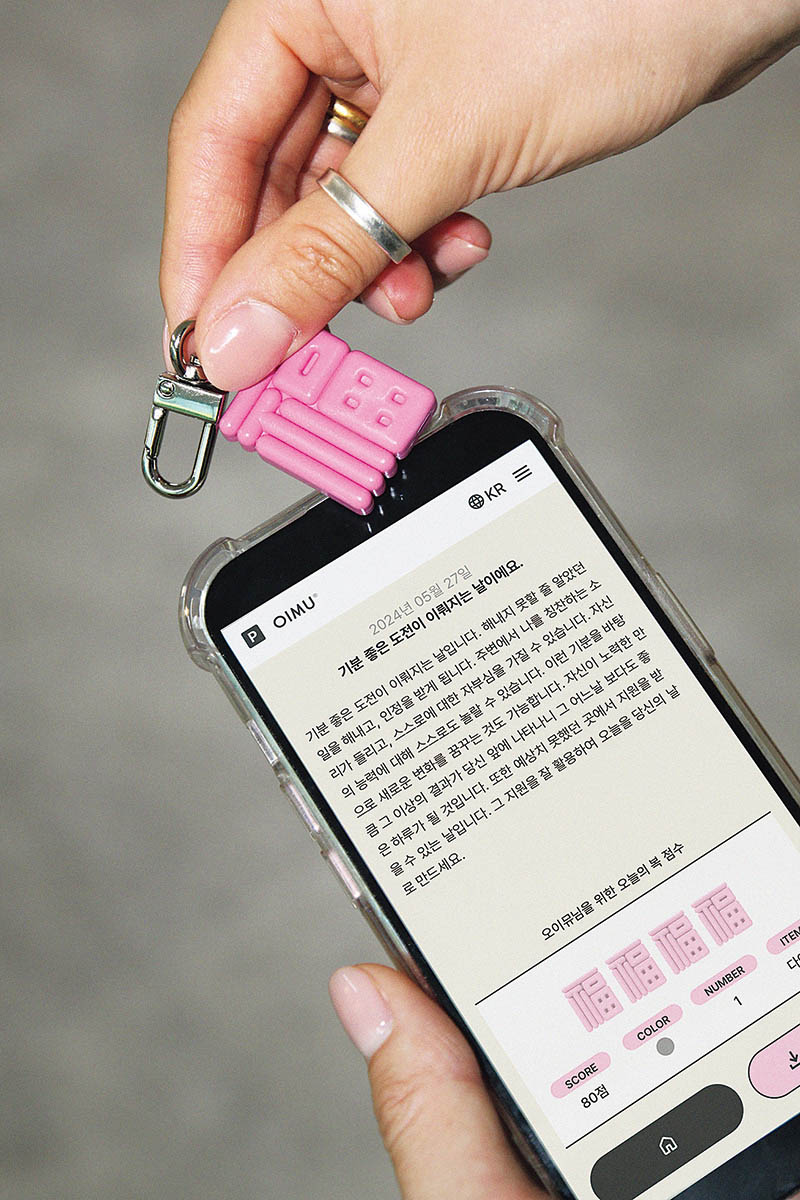
Developed by OIMU and recycled plastics brand NoPlasticSunday, this bok (福, “good fortune”) key chain features an embedded NFC chip for daily smartphone fortunes, uniting digital tech with environmental values.
© OIMU
Seung Yun Lee Professor, Department of Business Administration at Konkuk University
 한국국제교류재단