K-pop album sales have cooled in recent years, but fan merchandise has emerged to drive the industry’s next wave of growth. Once simple souvenirs for collectors, K-pop goods have been pushing into fashion and lifestyle products, giving fans a way to experience an artist’s worldview and aesthetic firsthand.
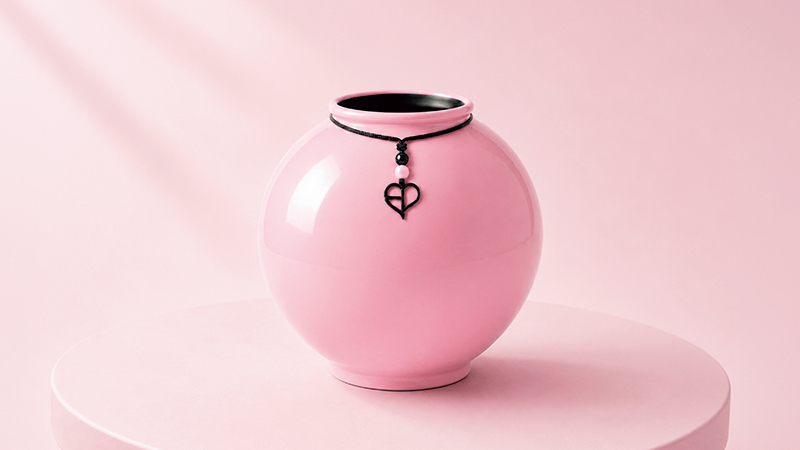
In celebration of its 10th anniversary in August 2026, Blackpink introduced the BLACKPINK HERITAGE COLLECTION, a selection of MU:DS merchandise including this Pink Moon Jar.
© YG PLUS
If you know what the term “goods” means, chances are you are, or once were, a fan of K-pop or Japanese pop culture. In Japan, where fan culture emerged early and moved fast, promotional merchandise tied to that culture came to be known simply as “goods,” and the term crossed into Korean unchanged. It circulated by word of mouth among fans until it settled into everyday use. Korea’s retail industry tends to file such branded items under “MD,” short for “merchandise,” but among K-pop fans, the industry term simply never landed. Fans simply called them “goods,” which is one of the biggest topics in the K-pop industry in 2026. Fan merchandise has grown into a core business generating added value and recurring revenue.
K-POP’S NEW GROWTH DRIVER
According to data HYBE released in February 2026, the company’s merchandise and licensing revenue climbed from about KRW 325.6 billion (approx. USD 230.9 million) in 2023 to KRW 420.2 billion (approx. USD 297.8 million) in 2024, a gain of 29.1%, then jumped again to KRW 570.6 billion (approx. USD 404.3 million) in 2025, up 35.8%. HYBE was not the only company experiencing this growth. SM Entertainment, YG Entertainment, and JYP Entertainment showed the same pattern. A 2026 filing from YG Entertainment, which compiled figures across all four companies, known in the industry as Korea’s “Big Four” agencies, put their combined merchandise and licensing revenue at KRW 803.4 billion (approx. USD 568.9 million) in 2024, rising to KRW 1.07 trillion (approx. USD 758.5 million) in 2025, an increase of about 33%.
The rapid growth of the K-pop goods market signals something bigger than the numbers alone. It coincides with a decline in the album market, long the driving force behind the K-pop industry. Spurred by global market expansion and a pandemic-era boom, physical K-pop album sales surpassed the historic milestone of 100 million copies in 2023. Since then, sales have reversed course and shown little sign of recovery. Analysts have identified two factors regarding this downturn: sales becoming increasingly concentrated among a handful of top-tier artists and a marketing strategy reliant on fans buying multiple copies of the same release. Concerns over the environmental costs of K-pop consumption have intensified as well. Critics point to the plastic waste that piles up when fans, driven by chart rankings and opportunities to participate in special fan events, buy albums they will never play, and also to the issue of carbon emissions generated during production and disposal.
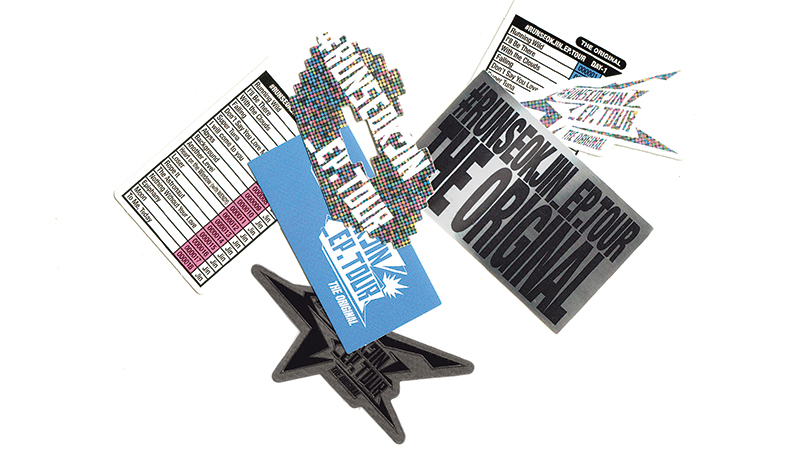
Designed by HAUS ARDORYOUTH with a funky, rock-band vibe, this official merchandise was created for BTS member Jin’s first solo tour, held from June to August 2025.
© HAUS ARDORYOUTH
Even so, the industry cannot simply abandon the momentum it has built and overhaul how it sells albums overnight. Caught in that bind, it faced a familiar specter: periodically throughout K-pop’s three-decade history, just when people started to forget it, talk of a “K-pop crisis” would resurface. It was about to happen again when a “timely savior” stepped in: K-pop goods, the real focus of this piece. Anyone still picturing K-pop goods as little more than light sticks, printed photos, or photocards should update that mental list right away. As of 2026, the K-pop goods market has entered a golden age so dazzling and inventive it could pass for a whole new world.
POP-UP STORES REWRITING THE GRAMMAR OF GOODS
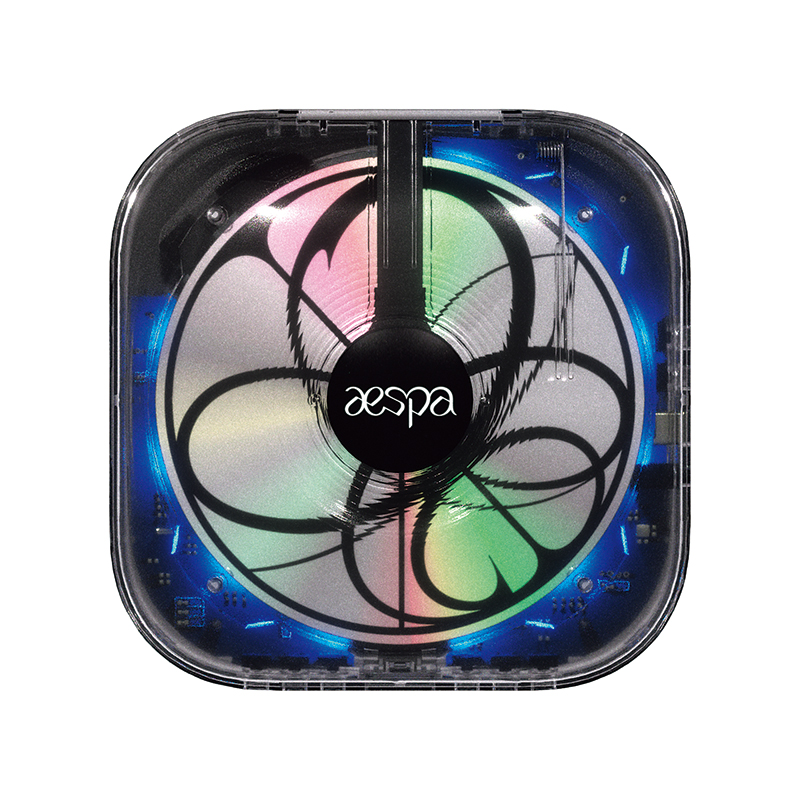
This version of aespa’s first full-length album, Armageddon (2024), combines the CD player and album into a single object, and the listening experience becomes a part of the album concept itself. The CD player album was hugely popular, with the first round of pre-orders selling out in just 90 minutes.
© SM Entertainment Co., Ltd.
The K-pop goods market had been expanding steadily, but it was the rise of pop-up stores in the 2020s that truly catalyzed the explosive boom. Before then, fan merchandise sold on a small scale, mainly through concert venues or online shops the agencies ran themselves. That changed once large-scale pop-up stores, held for occasions such as new album releases and debut anniversaries, gave the market a real boost. Built around K-pop idols and their powerful IP, these venues offered immersive spaces where fandom bonds could be deepened. They also filled the gap left by world tours, solo concerts, and fan meetings that COVID-19 had shut down. When offline events resumed, pent-up consumer demand broke loose, and it wasn't rare for pop-up stores representing popular groups to draw over 100,000 visitors.
As pop-up stores transformed into spaces where fans could experience a musician’s worldview and story through all five senses, goods could not afford to take a back seat. In addition to quality music, striking performances, and entertaining digital content featuring K-pop idols, well-crafted goods also received praise for elevating a musician’s image. Agencies began pouring as much care into designing goods as they did into album concepts or visual identity. NewJeans set off this new phase of competition. When the group debuted in 2022, K-pop stages were still centered on high-energy performances. NewJeans’ arrival put the combination of music and aesthetic sensibility on K-pop’s radar.
Consumer expectations also increased in step with this trend. Gone were the days when fans clicked “buy” out of sheer excitement just because a product featured a member’s face or initials. Fans wanted the artists they loved to make high-quality goods. Once a product cleared that bar, it became a talking point across the K-pop world, regardless of the artist behind it. NCT’s collaboration with Sanrio, the company behind the iconic Hello Kitty character, is a case in point: the collection largely sheds the typical look of fandom merchandise. Le Sserafim took a similar approach, with a line of cool, sporty clothing that reads nothing like typical fan gear. Beyond that, Blackpink’s Jennie released a free Korean font, Zen Serif, on Hangeul Day, October 9, 2025. So at this point in time, it’s difficult to clearly define what we call “goods.”
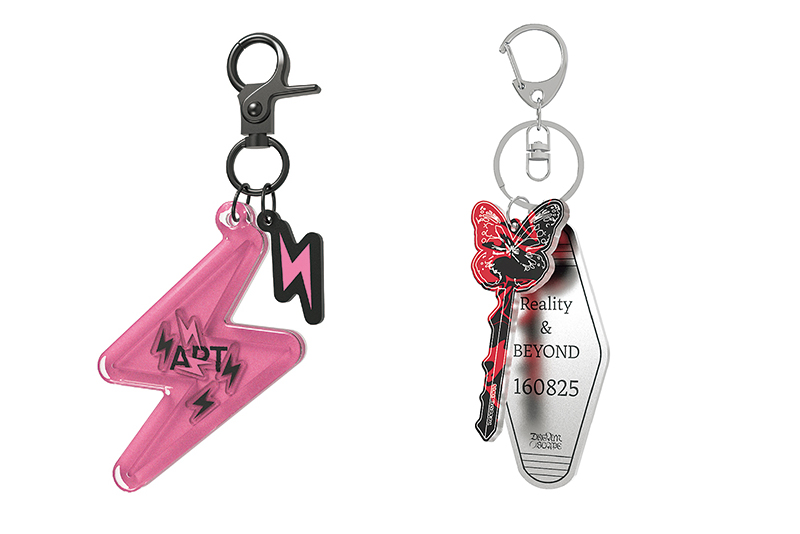
1.Created for pop-up stores worldwide, this merchandise celebrates the global success of Rosé’s hit song “APT.”
2.This key chain is inspired by elements featured in the music video for NCT Dream’s album DREAM( )SCAPE (2024).
© Crystal Studio_for fdcrp
ALBUMS TRANSFORM INTO GOODS
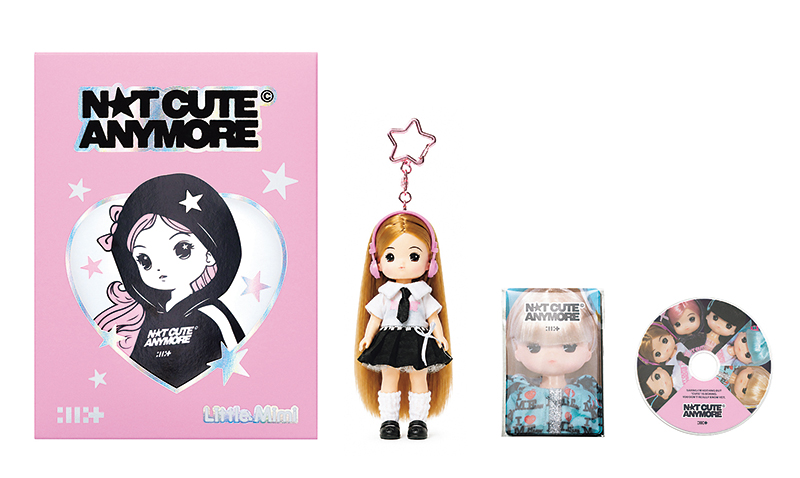
Combining Illit’s concept with Mimi World’s Little Mimi doll, this is a special edition of the group’s first single album, Not Cute Anymore (2025), with the group’s label BELIFT LAB and creative group Typefounder contributing to the design.
© BELIFT LAB Inc.; courtesy of Typefounder
Nowadays, turning the album itself into fan merchandise has become a notable approach. At the helm of this trend are groups like NewJeans and Shinee. NewJeans’ debut EP, New Jeans (2022), came packaged as a round cross-body shoulder bag in black, white, and red — a design that won over both NewJeans fans and trend-conscious consumers. Meanwhile, Shinee member Key has made a name for himself by extending an album’s concept into its packaging. His mini album Bad Love (2021), which took on the aesthetics of retro sci-fi films like Star Wars and Star Trek, came in a case shaped like a toy ray gun. The following year, his full-length album Gasoline took its visual cues from VHS tapes and floppy disks. By incorporating media formats that had become obsolete in the 21st century, he highlighted a visual sensibility distinctly his own.
These convention-defying designs continue to evolve, delighting K-pop fans with each new release. The biggest splash of 2024 arrived with Aespa’s first full-length album, Armageddon, which featured a version in the form of a CD player. Priced at a steep KRW 145,000 (approx. USD 103), it nonetheless sparked three rounds of pre-orders. Other artists followed suit: Day6’s The Decade (2025) included a pair of real earbuds, and one version of the album Panorama: The Best of Taeyeon (2025) by Taeyeon of Girls’ Generation offered a microphone-shaped Bluetooth speaker. The girl group Illit’s Not Cute Anymore (2025) album featured Little Mimi, a beloved Korean doll, while Le Sserafim’s Spaghetti (2025) album included a stress ball — both quick, savvy plays on the trend. And at a time when it’s quite common to see doll key chains dangling from bags everywhere, NCT Wish has made its own mark: its winged, star-shaped mascot, Wichu, has shaken up the market for character-themed doll albums.
Ultimately, the success of “goods” comes down to how they appeal to the senses. Today’s K-pop market has turned into a survival-of-the-fittest arena where nothing lasts unless it appeals aesthetically. The old assumption that fans will buy whatever an artist offers no longer holds. Hallyu, the Korean Wave, now counts more than 200 million fans worldwide, and fans are increasingly looking for a sense of belonging without openly announcing who they support. They also take pride in a community with a greater sense of aesthetic sophistication, not just impressive numbers. K-pop goods now compete on a battlefield where relying solely on the strength of IP, which refers to a bundle of intellectual property rights surrounding K-pop artists, means brands can be left in the dust.
Kim Yoon-ha Popular Music Critic
 한국국제교류재단